20 hr
Cairo & Giza Full-Day Expedition from Hurghada
- Expert local guide
- Small group
- Skip-the-line access
- Free cancellation
Hurghada To Pyramids — Red Sea Coach Transfers & Guided Giza Day Trips
Six hours of desert road, one horizon of stone.
Compare fares, pick the fit — all bookings are mobile-voucher and eligible for free cancellation where shown.
20 hr
16 hr
24 hr
Anyone planning a hurghada to pyramids day trip needs to decide between two ticket levels: the base plateau entry and an optional interior-access add-on. This guide compares both official ticket types so first-timers booking hurghada to pyramids tours know exactly what each one covers before they reach the Giza ticket booths.
| Giza Plateau Entry (Base Ticket) |
Top pick Pyramid Interior Access (Add-on) |
|
|---|---|---|
| What it covers | Plateau, Sphinx enclosure, Queens' Pyramids, pyramid exteriors | Descending passage into Khufu, Khafre, or Menkaure chamber |
| Where it's purchased | Main plateau ticket booth at 700 EGP | Separate interior booths near each pyramid |
| Daily capacity | Uncapped for general entry | Limited tickets per pyramid, often one interior offered per day |
| Timed vs flexible | Flexible entry any time within opening hours | Fixed time slots, sold until daily quota is reached |
| Best for | First-timers wanting the classic exterior views and Sphinx | Visitors wanting the burial-chamber experience inside a pyramid |
| See tickets & prices |
Verdict: Most first-time visitors on a hurghada to pyramids tour do fine with the base plateau ticket alone, while only those keen on going inside a chamber need to add the separate interior ticket.
Worth it for first-timers, less so for repeat coastal-holiday travellers
A hurghada to pyramids day is a long haul, so the maths matters. Plateau entry is 700 EGP per foreign adult, and for that you stand before the Great Pyramid of Khufu, the Sphinx, and the last surviving Ancient Wonder still holding its ground on the Giza necropolis. The fee itself is modest; the real cost of most hurghada to pyramids tours is the road time and the guide. If this is your one shot at Egypt's defining landmark, the value is obvious — no photo prepares you for the scale of those limestone blocks up close. For repeat visitors who have already seen the plateau, or those unwilling to sacrifice a full beach day to a long transfer, the arithmetic tilts toward skippable. Judge it on the whole journey, not the ticket alone.
Bottom line: For a first Egypt visit, hurghada to pyramids tickets are money well spent — provided you accept the long road there.
Hand-picked experiences loved by thousands of travelers
2 days
Free Cancellation
Experience a 2-day journey to Cairo featuring the Giza Plateau, the Grand Egyptian Museum, and a luxury stay with pyramid views.
18 hours
Free Cancellation
Experience an epic 18-hour journey from Hurghada to explore the Giza Plateau and the Egyptian Museum.
Full day tour
Free Cancellation
A bespoke full-day excursion from Hurghada to explore the legendary Giza Pyramids and the expansive Grand Egyptian Museum.
Pass through security screening and purchase or present the 700 EGP plateau ticket at the Al Haram Street entrance
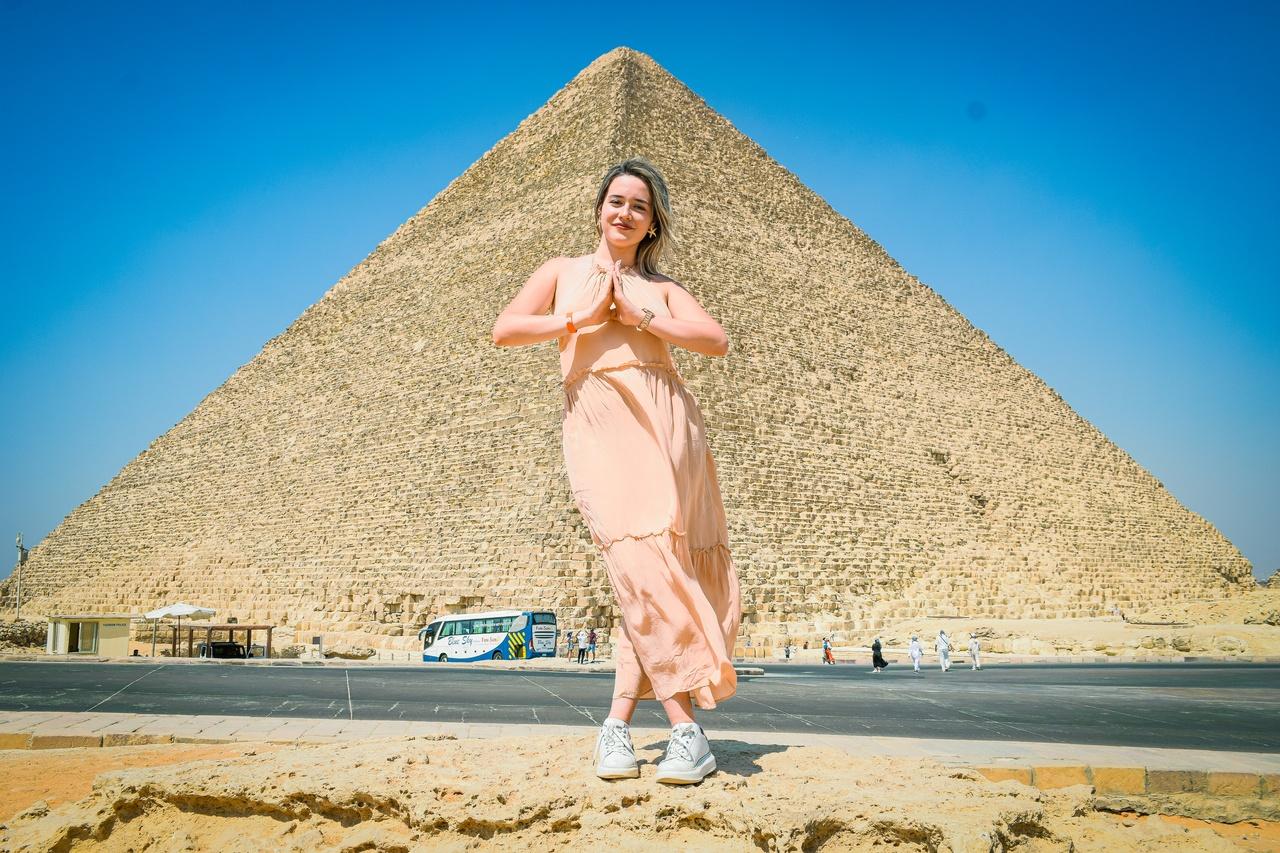
Walk the perimeter of Khufu's pyramid, the largest of the three, and photograph its scale from ground level
Continue along the plateau path to see the second and third pyramids and compare their differing casing stone remnants
Walk down toward the Sphinx enclosure to view the limestone statue and its adjacent Valley Temple
Learn about the reconstructed 4,600-year-old funerary boat found beside Khufu's pyramid
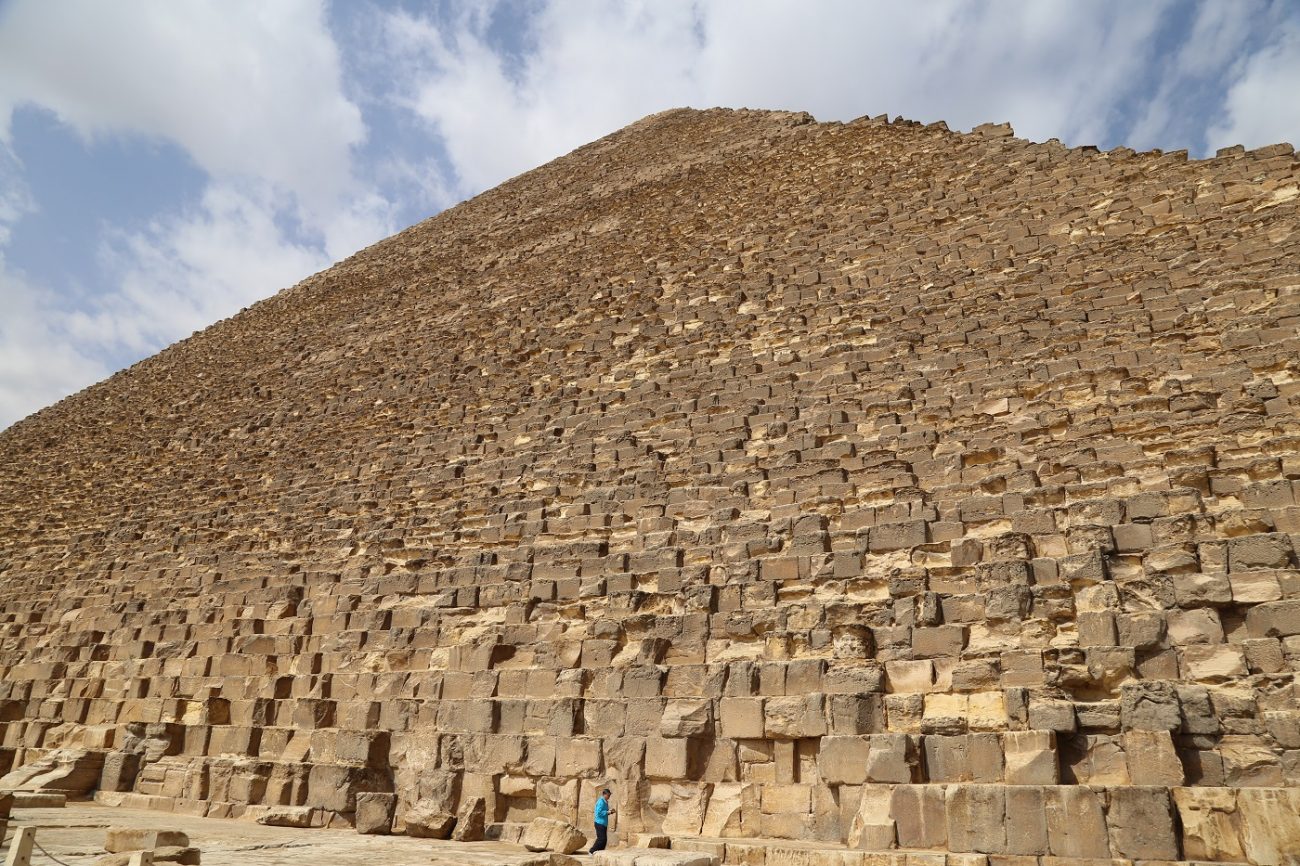
The largest of the three pyramids, originally built to about 146 meters and constructed from roughly 2.3 million limestone blocks. It remained the tallest man-made structure on Earth for nearly 3,800 years.
The second-largest pyramid, distinguished by a cap of original polished limestone casing still visible near its summit. Its adjoining valley temple connects directly to the Great Sphinx enclosure.
The smallest of the three main pyramids, standing roughly 65 meters tall and built with lower courses of pink granite. Three small subsidiary pyramids sit beside it, believed linked to Menkaure's queens.
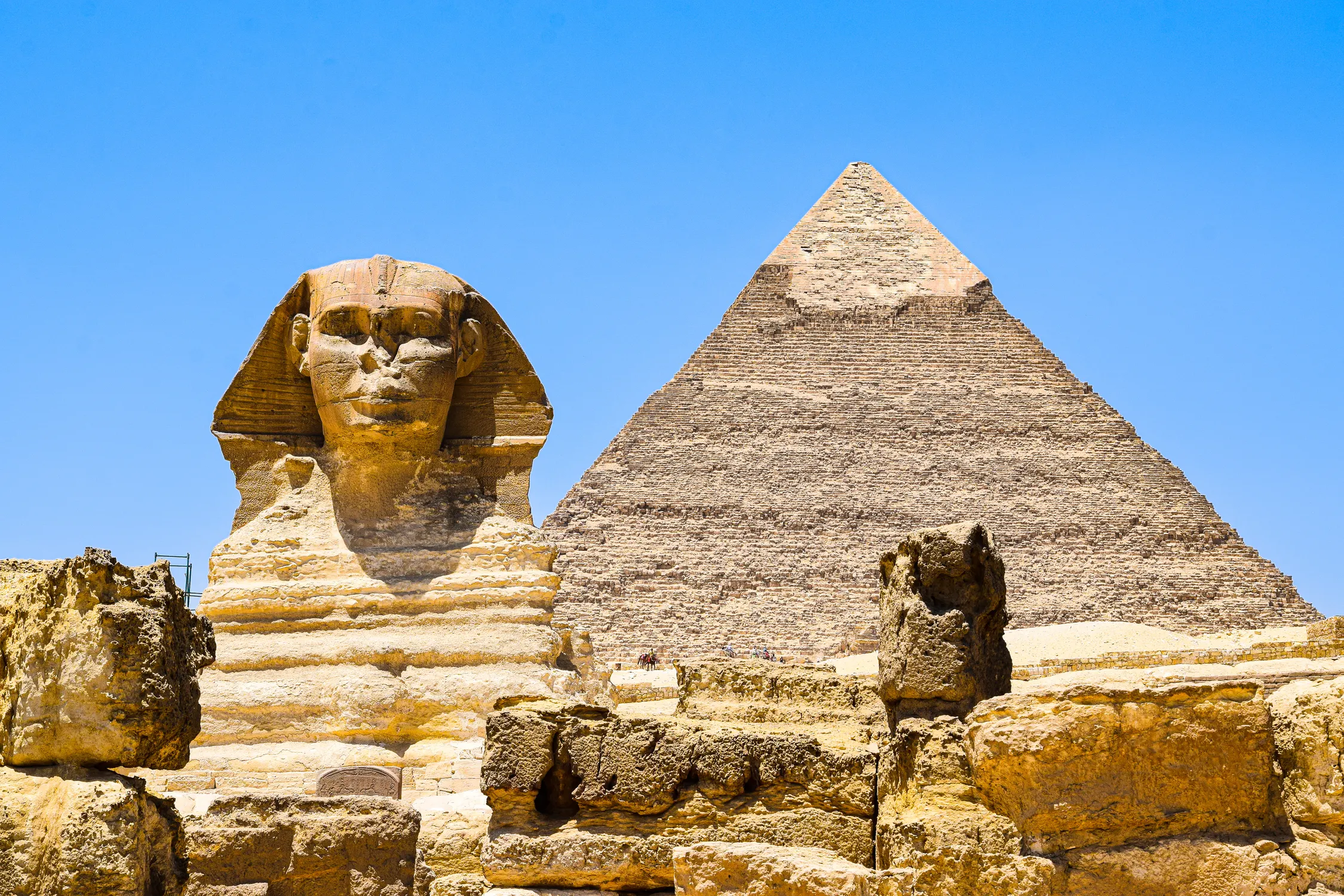
A limestone statue roughly 73 meters long and 20 meters high, carved with the body of a lion and a human head believed to represent Khafre. Traces of original red, blue, and yellow paint have been found in its crevices.
Houses the reconstructed Khufu ship, a 43-meter funerary vessel built without a single nail using mortise-and-tenon joints. It was discovered dismantled into more than 1,200 pieces beside the Great Pyramid.
Three smaller subsidiary pyramids southeast of Khufu's pyramid, built for his queens including his mother Hetepheres. They offer a compact contrast in scale next to the towering Great Pyramid.
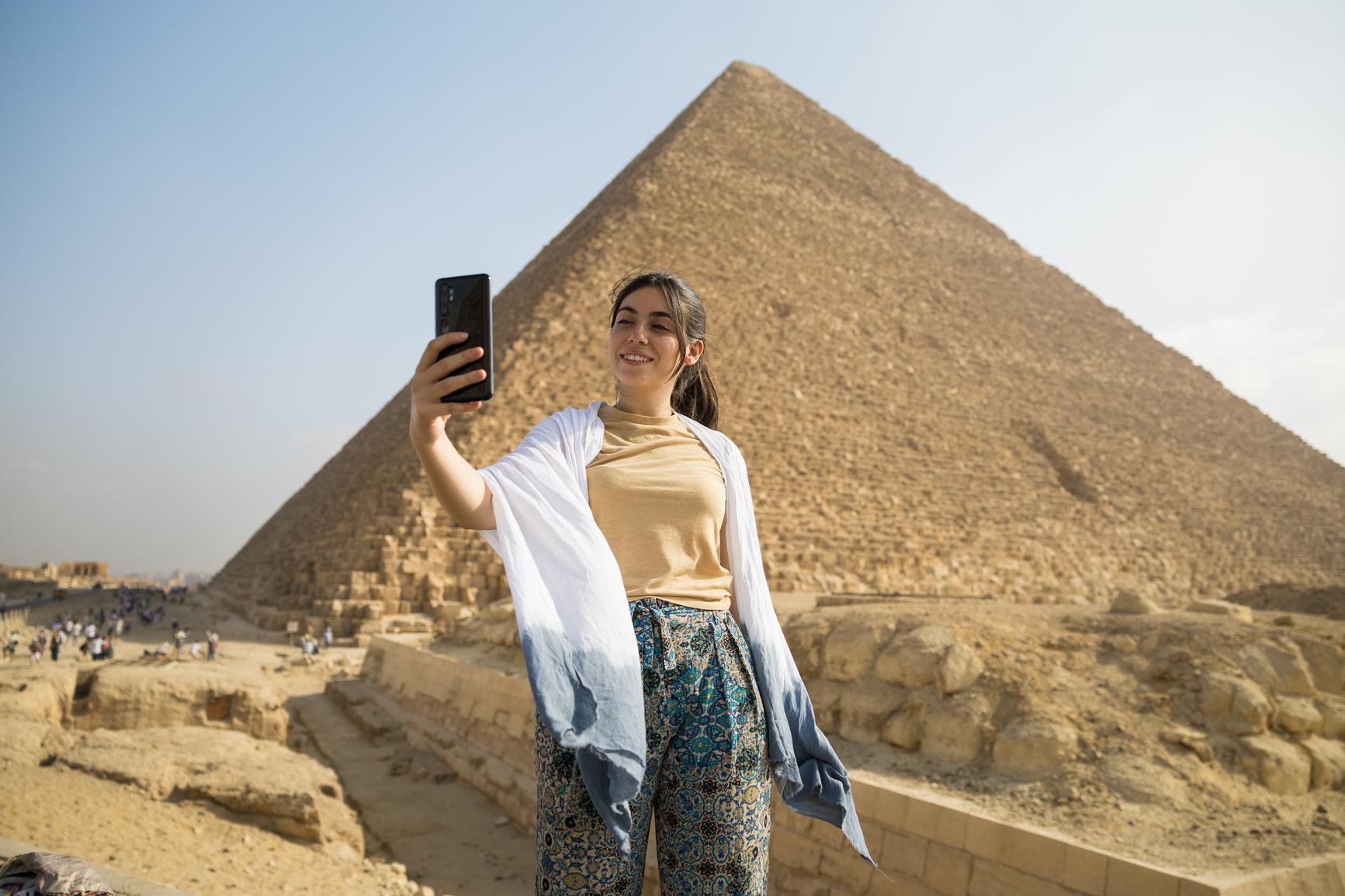
You board in darkness, the resort strip still asleep as the coach turns inland onto the desert highway. For the first hours you watch scrubland and checkpoints slide past, then the green seam of the Nile Valley opens and Cairo's sprawl thickens toward the plateau's edge. Your hurghada to pyramids tour delivers you to a car park where the Great Pyramid fills the windscreen before you have found your shoes. You step out into dry heat and pass the ticket gate onto the sand. You walk the base of Khufu's monument, tilting your head to follow tiers of weathered limestone upward, then trace the causeway toward Khafre, whose summit still wears a cap of original casing stone. You pause at the panorama point where all three pyramids line up across the ridge, camels crossing the frame. Later you descend toward the Sphinx enclosure, standing level with its paws while a guide points out the valley temple's granite blocks. You feel the scale shift from photograph to fact. By early afternoon you are back aboard, the plateau receding in the rear window, the return road unspooling the desert in reverse toward the coast and the reef you left before dawn.
All the details about your upcoming adventure in one place
The journey from Hurghada to Pyramids crosses the Eastern Desert to reach the Giza Plateau, home to the Great Pyramid of Khufu, the Sphinx, and the ancient necropolis of the Old Kingdom pharaohs. Our hurghada to pyramids tours pair air-conditioned coach transfers with a licensed Egyptologist guide who brings the limestone monuments and UNESCO World Heritage site to life. Travelers also reach the Egyptian Museum, making the Giza excursion a full window into ancient Egypt.
The Great Pyramid of Khufu held the record as the tallest human-made structure on Earth for roughly 3,800 years, until Lincoln Cathedral's spire rose in the fourteenth century. It stands on the Giza Plateau at the edge of Cairo, some 450 kilometres northwest of the Red Sea resorts, and the long desert corridor that links them is precisely why the hurghada to pyramids route has become a fixture of Egyptian travel. Coaches leave the coast before sunrise, tracing the Eastern Desert road toward the Nile Valley and a skyline of limestone that has drawn pilgrims, cartographers, and treasure-hunters for four and a half millennia. The plateau holds three principal pyramids — Khufu, Khafre, and Menkaure — flanked by queens' pyramids, mastaba fields, and the recumbent bulk of the Great Sphinx, carved from a single ridge of bedrock. Khufu's monument originally rose 146.6 metres and was sheathed in polished Tura limestone that once returned the sun in a single sheet of light; only fragments of that casing survive near Khafre's apex today. Egyptologists still debate the ramps, levers, and labour that raised an estimated 2.3 million blocks, and each survey season adds detail to the record rather than closing it. What gives the site its enduring pull is not scale alone but continuity. The pyramids were already ancient when Herodotus described them in the fifth century BCE; they were old when Rome was young. A red sea to giza excursion collapses that distance into a single day, carrying travellers from turquoise reef water to a necropolis first laid out under the Fourth Dynasty. The Giza plateau remains an active archaeological landscape, its solar-boat museum, workers' cemeteries, and valley temples still yielding evidence of the crews who lived and died in the pyramids' shadow. For visitors based along the coast, the appeal of a hurghada to pyramids day trip is this compression of geography and time — a chance to stand, within hours, before monuments that anchored ancient Egyptian cosmology and the afterlife of its kings. The plateau's UNESCO World Heritage listing recognises not just the structures but the funerary complex as a whole: causeways, mortuary temples, and the alignment of Khufu's monument to true north within a fraction of a degree. It is a landscape read as much as viewed, its meaning layered across dynasties, empires, and the slow patience of desert stone.
The pyramids were already ancient when Herodotus described them; they were old when Rome was young.
Modest clothing is expected at the Pyramids of Giza — shoulders and knees covered for both men and women, since this is a national heritage and religious-adjacent site near local communities. Loose, breathable fabrics are recommended given the desert heat, and sturdy closed-toe shoes help on the sand and uneven stone around the Giza Plateau.
All visitors pass through a metal detector and bag scan at the plateau's main gate on Al Haram Street. Large backpacks, suitcases, and professional camera equipment with tripods may be flagged for secondary inspection or a small equipment fee.
Personal photography and smartphone use are free throughout the outdoor plateau, including the Sphinx enclosure and pyramid exteriors. Drones are strictly prohibited without prior government permits, and tripods or commercial film equipment require separate approval from site authorities.
Children under 6 enter free, and the open plateau layout suits strollers on the paved sections near the entrance. Shade is scarce, so families should plan around the cooler morning hours.
The Giza Plateau has limited wheelchair accessibility because the ground is natural sand and uneven stone dating back over 4,500 years. Paved viewpoints near the main entrance and parking areas offer accessible vantage points of the pyramids and Sphinx, though pyramid interiors involve steep, narrow passages unsuitable for mobility aids.
There are no full-service restaurants inside the plateau itself, though kiosks near the entrance and the nearby 9 Pyramids Lounge sell bottled water, tea, and light snacks. Bringing a refillable water bottle is practical given the Giza heat and the distance between the Khufu, Khafre, and Menkaure pyramids.
Standard plateau hours
Midday prayer break at nearby mosques
Busiest day, weekend crowds
Open 07:00–17:00 daily
location
Car · 5–6 hours · Approx. 200–400 EGP fuel/toll per vehicle
Private car or tour bus from Hurghada follows the Red Sea–Cairo desert road directly to the Giza Plateau parking area at the Al Haram entrance.
Taxi · 20–30 minutes from Cairo · 30–50 EGP
A pre-booked taxi or private transfer from Cairo covers the roughly 20-minute drive from downtown to the plateau gate.
Public transport · Metro plus 10–15 minute taxi · 5–10 EGP metro, 30–50 EGP taxi
Cairo Metro Line 2 to Giza station connects with a short taxi or microbus ride to the plateau entrance on Al Haram Street.
Bike · 30–40 minutes from central Giza · No cost hint available
Not commonly used given the desert road distance from Hurghada; only feasible for the short Cairo-to-Giza segment.
Most Hurghada to pyramids tours allow free cancellation up to 24–48 hours before departure, with a full refund minus any processing fee. The 700 EGP plateau entrance fee itself is non-refundable once a ticket is issued at the gate, so cancellations are typically handled through the tour operator rather than the ticket office.
Recommended time
3-4 hours
Three to four hours covers the plateau's main circuit: the three main pyramids, the Sphinx, and a viewpoint stop, without rushing. A trip from hurghada to pyramids that also includes an interior chamber or a camel ride benefits from an extra 45 minutes to an hour, while a quick photo-focused stop can be done in under two. Arriving inside the 07:00-09:00 window matters most for queue reality: entrance lines and ticket counters are shortest right at opening, then lengthen fast as coach groups arrive.
Crowd levels through the day
Weather · crowds · average price — dots go green to amber to red as each metric rises.
Coolest months with daytime temperatures around 20°C, making this peak season for a Hurghada to pyramids tour with the largest crowds.
Mild temperatures near 25–28°C and moderate crowds make spring a comfortable shoulder season for visiting the plateau.
Daytime heat regularly exceeds 35–40°C, so a Hurghada to pyramids trip in summer favors the early morning arrival window before the midday sun intensifies.
Temperatures ease back into the high 20s°C with fewer tour groups than winter, making it a favorable stretch for hurghada to pyramids tours.
Hurghada to pyramids tours often depart Hurghada around 2:00–3:00 AM by bus or early morning by flight, so reserving transport ahead secures preferred departure times.
The 700 EGP plateau ticket is generally purchased in Egyptian pounds at the gate office on Al Haram Street; carry small denominations.
Kiosks near the plateau charge premium prices, so packing a refillable bottle saves money across a long desert visit.
Shade is limited across the open plateau, so a hat, sunglasses, and sunscreen are essential regardless of season.
Tripods and professional lighting gear may need prior approval, so check with your tour operator before packing bulky equipment.
Adding a stop at the Solar Boat Museum rounds out a Hurghada to pyramids tour with minimal extra walking.
An Egyptologist guide arranged through a reputable Hurghada to pyramids tours operator adds historical context that self-guided visits often miss.
Al Haram, Nazlet El-Semman, Giza Governorate, Egypt
Primary gate for ticket purchase and security screening
Get directionsGiza Plateau, near the Panoramic Point
Common photo stop and rest area with pyramid views
Get directionsAround 2560 BCE, the pharaoh Khufu ordered a tomb on the Giza plateau that would outlast every rival monument. His architect, likely his vizier Hemiunu, oversaw the placement of roughly 2.3 million limestone blocks. The Great Pyramid rose to 146.6 metres. It held the record for tallest human structure for nearly four millennia. Many travellers who now book hurghada to pyramids tours arrive expecting slave labour, yet excavations at the nearby workers' village, led by Mark Lehner and Zahi Hawass from 1990, revealed skilled paid crews housed in organised barracks and fed on bread, fish, and beef. Khufu's son Khafre built the second pyramid near 2520 BCE, slightly smaller but set on higher ground so it appears taller. The Great Sphinx, carved from a single limestone outcrop, is conventionally attributed to Khafre, though its disputed origins remain debated. Some geologists argue the erosion patterns predate his reign. Menkaure, Khafre's successor, completed the smallest of the three principal pyramids around 2490 BCE, casing its lower courses in red Aswan granite. Together these three monuments define the skyline that hurghada to pyramids tickets grant access to today. The plateau has been read and reread for millennia. Herodotus described it around 440 BCE, recording legends he could not verify. Arab scholars measured it in the medieval period. Napoleon's savants surveyed the Giza landmarks during the 1798 expedition, and Flinders Petrie produced the first rigorous measurements between 1880 and 1882. In 1925 George Reisner uncovered the burial equipment of Queen Hetepheres, Khufu's mother. Modern muon scanning, announced by the ScanPyramids project in 2017, detected a large void above the Grand Gallery, proving the structure still withholds secrets. Anyone joining a hurghada to pyramids tour walks through active research ground rather than a settled museum, which is why the pyramids of Giza reward slow, informed attention. The monuments have survived earthquakes, stone-robbing for medieval Cairo, and the loss of their smooth outer casing. What remains is the stepped core, the eroded Sphinx, and the mortuary temples that anchored the funerary cult, still standing as the last surviving wonder of the ancient world.
Khufu commissions the Great Pyramid, using roughly 2.3 million blocks.
Khafre builds the second pyramid and is linked to the Great Sphinx.
Menkaure completes the third pyramid, casing its base in Aswan granite.
Herodotus visits Giza and records legends about its construction.
Flinders Petrie makes the first precise survey of the plateau.
George Reisner discovers Queen Hetepheres' burial equipment.
Lehner and Hawass excavate the paid workers' village nearby.
ScanPyramids muon imaging detects a hidden void above the Grand Gallery.
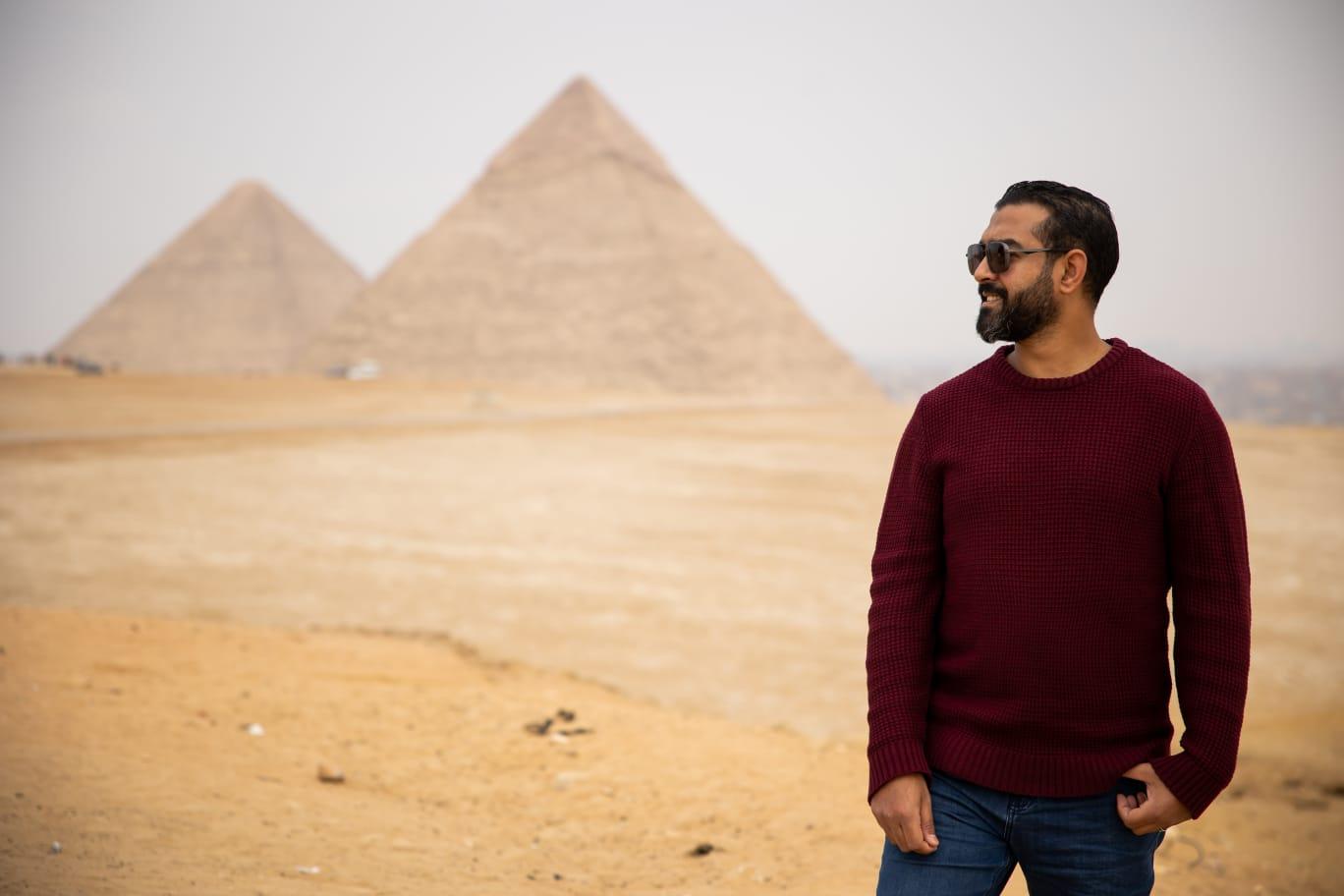
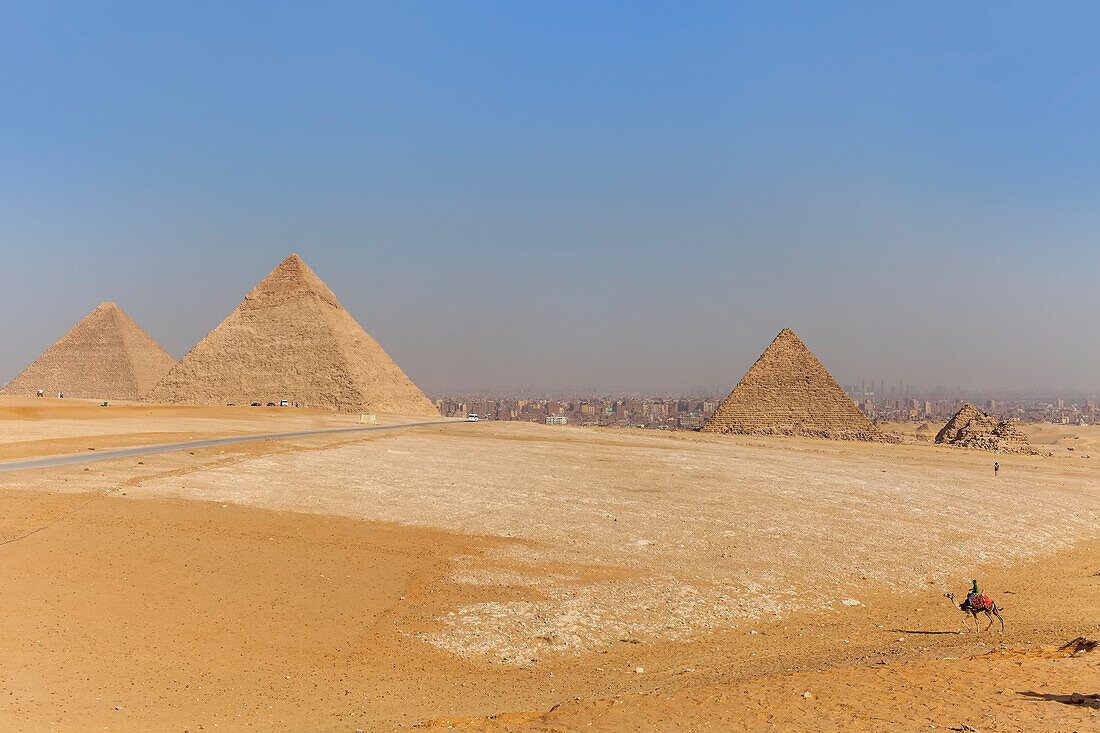
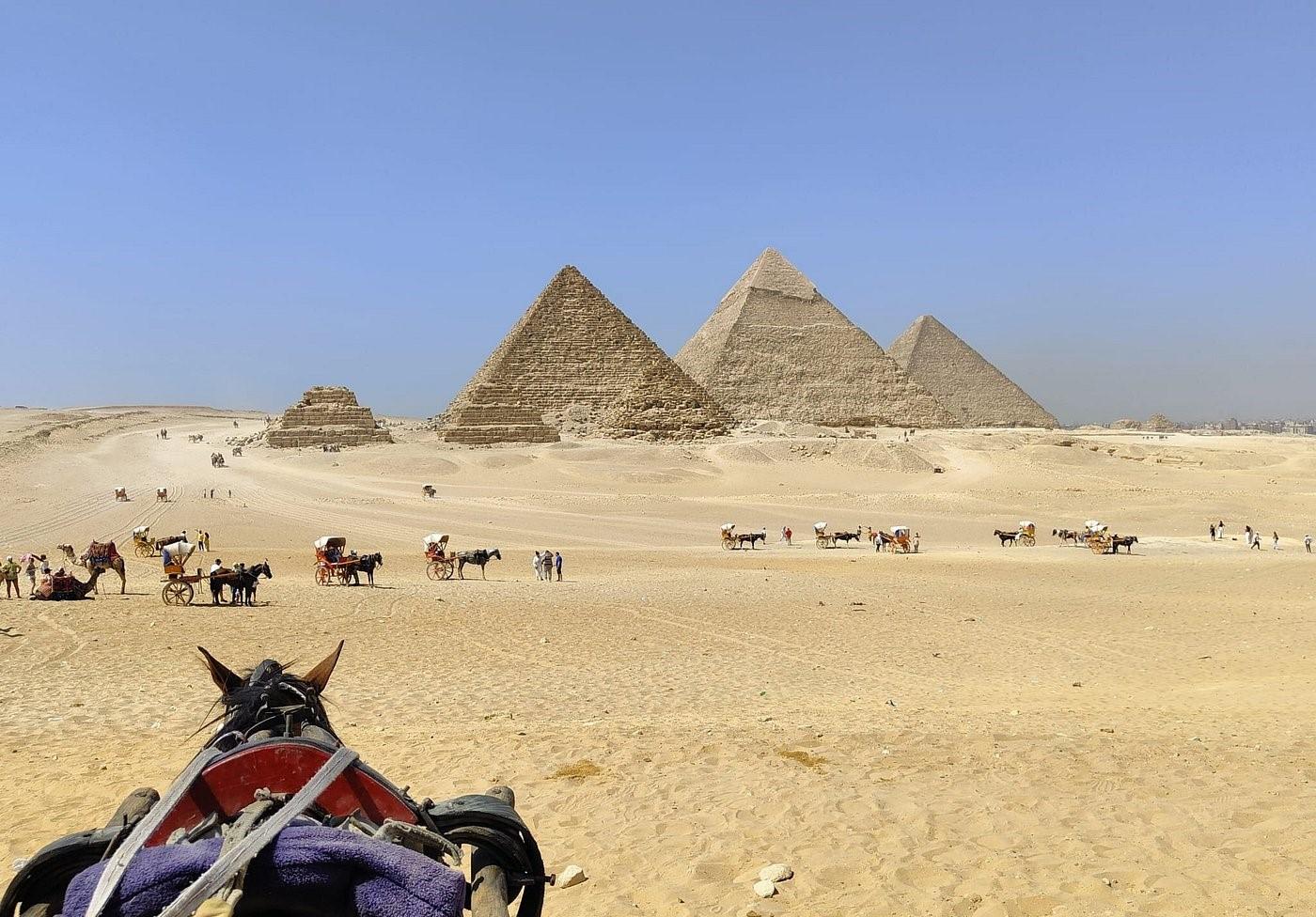
The classic frame with all three Great Pyramids of Khufu, Khafre, and Menkaure lined up in a single shot from an elevated spot at the plateau's southwestern edge. Most hurghada to pyramids day trips build a stop here into the itinerary since it needs no separate ticket beyond general entry. Step back from the crowded rail for a cleaner, less cluttered angle.
A raised platform beside the Great Sphinx Temple that lines up the Sphinx's profile with the Great Pyramid rising behind it, the closest thing Giza has to the postcard combo shot. Stand at the platform's right edge for the classic diagonal composition, then walk down to the open sandy area in front for a straight-on angle.
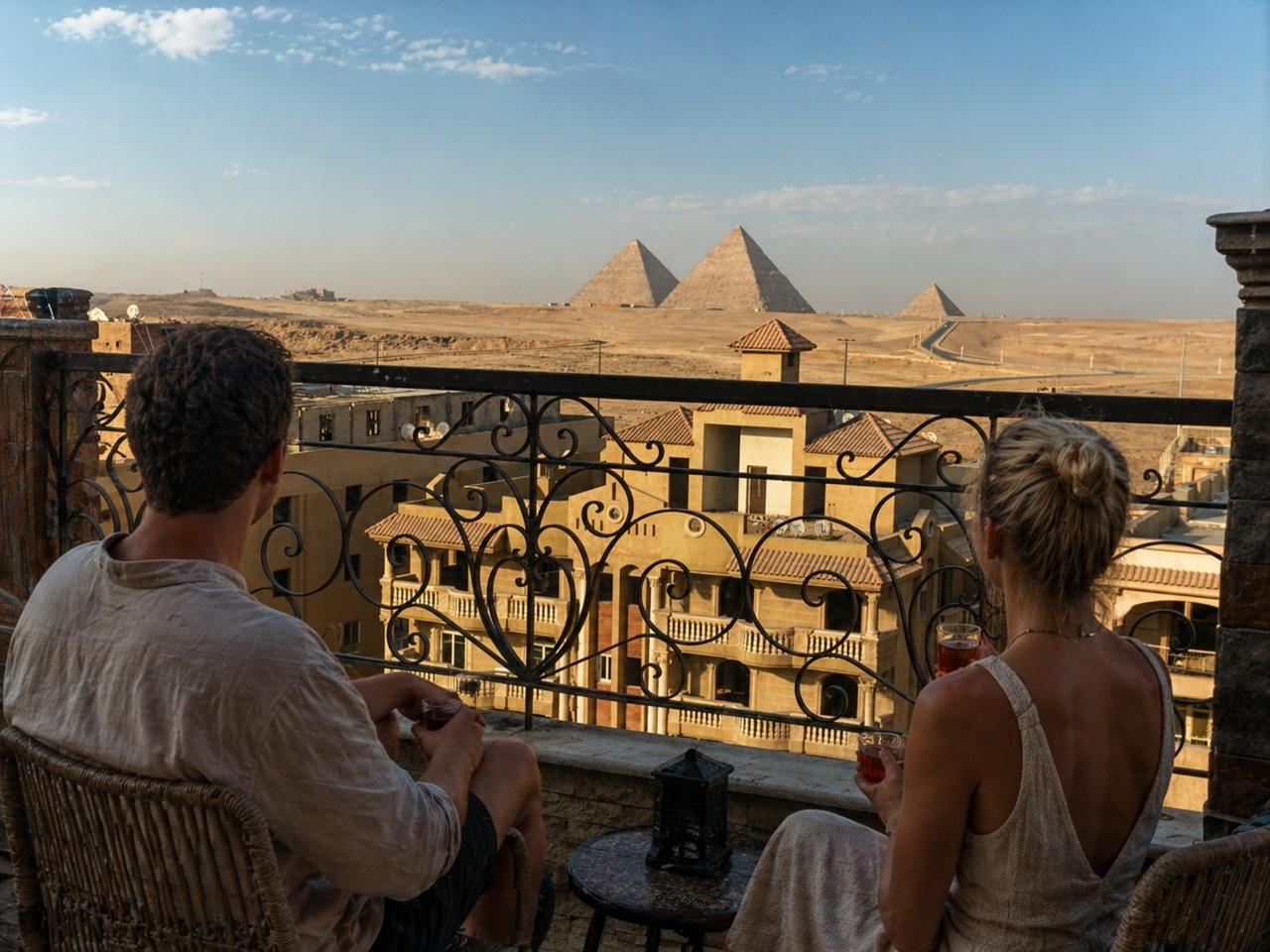
An open-sided restaurant terrace on the plateau's southern side facing all nine structures at once, the three main pyramids and their smaller queens' pyramids, across an uninterrupted stretch of desert. Seating in the outdoor Bedouin-style area gives the widest, least obstructed foreground of sand.
A quieter angle reached by walking a short distance west of the main viewing areas into open dunes, putting soft sand in the foreground instead of parking lots or crowds. Good for photos with no other visitors in frame.
Positioned south of Menkaure's pyramid, using the three small queens' pyramids as foreground layering in front of the main structures for a staggered, deep composition. A short walk from the main plateau road.
A hurghada to pyramids day trip works well with kids, but the Giza plateau is sandy, uneven, and shade-free, so pacing matters more than any single stop. Families who plan around heat and terrain tend to have the smoothest day.
Sandy, rocky ground makes wheeled strollers hard to push across the plateau; a carrier works better for toddlers and infants, especially near the Sphinx viewpoint.
Kids around 5 and up generally cope best with the walking distances and heat; babies and young toddlers are fine if carried rather than pushed.
Break the visit into short 20-30 minute stretches with shade breaks in the coach or ticket-booth area, since there is little natural shade once you're out on the plateau.
Bring more water than you think you need, ideally frozen bottles that thaw through the morning, as vendor-sold drinks on site are marked up and shade is scarce.
Camel and souvenir sellers approach persistently, including near kids; a firm 'no thank you' while continuing to walk works better than stopping to negotiate or explain.
Paid restrooms sit near the Khufu pyramid ticket booth and the Solar Boat Museum gift shop; carry tissues and wipes since baby-change stations are not standard.
Real experiences from real travelers
We booked the hurghada to pyramids tour from our hotel and left around 4am, arriving on the plateau just as the heat was building. Seeing all three pyramids line up in person makes the six-hour road each way feel justified. Bring water and something for your head, the sun is relentless by midday.
The scale of the Great Pyramid does not translate in photos until you are standing at the base blocks. Our guide handled the whole Giza pyramids tour smoothly and kept us moving before the crowds thickened. The Sphinx was smaller than I expected but the setting near Khafre is something else.
The road from the coast is monotonous but the payoff on the Giza plateau is real. We did the hurghada to pyramids run as a day trip and the low morning light over the limestone was beautiful. My only note is the drive back left us exhausted, so plan a quiet evening after.
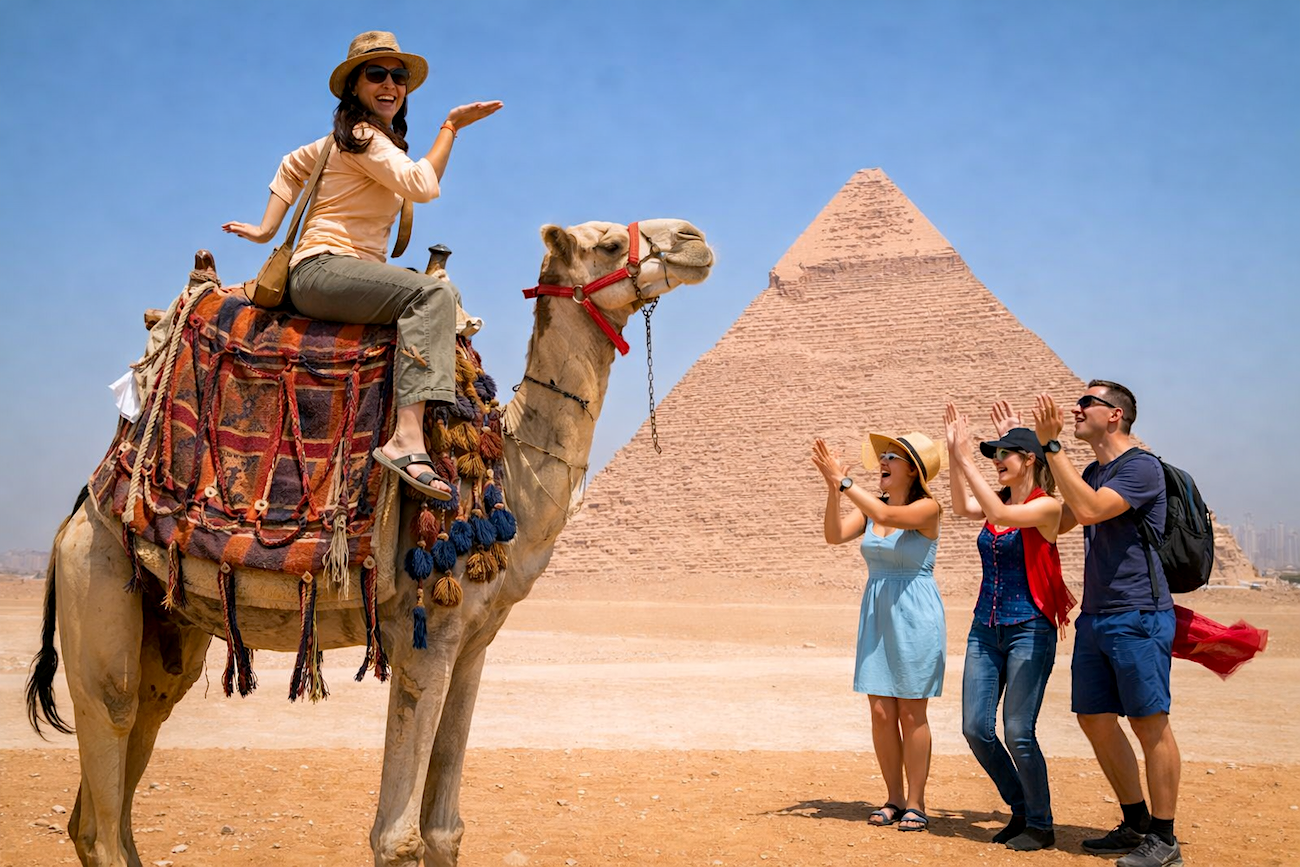
Reaching the desert plateau after crossing the Eastern Desert felt surreal, the Khafre pyramid still holds a cap of its original casing near the top. The guide on our hurghada to pyramids tour arranged a short camel ride at the panorama point where you can frame all three together. Go for one of the well-reviewed hurghada to pyramids tours so the long transfer is comfortable.
We timed our arrival for late afternoon and the honey light on the Sphinx and the causeway was the highlight. The Giza landmarks are busier than any photo suggests, so patience helps. Our driver for the hurghada to pyramids transfer was calm and steady the whole way.
Standing on the Giza plateau with the three pyramids and the Sphinx in one sweep is hard to describe. The desert wind carries fine sand so protect your camera lens. Booking hurghada to pyramids tickets through a proper operator saved us from the chaos at the entrance gates.
The Khufu pyramid dwarfs everyone around it and the Eastern Desert crossing is part of the experience. It is a very full day, we were on the road before dawn and back after dark. If you want the pyramids of Giza without a hotel change, this is the way to do it.
By late morning the limestone almost glows and the outline of Khufu against the sky is unforgettable to stand under. I recommend a skip-the-line Giza entry if your operator offers it because the ticket queue eats into your plateau time. Comfortable shoes matter, the sand and uneven stone are tiring.
We grabbed our hurghada to pyramids tickets the day before and left in darkness, watching the sun rise over the desert on the drive in. The Sphinx enclosure and the panorama viewpoint were the two moments I keep replaying. Bring cash for the camel handlers and small tips.
The pyramids themselves are everything you hope for, especially the causeway view toward Khafre. My honest caution is the round trip from the coast is long and the midday heat on the open plateau is intense. Loved the ancient Giza landmarks, just underestimated how draining the travel would be.
Everything you need to know for your journey
The Giza Plateau is open daily from 07:00 to 17:00, so any hurghada to pyramids day trip needs to account for the roughly 5–6 hour drive or 1-hour flight to arrive within these hours.
Accessibility is limited because the plateau's terrain is natural sand and uneven ancient stone, though paved viewpoints near the entrance allow visitors with mobility challenges to see the pyramids and Sphinx.
Prohibited items include drones without a permit, unapproved tripods, glass bottles, alcohol, and weapons or sharp objects, all screened at the main gate.
Yes, personal photography is free across the outdoor plateau on any hurghada to pyramids tour, though drones and professional filming equipment require separate permits.
Arriving in the 07:00–09:00 window offers the coolest temperatures and smallest tour groups before mid-morning buses arrive, which is especially useful when booking hurghada to pyramids tickets during summer.
Modest clothing covering shoulders and knees is expected for both men and women when visiting the pyramids.
There are no full restaurants inside the plateau, but kiosks near the entrance sell bottled water and snacks, so packing your own water is recommended for the day.
Most travelers reach the plateau via a private car or bus along the desert road from Hurghada, taking 5–6 hours, or by a roughly 1-hour flight to Cairo followed by a short taxi transfer.
Yes, hurghada to pyramids tours are commonly done as family day trips, and children under 6 enter free of charge.
Most operators allow free cancellation 24–48 hours before departure with a refund minus a small processing fee, though the entrance ticket itself is non-refundable once issued.
Many hurghada to pyramids tours combine the Giza Plateau with the Solar Boat Museum, the Egyptian Museum in Cairo, or Saqqara's Step Pyramid for a fuller day of ancient Egyptian sites.
General plateau entry costs 700 EGP per person for foreign adults, covering the Sphinx enclosure, Queens' Pyramids, and the exteriors of all three main pyramids.
A limestone statue with a lion's body and human head guarding the Khafre valley temple approach.
Houses the reconstructed 4,600-year-old funerary boat of Khufu, assembled from over 1,200 wooden pieces.
Granite and limestone temple adjoining the Sphinx enclosure, used in ancient mummification rituals.
A desert overlook offering a wide-angle view of all three pyramids together, popular for group photos.
Three smaller subsidiary pyramids southeast of Khufu's pyramid built for his queens.
Historic hotel directly beside the plateau with rooms overlooking the pyramids.
Cluster of mid-range hotels along Al Haram Street offering pyramid-view rooftops.
Budget guesthouses and hostels near Tahrir Square with easy access to Giza via taxi or metro.
Newer boutique properties in a quieter district west of central Giza.
Join thousands of happy travelers who have discovered this incredible experience
Book Your Experience Now