Tomb of Meresankh III
A rock-cut chapel beneath mastaba G7530-7540 holding some of Giza's best-preserved painted reliefs, showing Meresankh with her mother Hetepheres II amid scenes of baking, brewing, and craftsmen at work.
Entry to the last standing wonder of the ancient world, its guardian Sphinx, and the tombs of the Giza plateau.
The Great Pyramid held the record for the tallest structure made by human hands for nearly four thousand years, until a cathedral spire in Lincoln, England, finally surpassed it in the fourteenth century. That single fact frames the plateau at Giza: a place built to outlast every empire that would later claim it.
The monuments rest on a bedrock shelf above the Nile floodplain, positioned so precisely to the cardinal points that their alignment still unsettles modern surveyors.
What shaped Giza was the ambition of the Fourth Dynasty, when Khufu, Khafre and Menkaure marshalled a nation to raise their tombs from local limestone and finer casing stone barged downriver. The necropolis grew outward in ordered rows — queens' pyramids, boat pits, and the mastabas of the courtiers who hoped to serve their kings in the afterlife. The Sphinx, carved from a single ridge of stone, has watched the desert edge since. Today the plateau is neither ruin nor museum but a living threshold where Cairo's traffic ends and the Sahara begins, and where visitors buy Pyramids of Giza Tickets to cross into deep antiquity.
The attractions fit together as a sequence rather than a checklist. A camel or horse ride carries travellers along the sand ridge for the classic three-pyramid view; a private guided tour threads the tombs and the Valley Temple with context; a quad-bike desert safari trades reverence for open throttle across the dunes behind the site. After dark, the sound and light show throws colour across the stone and narrates the pharaohs' story in the cool desert air. Many arrive on a Cairo half-day trip, while others fold Giza into a wider Saqqara and Memphis loop to trace how pyramid-building evolved.
Giza suits the traveller who wants proof that scale can still astonish. It rewards the history reader, the family with restless children, the photographer chasing golden light, and the day-tripper arriving from the Red Sea coast. A skip-the-line Giza pyramids pass spares the queue at the ticket gate; a straightforward Pyramids of Giza Tickets tour hands the logistics to a guide so the day belongs to the monuments. Whether the visit lasts three hours or a full day, the plateau asks little and returns much — a horizon interrupted by four and a half millennia of stone, and the quiet realisation that the builders meant it to be seen exactly this way. Booking Pyramids of Giza Tickets tickets in advance simply removes the friction between arrival and awe, and a well-chosen Pyramids of Giza Tickets tours package can carry a first-timer from Cairo to the Sphinx and back without a single wrong turn.
“A living threshold where Cairo's traffic ends and the Sahara begins.”
Descend the Grand Gallery into the burial chamber of Khufu, the largest pyramid ever built.
Stand before the limestone lion-bodied guardian carved from a single bedrock outcrop.
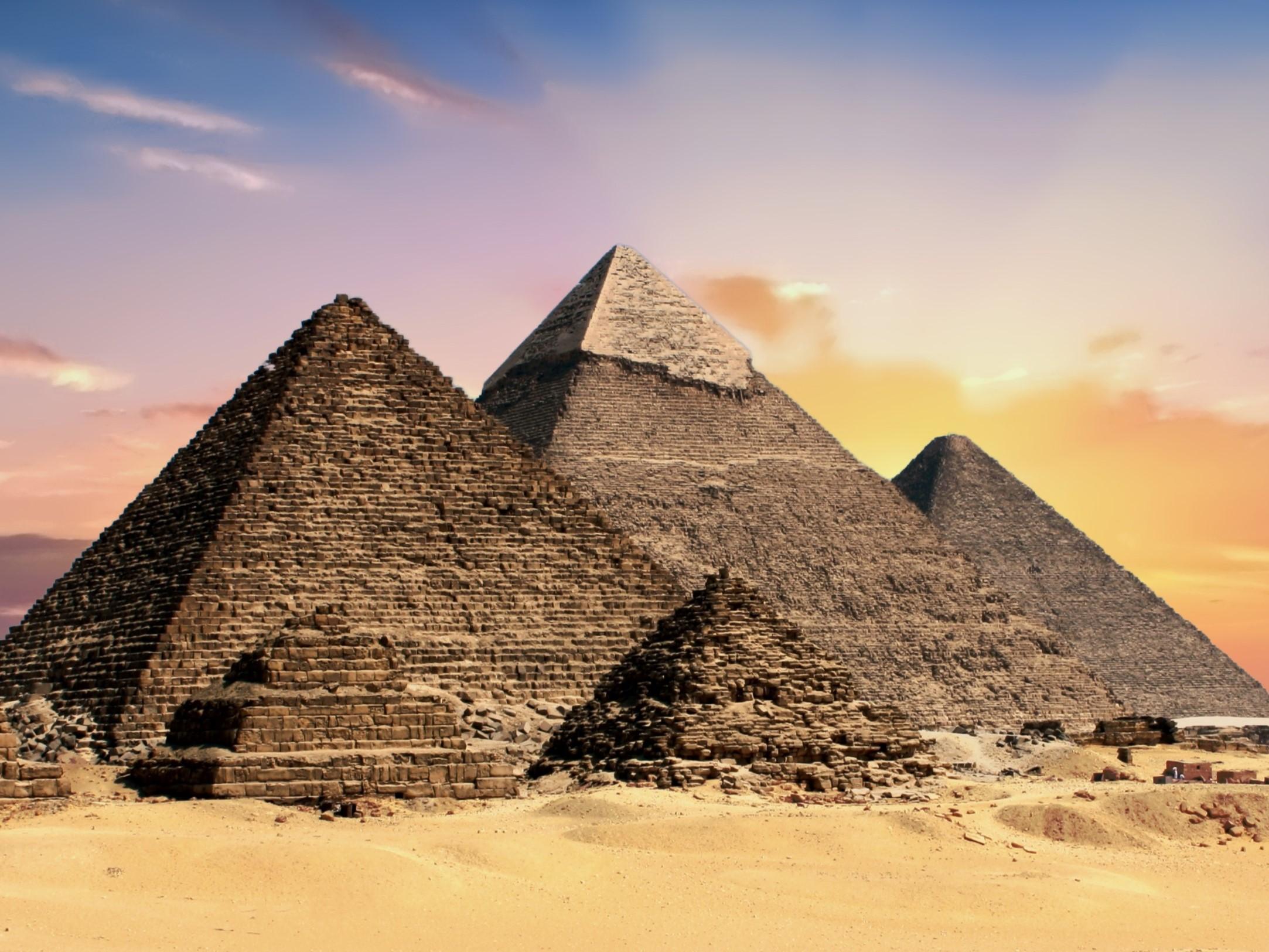
Walk the desert ridge where all three pyramids and the Cairo horizon align in one frame.
The Pyramids of Giza reward visitors who match the plateau to their appetite for adventure. Some ways of seeing it lean cultural and contemplative, others physical, others logistical, threading Giza into a wider Egypt trip from the Red Sea coast. This collection sorts the options by how you want to move through the site and where you're arriving from, so you can pick the experience that fits your pace, party size, and time on the ground rather than defaulting to the obvious.
 Activity
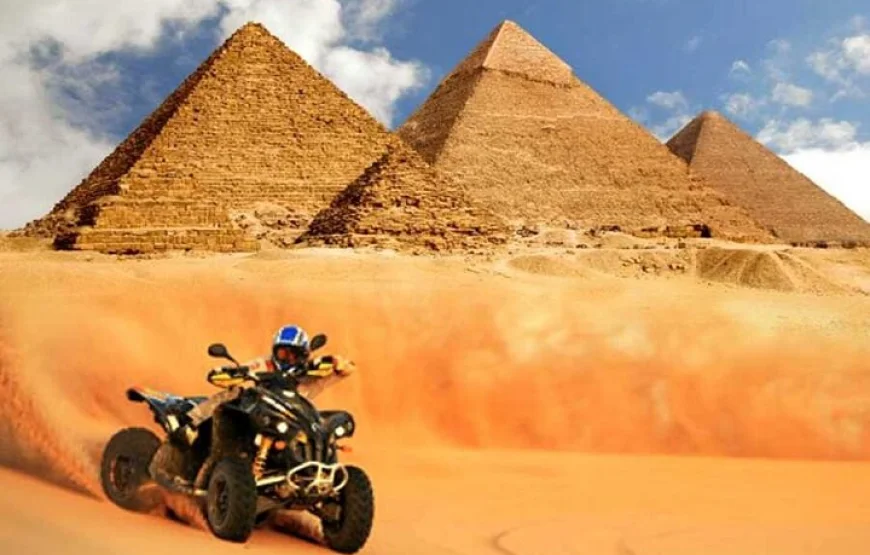
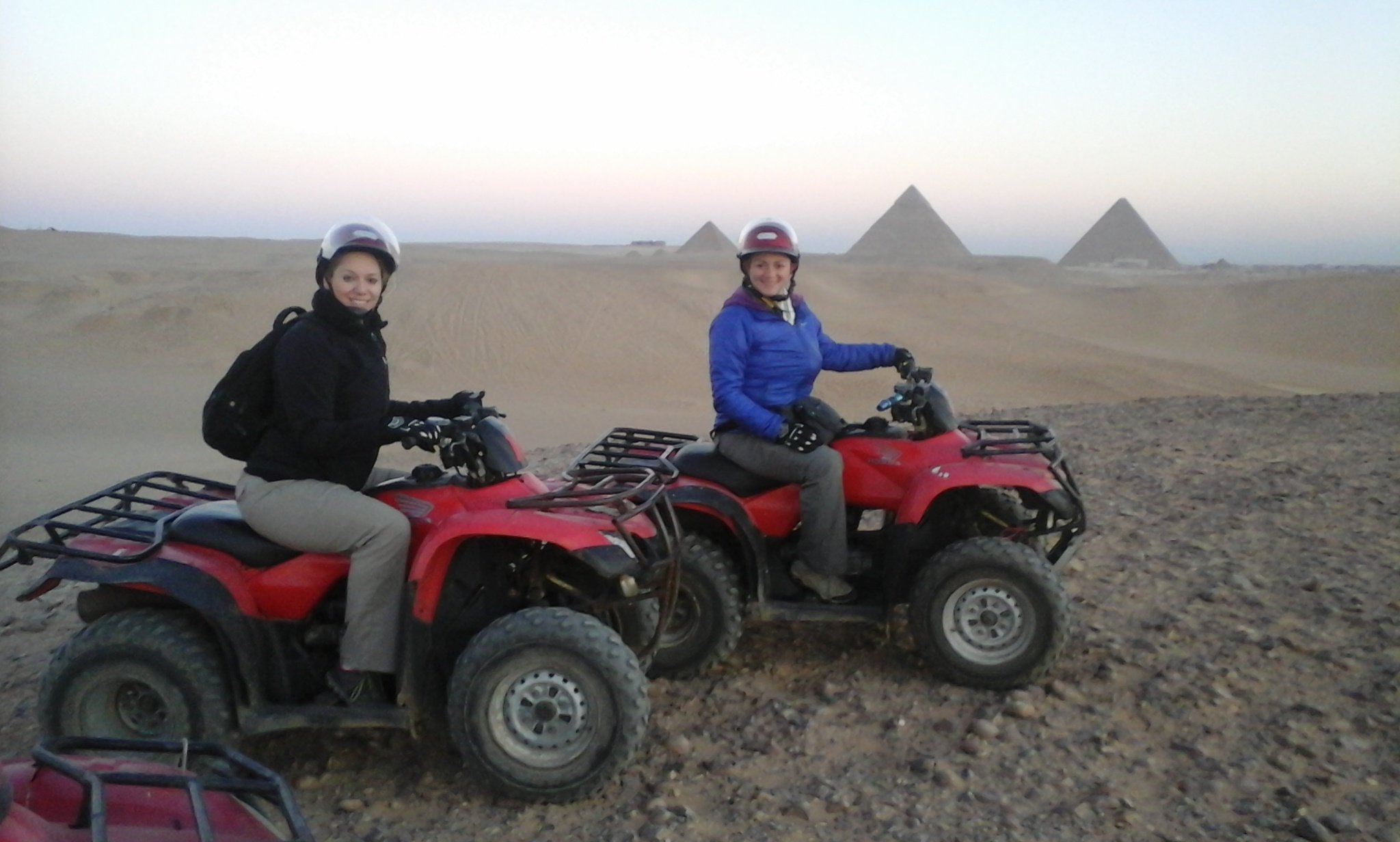
Ride an ATV across the dunes flanking the plateau, covering open desert terrain at speed for a motorized angle on the pyramids from the surrounding sands.
 Activity
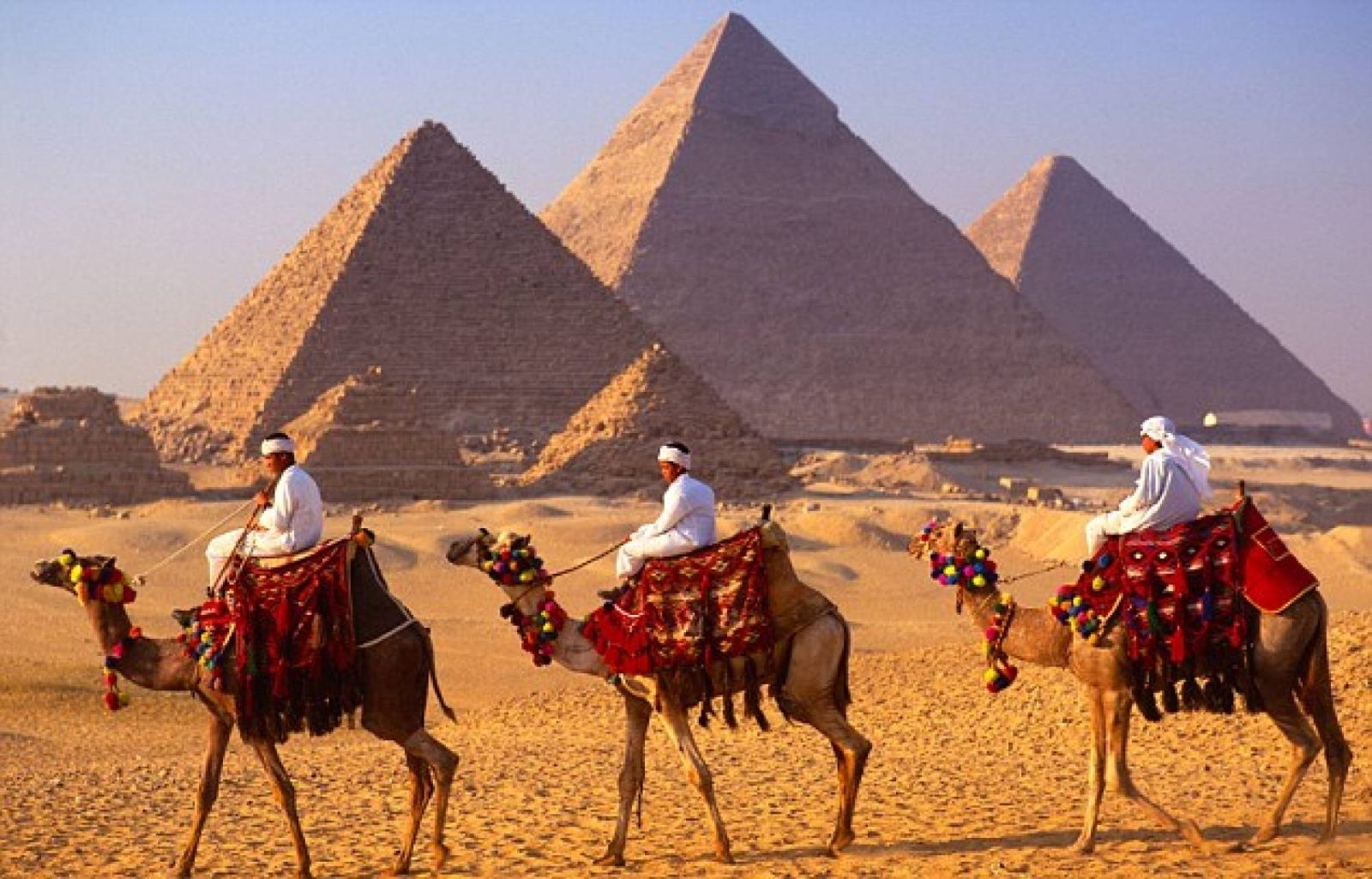
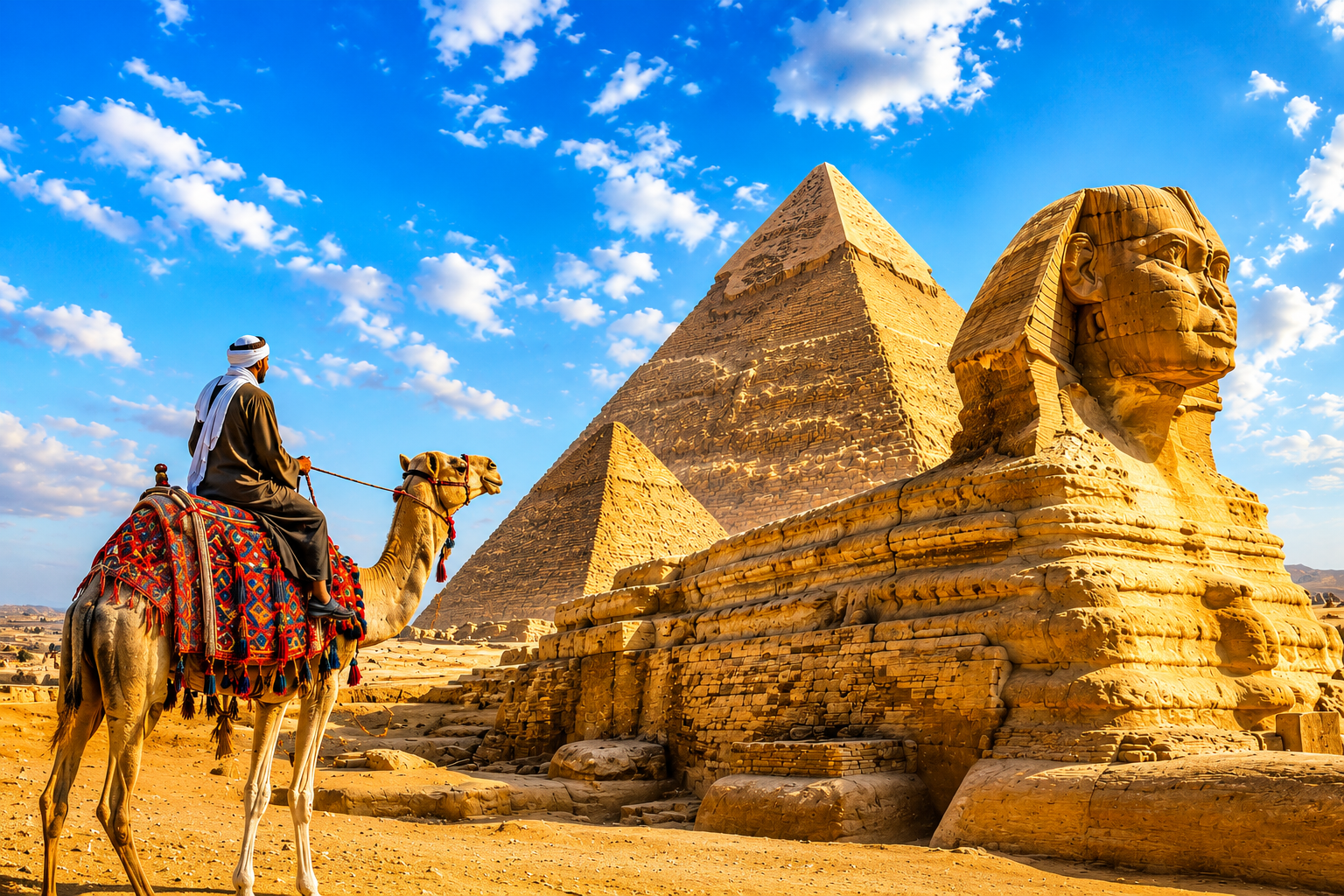
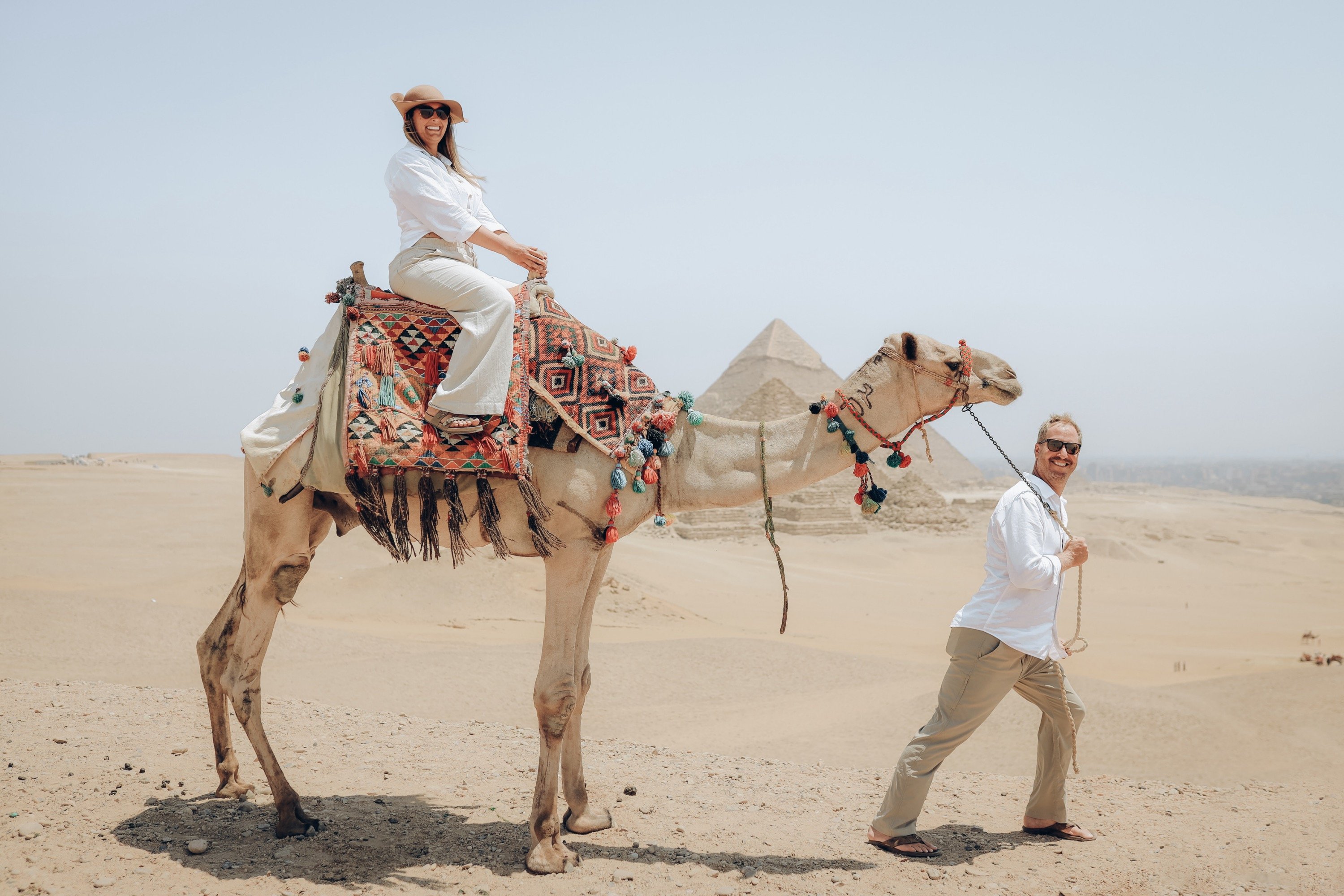
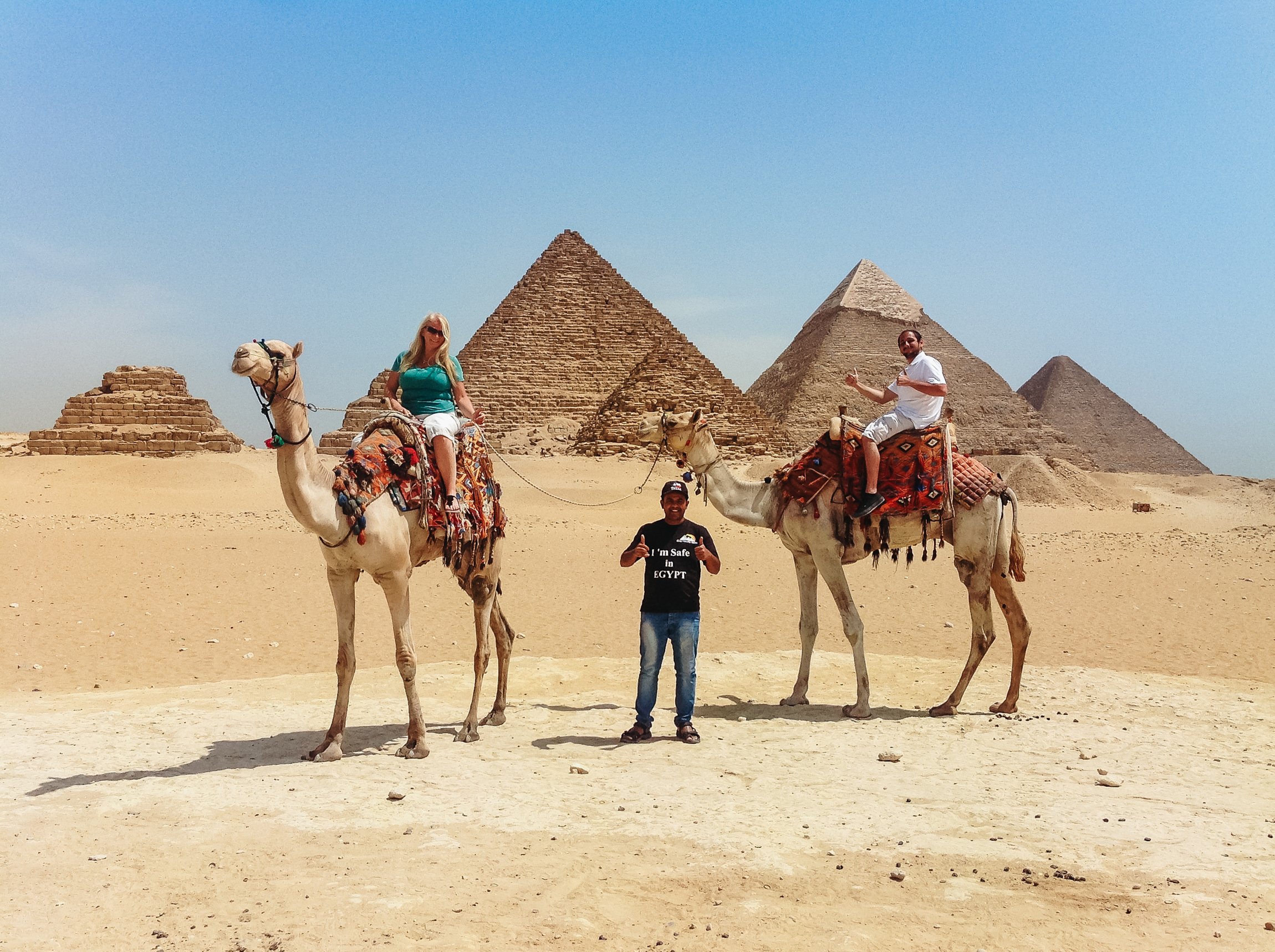
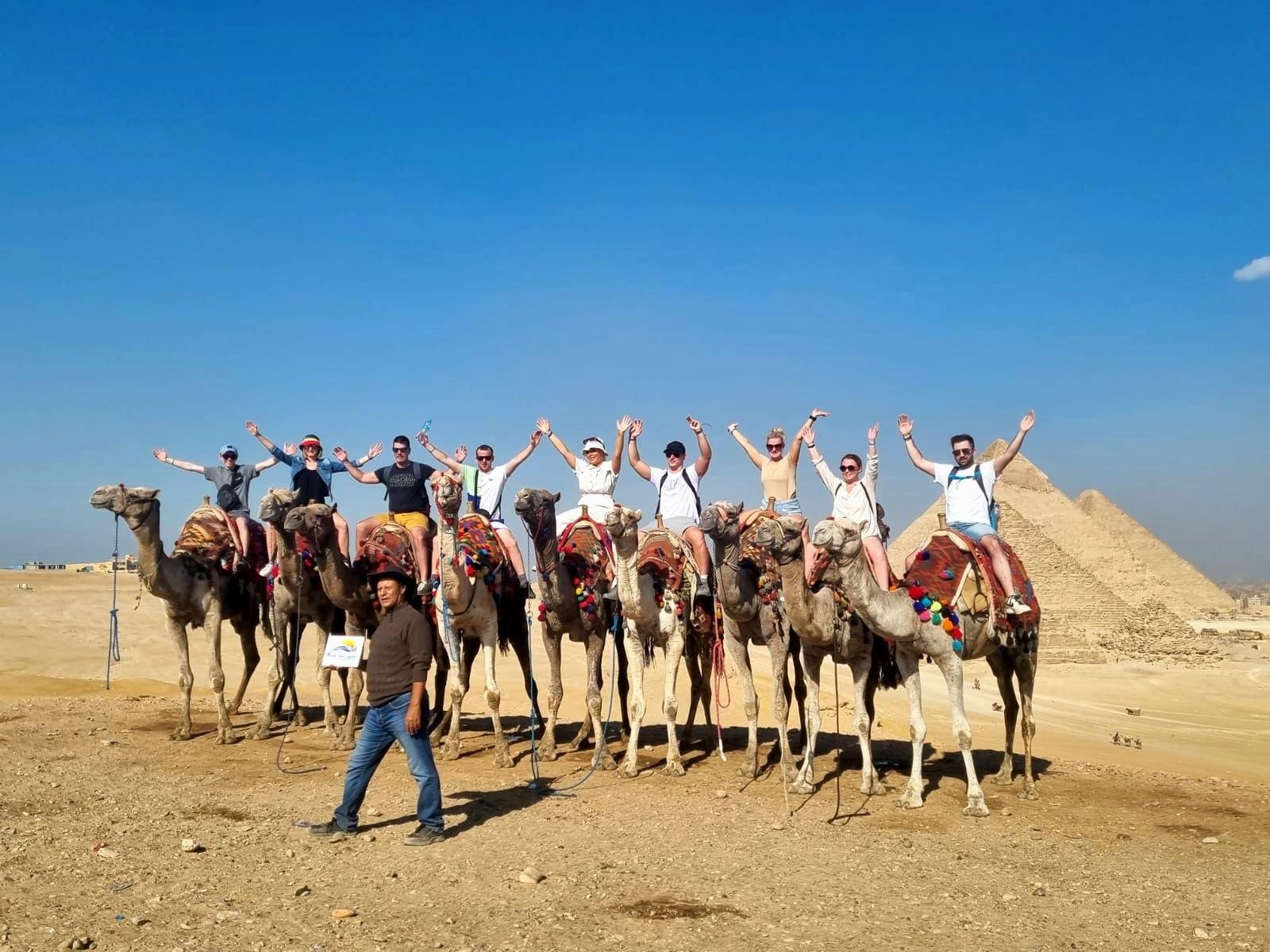
Saddle up for a desert-edge ride circling the pyramids from the sand, reaching the panoramic ridge where all three structures line up beyond the tourist paths.
 Tour
Tour
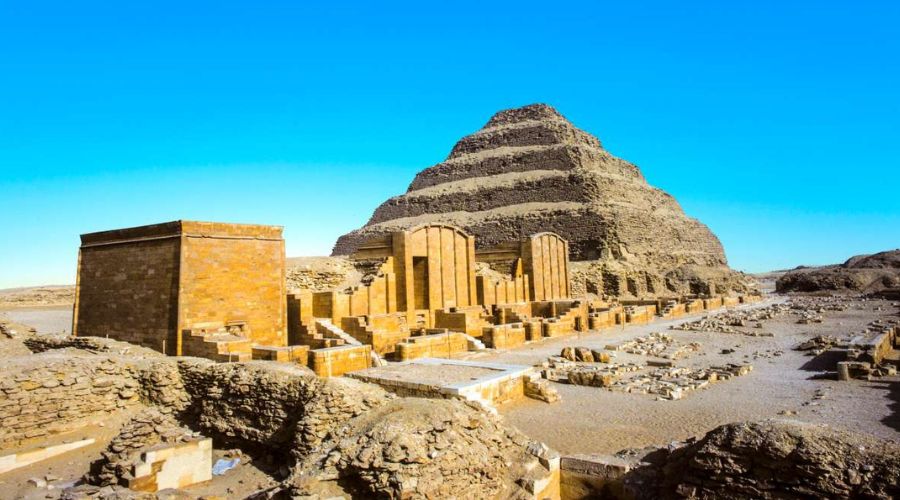
Pairs Giza with Djoser's Step Pyramid at Saqqara and the open-air ruins of Memphis, tracing pyramid-building from its earliest stepped form to Giza's smooth-sided peak.
 Show
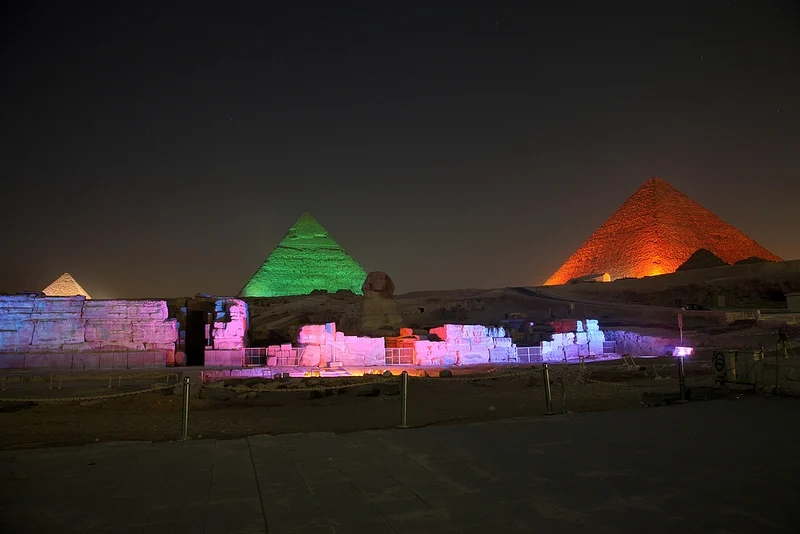
Show
Evening projection show narrated across the pyramids and Sphinx, with colored lighting mapped onto the stone and an audio account voiced from the monuments themselves.
 Half-Day Tour
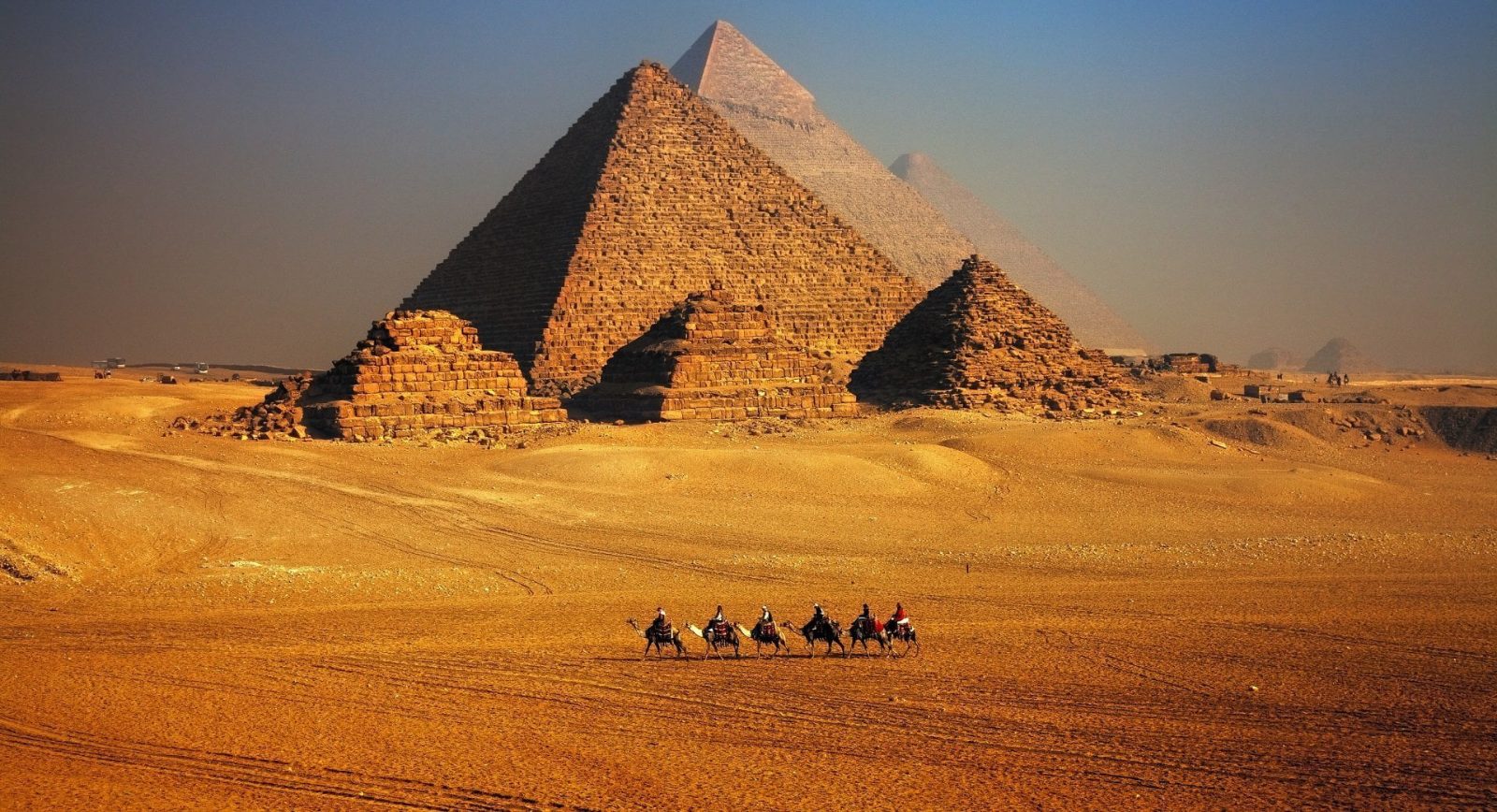
Compact morning or afternoon run from the city to the plateau and Sphinx and back, built for travelers with one free half-day in Cairo.
 Private Tour
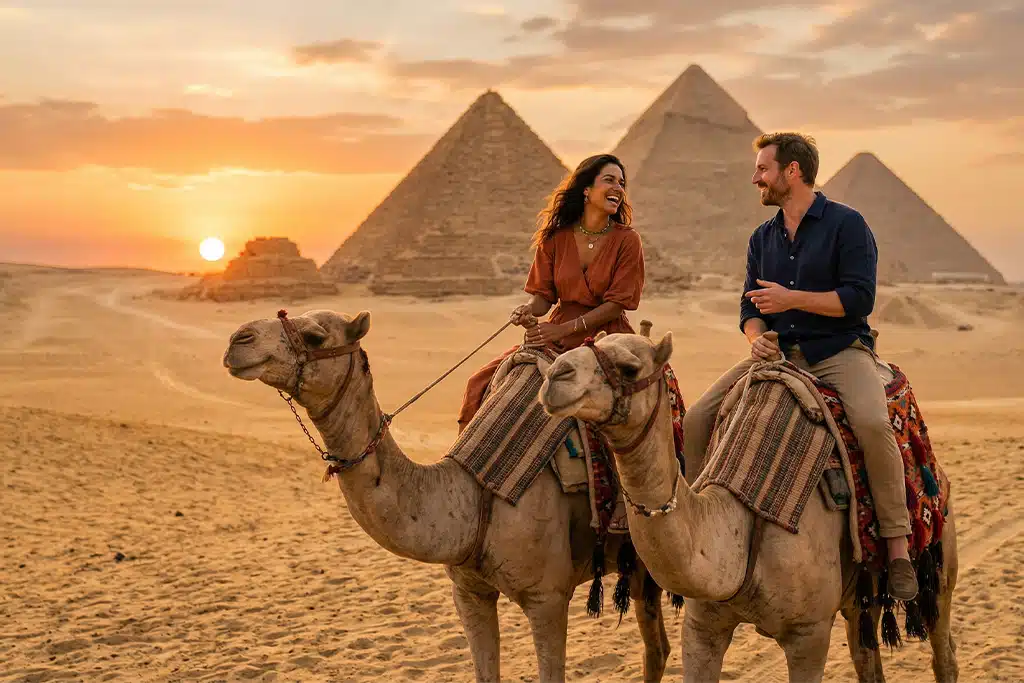
Your own guide and vehicle across the plateau and Sphinx enclosure, with pacing, stops, and interior-entry choices set by your group rather than a fixed coach schedule.
 Day Trip
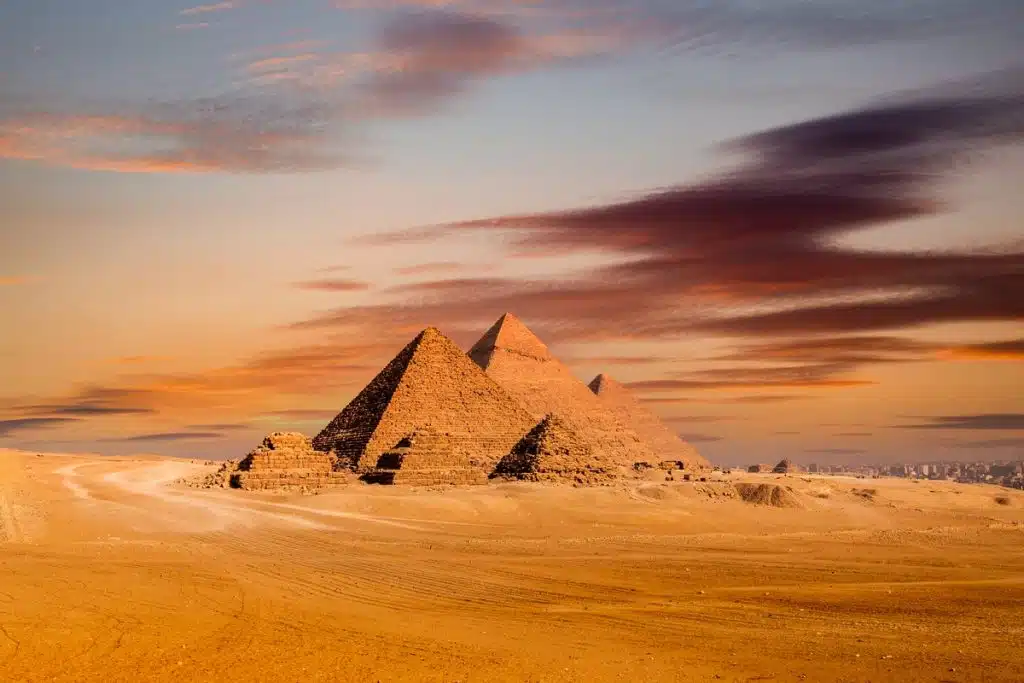
Long-haul day trip or flight-in transfer bringing Red Sea resort guests to the plateau and back, engineered for divers and beach travelers wanting Giza without relocating.
 Day Trip
Full-day journey or flight linking Hurghada's coast to Giza, packaging the long crossing and plateau visit for Red Sea holidaymakers on a single-day loop.
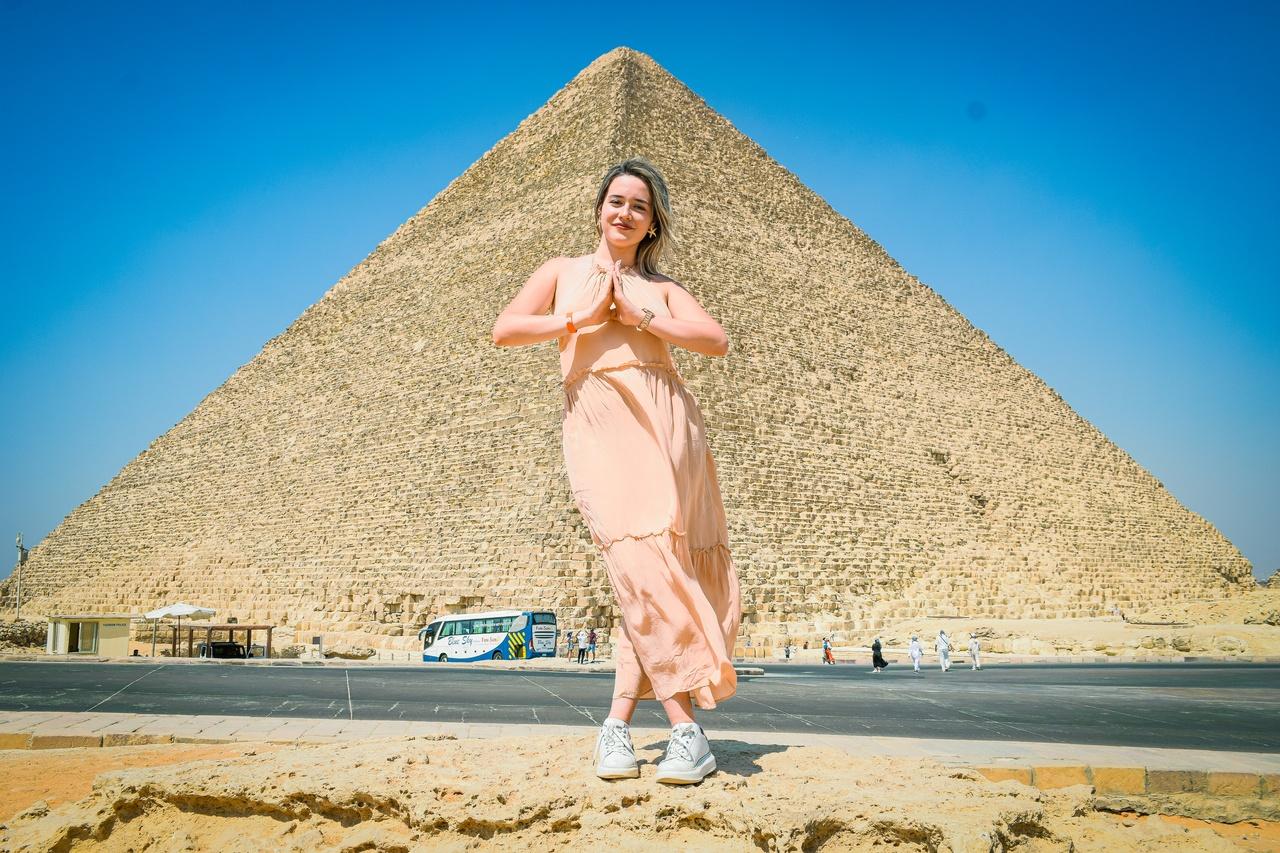
The plateau rewards both a tight half-day visit and a fuller day that stretches into the evening. Below are a plateau-only morning, a full day adding the Solar Boat Museum and an after-dark show, and a two-day version that folds in nearby Saqqara and Memphis.
Enter at the main plateau gate and start with Khufu, allowing about 90 minutes to circle the base and, if you hold an interior ticket, climb the ascending passage. Book a private guide if you want the layout explained on the walk.
View guideWalk south to the second and third pyramids, roughly 45 minutes, ending at the panorama point where all three align. This closes a plateau-only half day.
Descend to the Sphinx enclosure and adjoining Valley Temple, about 40 minutes, then break for lunch at a plateau-edge café. A camel or horse loop across the sand is an optional add here.
View guideVisit the reconstructed cedar barque of Khufu beside the Great Pyramid, around 45 minutes indoors and a good heat escape. Bag storage is required before entry.
Return after dark for the projected show narrated across the monuments, roughly one hour seated. Arrive 30 minutes early to claim a mid-tier seat facing the Sphinx.
View guideDrive south to Saqqara for Djoser's step pyramid and surrounding tomb complex, about two hours on foot. A combined itinerary handles the transfers between the three sites.
View guideContinue to Memphis for the reclining colossus of Ramesses II and the alabaster sphinx, roughly one hour. Pair with a lunch stop before the return leg to the plateau.
View guideCentral Cairo to the Giza plateau is a single connection away, and once inside the site, movement between the three pyramids, the Sphinx, and the main viewpoints is short and manageable on foot, by shuttle, or by camel and horse.
Ride Cairo Metro Line 2 toward Giza; from the terminus you'll need a taxi or microbus for the final stretch to the plateau gate, since the station sits several kilometers short of the entrance.
Uber and Careem are the standard way locals and visitors cover door-to-door trips from downtown hotels straight to the Giza entrance gate, avoiding the metro-plus-transfer routine entirely.
Most Giza-area and downtown hotels arrange a private car or minivan directly to the plateau, useful for early entry before the gates get busy.
On the plateau itself, the distance between the Great Pyramid, Khafre's pyramid, Menkaure's pyramid, and the Sphinx enclosure is walkable, though the terrain is sandy and open with little shade.
Licensed handlers near the ticket gates offer camel or horse transfer between the pyramids and the panoramic viewpoint road; agree on the route and price with the handler before mounting.
From the airport: From Cairo International Airport (CAI), the practical option is an Uber or Careem straight to central Cairo or the Giza plateau, taking 45-60 minutes and costing EGP 150-250.
The Cairo Pass is a real, government-issued combo pass covering unlimited entry to Cairo, Giza, Saqqara, and Dahshur sites over five days. It suits travelers hitting multiple archaeological sites beyond just the Giza plateau, not single-day Pyramids visitors.
| Cairo Pass 5-day multi-site pass |
Top pick Individual tickets Pay per site |
|
|---|---|---|
| Price | $130 USD per adult ($65 USD for students) | Sum of each site's entry fee, paid separately in EGP |
| What's included | Unlimited entry to Giza Plateau, Saqqara, Dahshur, Mit Rahina, plus Islamic and Coptic sites in Cairo; excludes the Grand Egyptian Museum (GEM) | Only the specific site and ticket tier purchased, no bundling across locations |
| Transit included? | No, pass covers admission only, transit between plateau and other sites is separate | No, same as pass, transit paid separately |
| Break-even point | Visitors planning to enter 5 or more paid sites across Cairo, Giza, Saqqara, and Dahshur within the 5-day window | Better value for visitors seeing only the Giza Plateau or one or two additional sites |
| Best for | Multi-day Cairo itineraries covering several archaeological zones beyond Giza | One or two-day visits focused mainly on the Pyramids and Sphinx |
Verdict: Buy the Cairo Pass only if your itinerary covers five or more paid sites across Cairo, Giza, Saqqara, and Dahshur within five days; otherwise individual tickets cost less for a Giza-only visit.
Giza is inexpensive by regional standards, but interior pyramid access and animal or vehicle add-ons can double or triple a base visit if booked at the gate rather than planned in advance.
Daily budget: A realistic day covering entry, one interior ticket, meals, and rideshare transport runs roughly EGP 2,000-2,800 ($40-56) per person on a budget plan, or EGP 3,500-5,000 ($70-100) mid-range once a camel ride or private guide is added.
Standard admission to the Giza Plateau already covers a handful of Old Kingdom tombs that most visitors walk past on their way to the pyramids themselves. These sit within the Eastern and Western Cemeteries flanking the Great Pyramid and rarely draw a crowd.
A rock-cut chapel beneath mastaba G7530-7540 holding some of Giza's best-preserved painted reliefs, showing Meresankh with her mother Hetepheres II amid scenes of baking, brewing, and craftsmen at work.
A multi-room mastaba (G7101) just east of Queen Hetepheres' pyramid, unsigned and easy to miss, with carved pillars and a funerary boat procession from Qar's career as a 6th Dynasty official.
Sitting beside Qar's tomb and possibly belonging to his son, this smaller chapel shares the same quiet corner of the cemetery and rewards visitors who linger after seeing its larger neighbor.
Rows of Old Kingdom tombs belonging to nobles and officials, spread across a grid of streets west of the Great Pyramid, with sightlines back toward both Khufu's and Khafre's pyramids; several chapels are open on rotation.
Belonging to a prince and vizier under Khufu and Khafre, this recently restored chapel is part of a small cluster of newly opened tombs south of the queens' pyramid row.
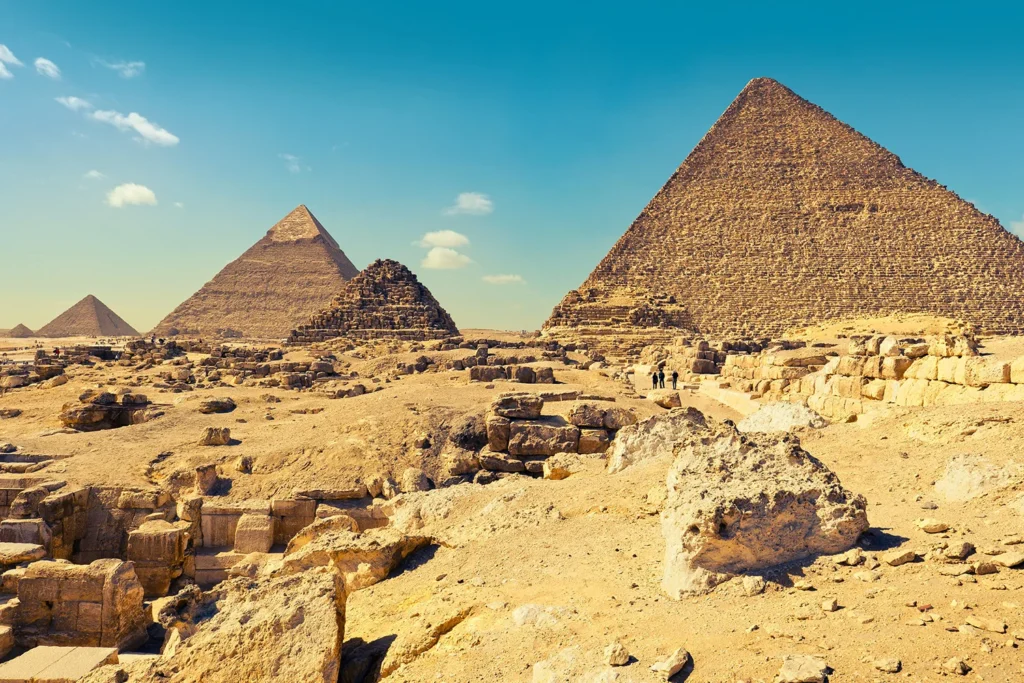
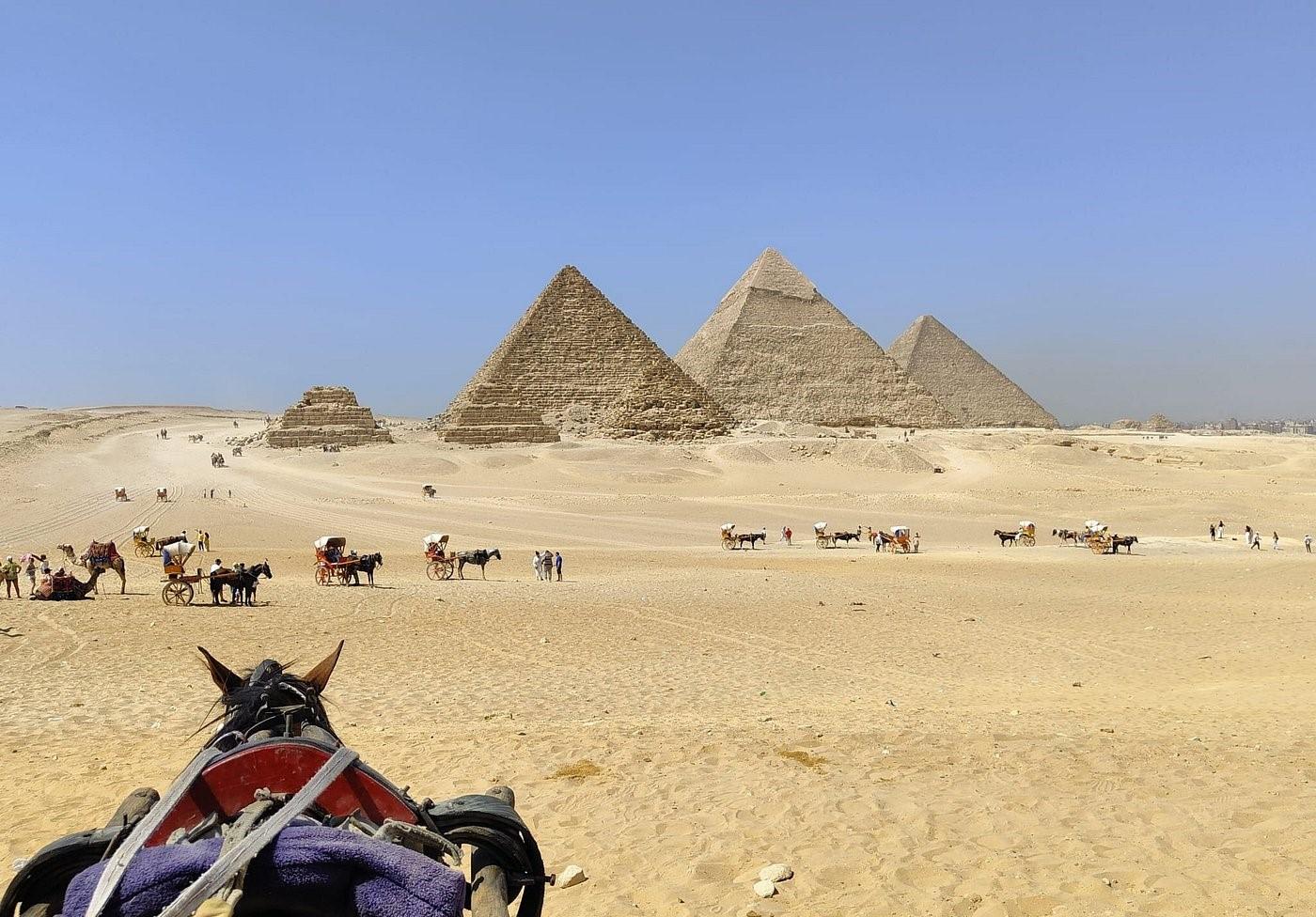
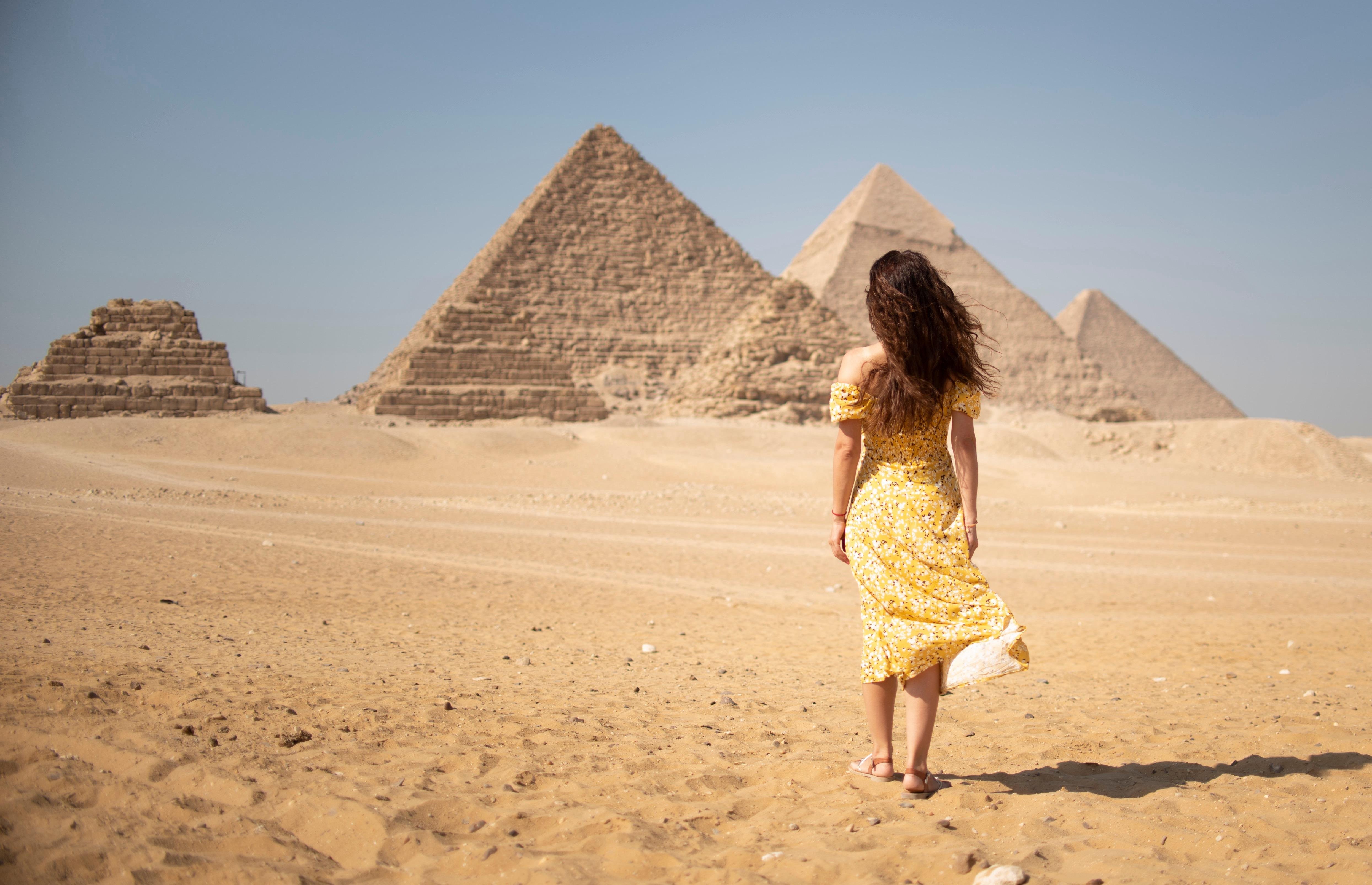
The elevated ridge behind the plateau lines up the Great Pyramid of Khufu, Pyramid of Khafre, and Pyramid of Menkaure in a single frame, the classic three-pyramid wide shot.
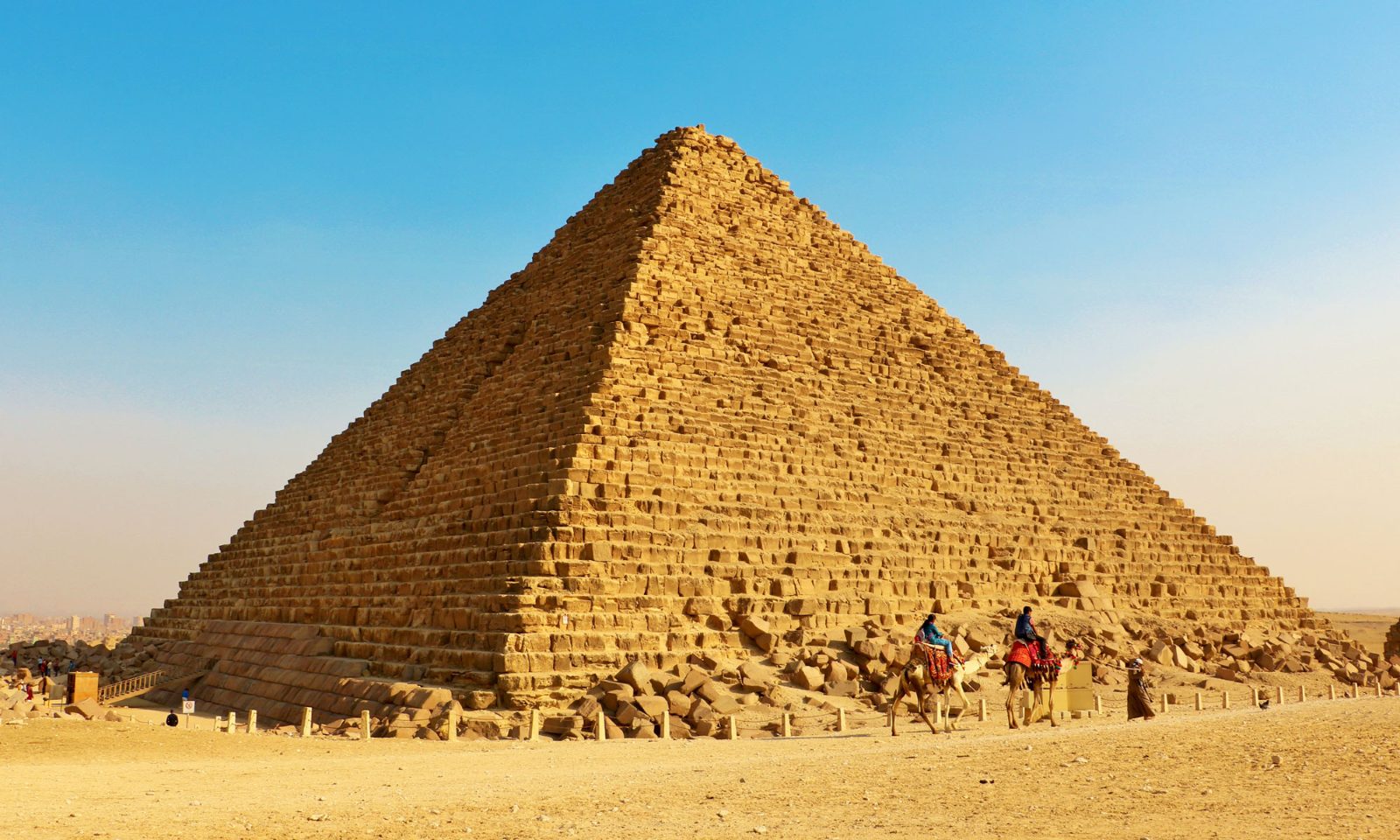
A quieter angle from the open sand beyond the Pyramid of Menkaure, looking back across the plateau for a composition with fewer people in frame and more empty desert.
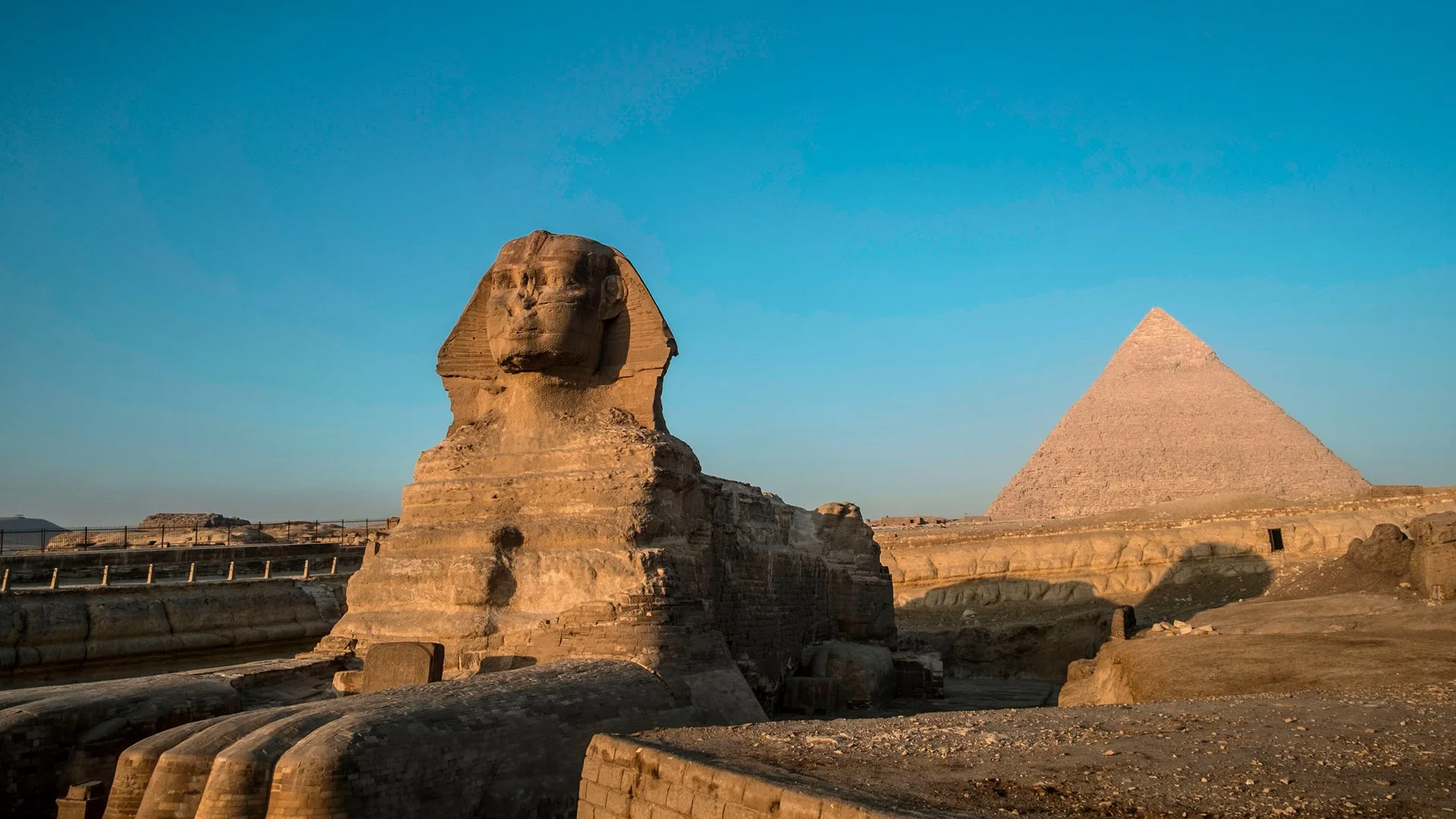
The platform beside the Sphinx frames its profile with the pyramids stacked behind, the standard forced-perspective and close-up angle.
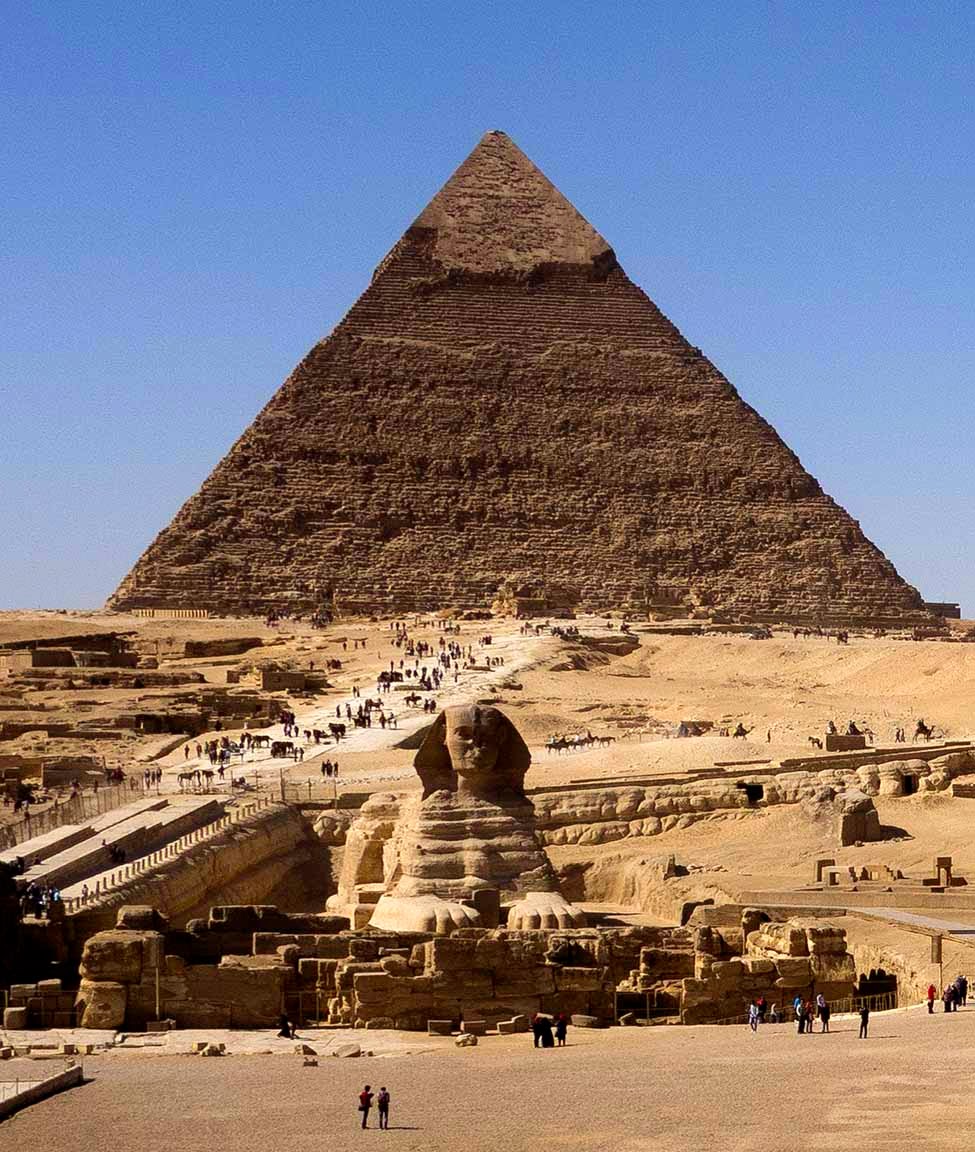
The open sandy area facing the Sphinx gives room to shoot the monument and pyramids together in one wide composition.
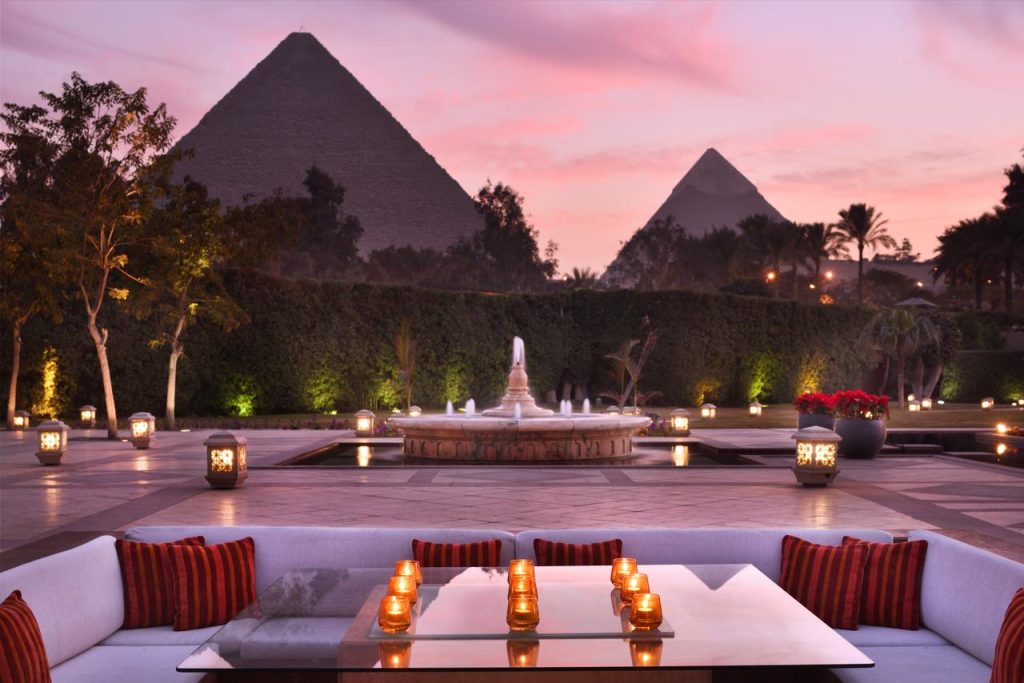
From the historic hotel's garden stairway and small bridge near Al Haram, the pyramids appear centered above manicured lawns; open to non-guests for photos.
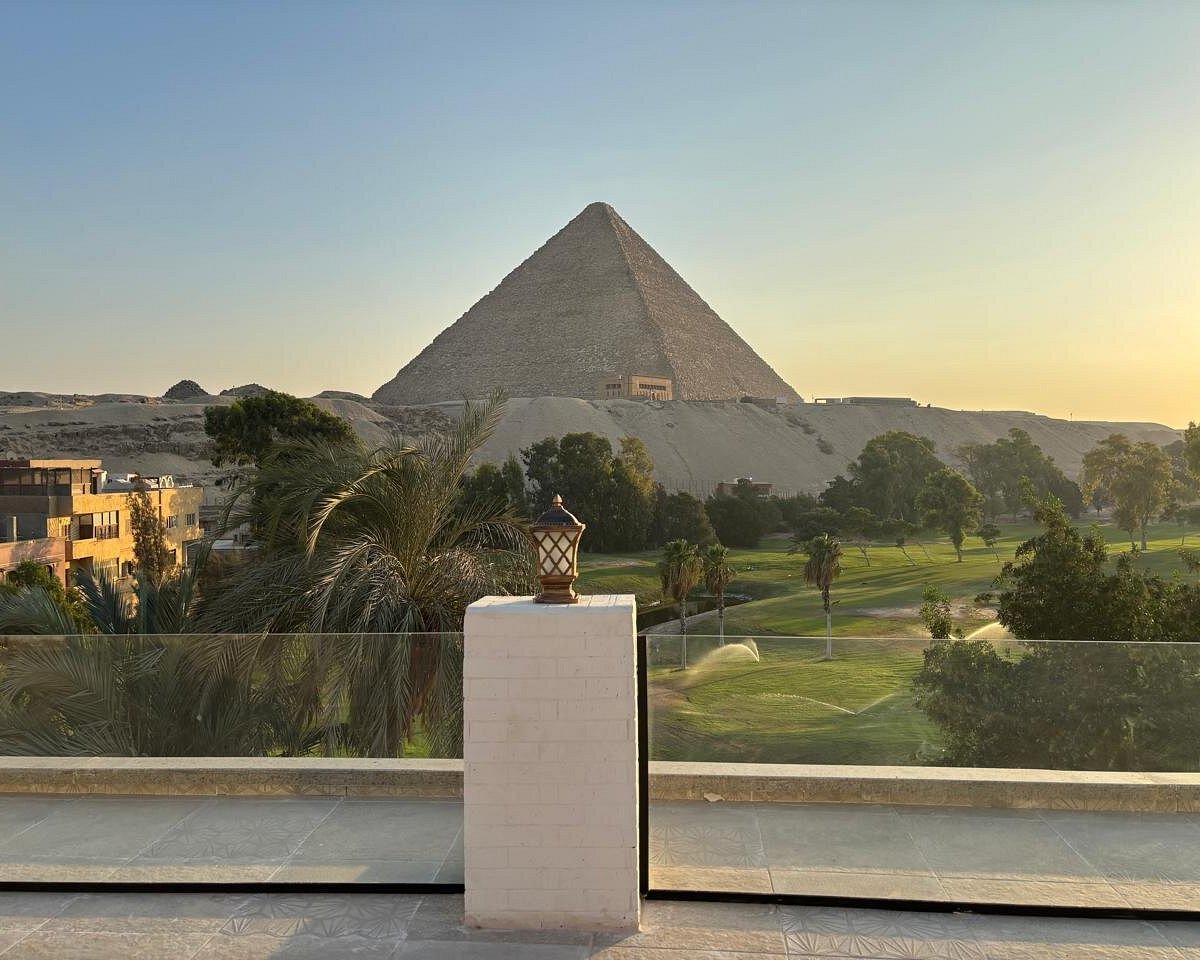
Rooftop restaurants and cafes in this village at the plateau's edge frame the pyramids above the rooflines of the local street.
The Fourth Dynasty raised Giza in barely three generations. Around 2589 BCE, Khufu began the Great Pyramid, a monument of roughly 2.3 million limestone blocks rising 146 metres. His architect Hemiunu oversaw quarrying, ramps, and a workforce housed in a nearby settlement, not enslaved masses. Curious visitors buying Pyramids of Giza Tickets stand before the last surviving wonder of the ancient world. Khufu's son Khafre followed around 2558 BCE. His pyramid appears taller only because it sits on higher bedrock; its cap still holds patches of the original Tura limestone casing. Khafre's complex included the Great Sphinx, carved from a single limestone outcrop. Debate persists over its origins. Egyptologists date the Sphinx to Khafre's reign; a minority argue that water erosion on its enclosure implies an older creation. Restoration began under Thutmose IV around 1401 BCE, commemorated by the Dream Stele between its paws. A skip-the-line Pyramids of Giza tour today traces this Fourth Dynasty arc across the necropolis. Menkaure closed the trio around 2532 BCE with a smaller pyramid faced in red Aswan granite, left unfinished at his death. Together the mastaba fields, causeways, and valley temples form one funerary landscape. Many arrive on Pyramids of Giza Tickets tours to weigh the Sphinx theories firsthand. The plateau earned UNESCO World Heritage listing in 1979. Visitors holding Pyramids of Giza Tickets tickets still see Khafre's granite valley temple, Menkaure's granite courses, and the eroded Sphinx enclosure that fuels the debate.
Khufu begins the Great Pyramid, eventually 146 metres tall.
Khafre raises the second pyramid and commissions the Great Sphinx.
Menkaure builds the smallest pyramid, faced in Aswan granite, unfinished at his death.
Thutmose IV restores the Sphinx and erects the Dream Stele between its paws.
UNESCO inscribes the Giza necropolis as a World Heritage Site.
Everything you need to know about visiting Pyramids of Giza Tickets
One focused day is enough to cover the plateau highlights, but travelers who want a slower pace often add a second day for nearby sites in Cairo. Booking Pyramids of Giza Tickets in advance for a single well-planned morning is usually the most efficient approach for first-time visitors. Those who also want time for other things to do in Pyramids of Giza, like the Solar Boat Museum, should budget extra hours rather than a full extra day.
October through April is the peak season, since cooler weather makes the outdoor plateau touring far more comfortable than the summer months. Early morning slots are popular no matter the month, since Egypt's desert sun climbs fast even in the cooler season. Shoulder months just before or after peak still offer manageable conditions for anyone booking Pyramids of Giza Tickets outside the busiest weeks.
From Cairo International Airport (CAI), the simplest option is an Uber or Careem rideshare, which takes roughly 45 to 60 minutes and costs around EGP 150-250 depending on traffic and time of day. This is generally more predictable than negotiating a taxi fare curbside. Many visitors arrange this transfer the same day they plan to use their Pyramids of Giza Tickets, so it's worth checking traffic conditions before heading out.
Cairo Metro Line 2 connects toward Giza and pairs well with a short taxi or microbus for the final stretch to the plateau. A single metro ride runs EGP 5-10, with an additional EGP 40-60 for the taxi connection onward. This combination keeps costs low for anyone touring beyond just the pyramids of giza tour itself.
Giza doesn't have to be expensive if you plan ahead. A mid-range meal typically runs EGP 250-400, a coffee EGP 60-90, and a local tea or karkade EGP 40-60. Taxis charge roughly EGP 3.5-7 per kilometer with a base fare around EGP 10, so getting around the city stays reasonably affordable outside of major purchases like Pyramids of Giza Tickets themselves.
Combo passes and city cards can reduce per-site costs for travelers planning to see several Cairo landmarks beyond skip-the-line Pyramids of Giza Tickets. Whether a pass pays off depends on how many paid sites are on the itinerary. It's worth comparing the bundled price against buying entries separately before deciding.
The Giza Plateau is a heavily visited, well-patrolled tourist area, and most visits pass without incident when normal travel precautions are followed. Persistent vendors and unofficial guides near the entrance are the most common nuisance rather than any serious safety concern. Sticking to official ticket booths and licensed guides makes for a smoother visit.
Tipping, known locally as baksheesh, is customary for guides, drivers, and site staff, even for small services like pointing out a photo angle. Small denominations of Egyptian pounds are appreciated and expected in many everyday interactions. Modest, respectful dress is also appreciated when moving around the plateau and surrounding area.
Families find the plateau manageable, though the open desert terrain means sun protection, water, and comfortable shoes matter more than for a typical city landmark. Camel and horse touts can be persistent, so agreeing on any activity and price beforehand helps avoid surprises. Kids generally enjoy the scale of the monuments, making it one of the more memorable things to do in Pyramids of Giza with a family.
Giza is famous as the site of the last surviving wonder of the ancient world, the Great Pyramid, along with its two companion pyramids and the Great Sphinx. The plateau represents one of the most recognizable displays of Old Kingdom engineering anywhere on earth. It remains the centerpiece of any Cairo landmarks itinerary and the reason most visitors seek out Pyramids of Giza Tickets in the first place.
Choose from amazing attractions and create unforgettable memories in this beautiful city
View All Attractions