English| EUR
Book Now
Open today · hours_today

Giza Pyramids Camel Ride

Giza Pyramids Camel Ride — Desert Routes Past Khufu & the Sphinx

Sand under hoof at dawn, three tombs against the sky.

159K+ travelers chose this
Free Cancellation
Right now: attendance advisory open
2-3 hours recommended
1 Languages
Up to 12 riders
Free Cancellation
Free cancellation Instant confirmation Mobile voucher Verified partner Skip-the-line
Choose your ticket

Ticket options at a glance

Compare fares, pick the fit — all bookings are mobile-voucher and eligible for free cancellation where shown.

Giza Sunrise or Morning Tour: Camel Ride, Breakfast & Pyramids 5 hr
Standard Entry

Giza Sunrise or Morning Tour: Camel Ride, Breakfast & Pyramids

4.7 (857)
€53
  • Entry ticket
  • Mobile voucher
  • Valid same day
  • Free cancellation
Book this ticket
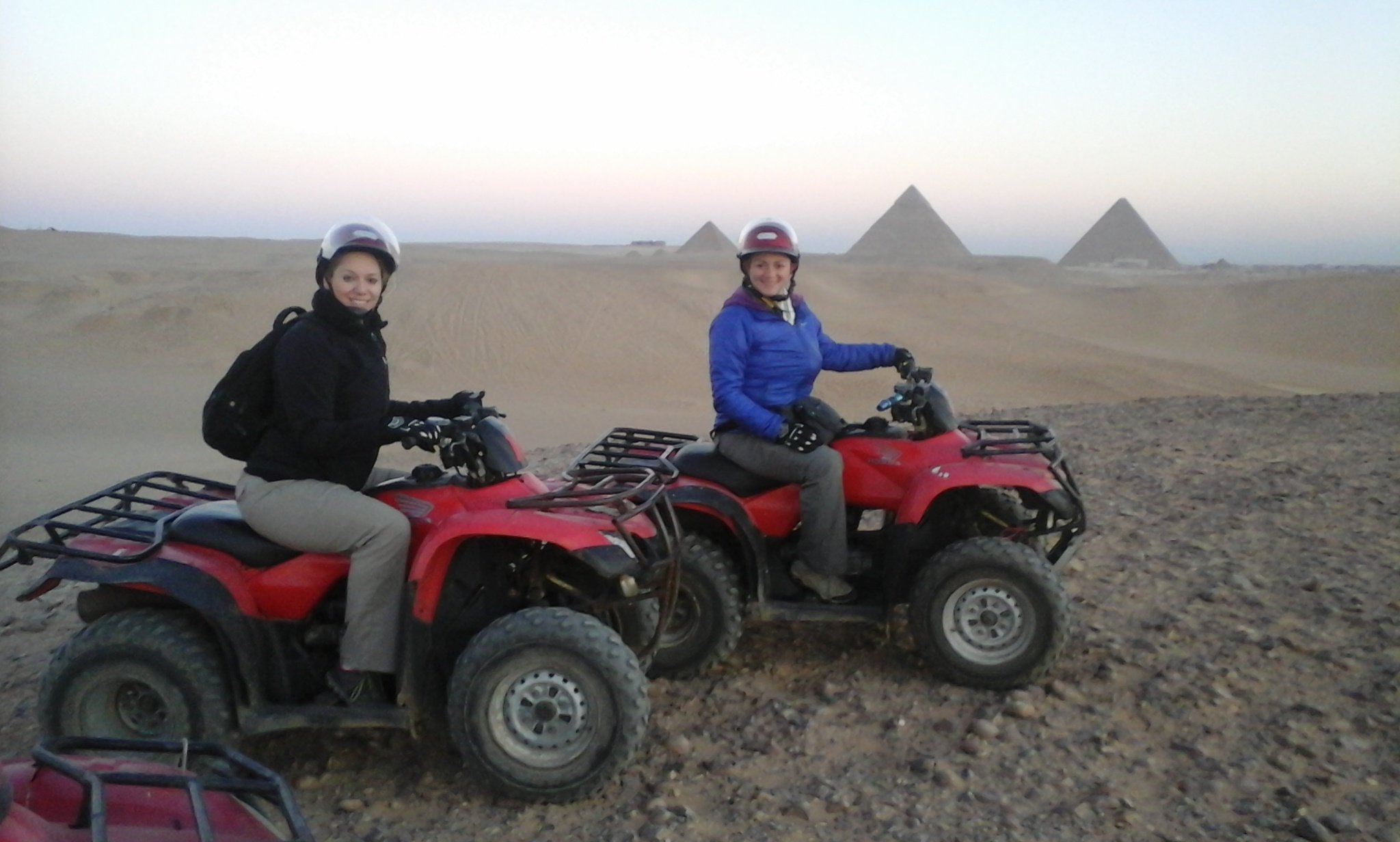
Giza Desert Quad Bike Adventure with Optional Camel Trek 2 hr
Standard Entry

Giza Desert Quad Bike Adventure with Optional Camel Trek

4.5 (1096)
€34
  • Entry ticket
  • Mobile voucher
  • Valid same day
  • Free cancellation
Book this ticket

Is it worth it?

Worth it if you agree the price first

A giza pyramids camel ride pays off mainly for the vantage, not the transport. Beyond the 700 EGP plateau entry, the ride itself is unofficial and unregulated, so pricing is haggled on the spot rather than fixed; expect to negotiate hard before mounting and to confirm the return trip is included. What you actually buy is access to Panorama Point, the classic desert line-up where all three pyramids stack against open sand — a vantage that walking makes tiring under summer heat. For first-timers wanting that postcard sweep of Giza landmarks, the payoff justifies the hassle. Budget travelers and skeptics of unofficial guides will find giza pyramids camel ride tours harder to justify against the fixed entry baseline. Settle a written or clearly-stated total, including the dismount and photos, before you start, and the desert-caravan experience holds its value.

What makes it worth it

  • Reaches Panorama Point without a hot desert walk
  • Classic three-pyramid desert vantage for photos
  • Short camel-caravan experience most first-timers want
  • Covers ground faster than walking the plateau

Keep in mind

  • Pricing is unofficial and must be haggled
  • Dismount and photo fees often added later
  • Midday summer heat makes it uncomfortable
  • Return trip sometimes excluded until you pay

Bottom line: Lock the full price up front and a giza pyramids camel ride tour earns its keep — leave it vague and it won't.

Head to head

Giza Pyramids Camel Ride vs Horse Ride: Which Should You Choose

Most first-timers should book a giza pyramids camel ride over a horse ride, since the higher seat and slower gait make it easier to relax and frame the pyramids in a single shot; confident riders often prefer the horse for its faster pace across the plateau.

Top pick
Camel Ride
Horse Ride
Vantage height and view
5–6 ft seat, ground-level view Slow, rolling gait, easy to balance
Bouncier trot, needs more core control High — height clears foreground crowds
Good — but lower angle crops less sand 300–500 EGP per short ride
350–600 EGP per short ride 20–40 minutes for a standard loop
20–40 minutes for a standard loop Ideal for first-timers, families

Verdict: For a relaxed first ride with sweeping views and easy photos, the camel wins; for riders who already know how to sit a trot and want more movement, the horse is the better match.

Featured Experiences

Popular tours & activities

Hand-picked experiences loved by thousands of travelers

Recommended Experience

Powered by GetYourGuide

Another traveler favorite

Powered by GetYourGuide
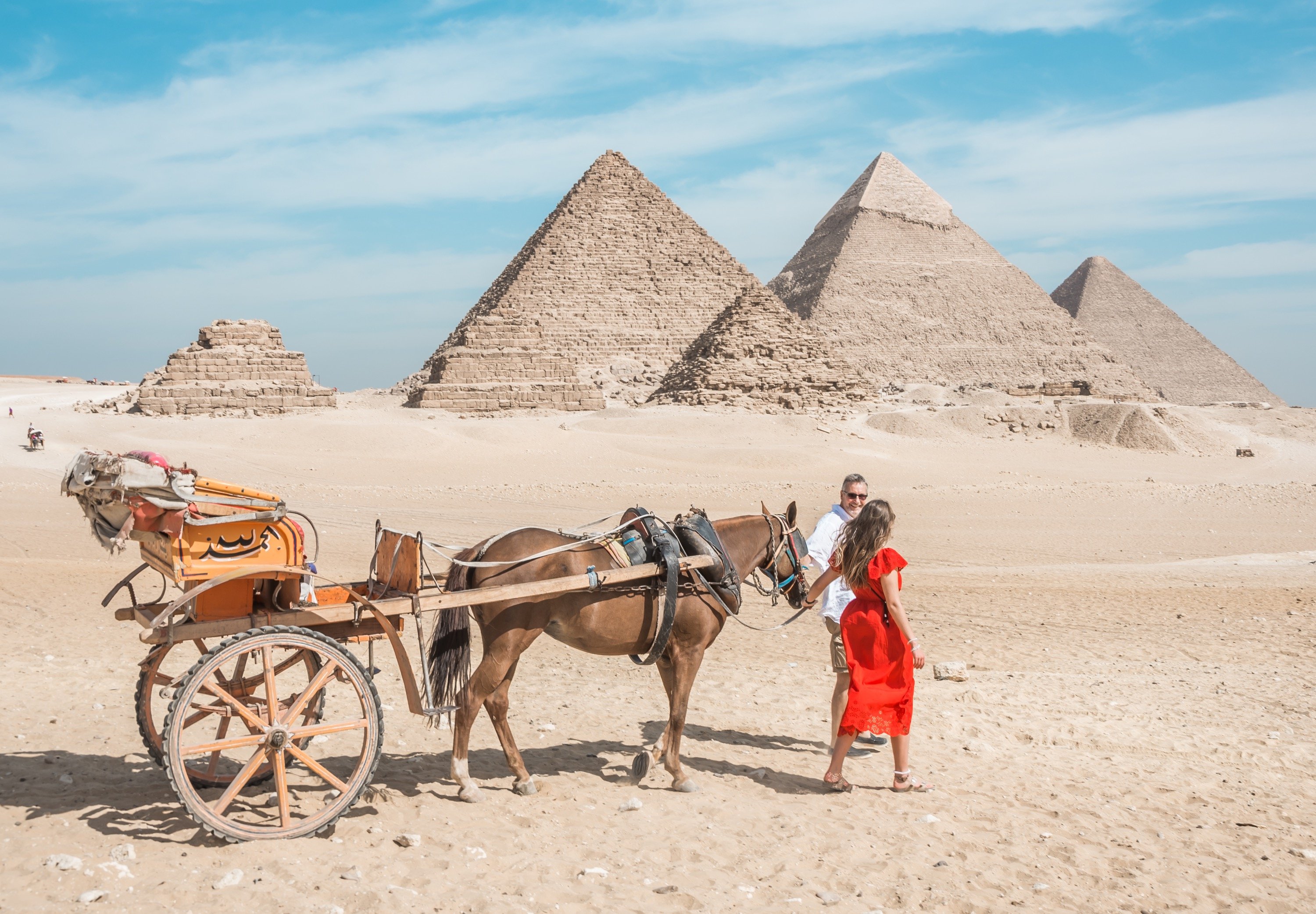
Cairo: Half-Day Giza Pyramids Excursion by Camel or Carriage 5 hours Free Cancellation

Cairo: Half-Day Giza Pyramids Excursion by Camel or Carriage

Explore the Giza Plateau's timeless wonders on this guided half-day journey featuring your choice of a camel or carriage ride.

4.9 (171)
FromFrom €69.13
See details
Private Giza Pyramids Tour with Camel Trek & Lunch 4 hours Free Cancellation

Private Giza Pyramids Tour with Camel Trek & Lunch

Discover the wonders of Giza on a private half-day excursion featuring a camel ride, Sphinx visit, and local meal.

4.7 (198)
FromFrom €49.96
See details
Giza Pyramids Camel Safari with Hotel Transfers 2 hours Free Cancellation

Giza Pyramids Camel Safari with Hotel Transfers

Experience the Giza plateau on a traditional camel ride with convenient hotel pickup and expert guidance.

4 (99)
FromFrom €22.55
See details
Your journey

Step-by-step — what your day looks like

1

Arrive at the Sphinx Gate

Pass security screening and collect the general plateau ticket for 700 EGP before heading toward the Great Sphinx.

2

Visit the Great Sphinx and Valley Temple

Walk through Khafre's Valley Temple to reach the Sphinx viewing platform, the only route onto the enclosure.

3

Walk to the Great Pyramid of Khufu

Cross the plateau on foot or by shuttle bus to stand beside the largest of the three pyramids.

4

Begin the giza pyramids camel ride

Meet a licensed camel handler near the Khafre Pyramid area and negotiate a route toward the Panoramic Viewpoint.

5

Stop at the Panoramic Viewpoint

Dismount for photos of all three pyramids aligned against the desert horizon, a classic stop on any giza pyramids camel ride tour.

6

Exit via the Giza Plateau main gate

Return by camel or shuttle to the main entrance for departure toward Cairo or Saqqara.

What you'll see

Highlights not to miss

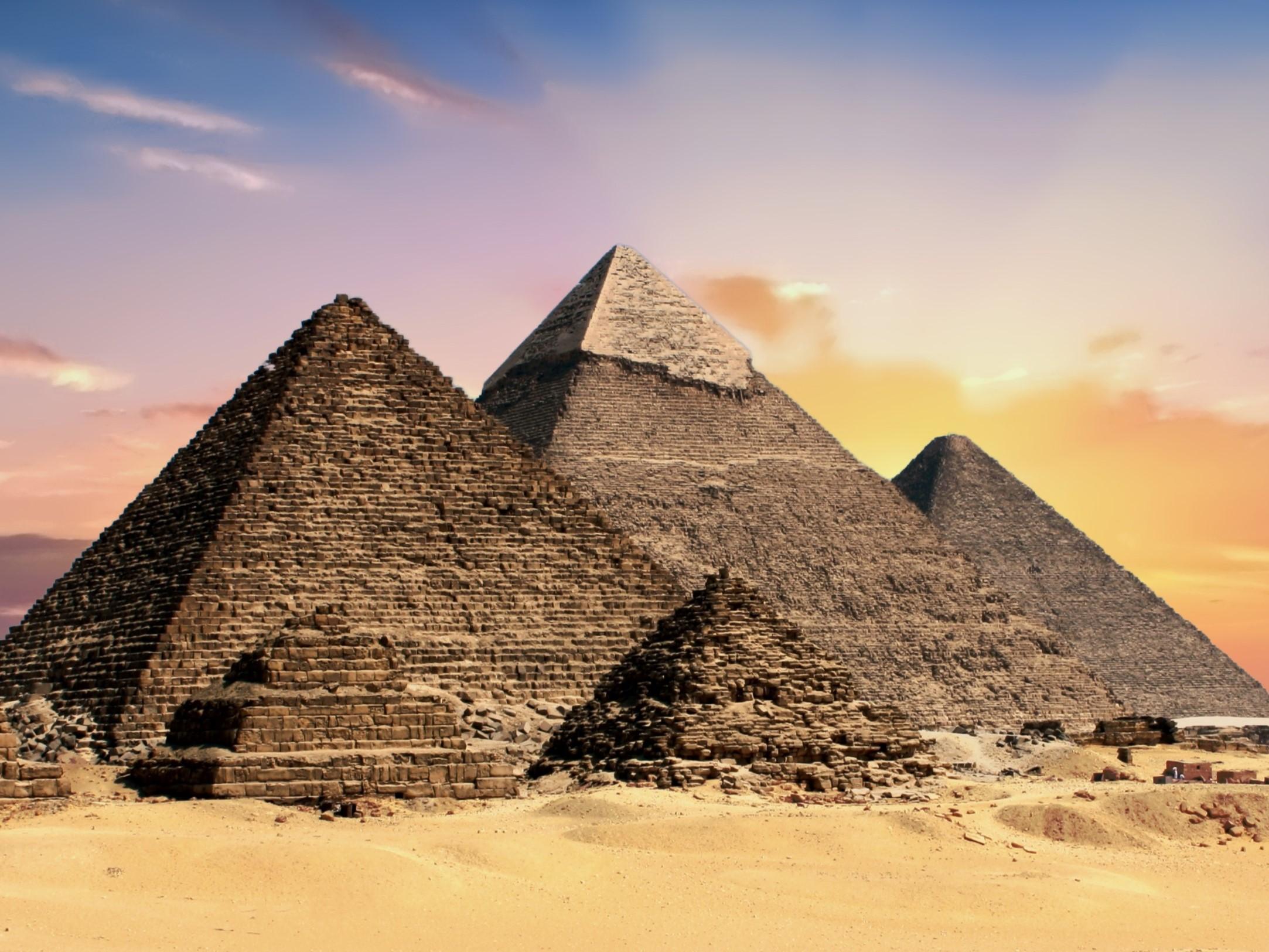
Great Pyramid of Khufu

The largest of the three pyramids at Giza, originally standing 146.6 meters tall and built from an estimated 2.3 million limestone blocks. It remained the tallest man-made structure on Earth for roughly 3,800 years.

Pyramid of Khafre

Rising to 471 feet, just under 10 feet shorter than the Great Pyramid, this second pyramid still retains a cap of its original polished limestone casing near the summit.

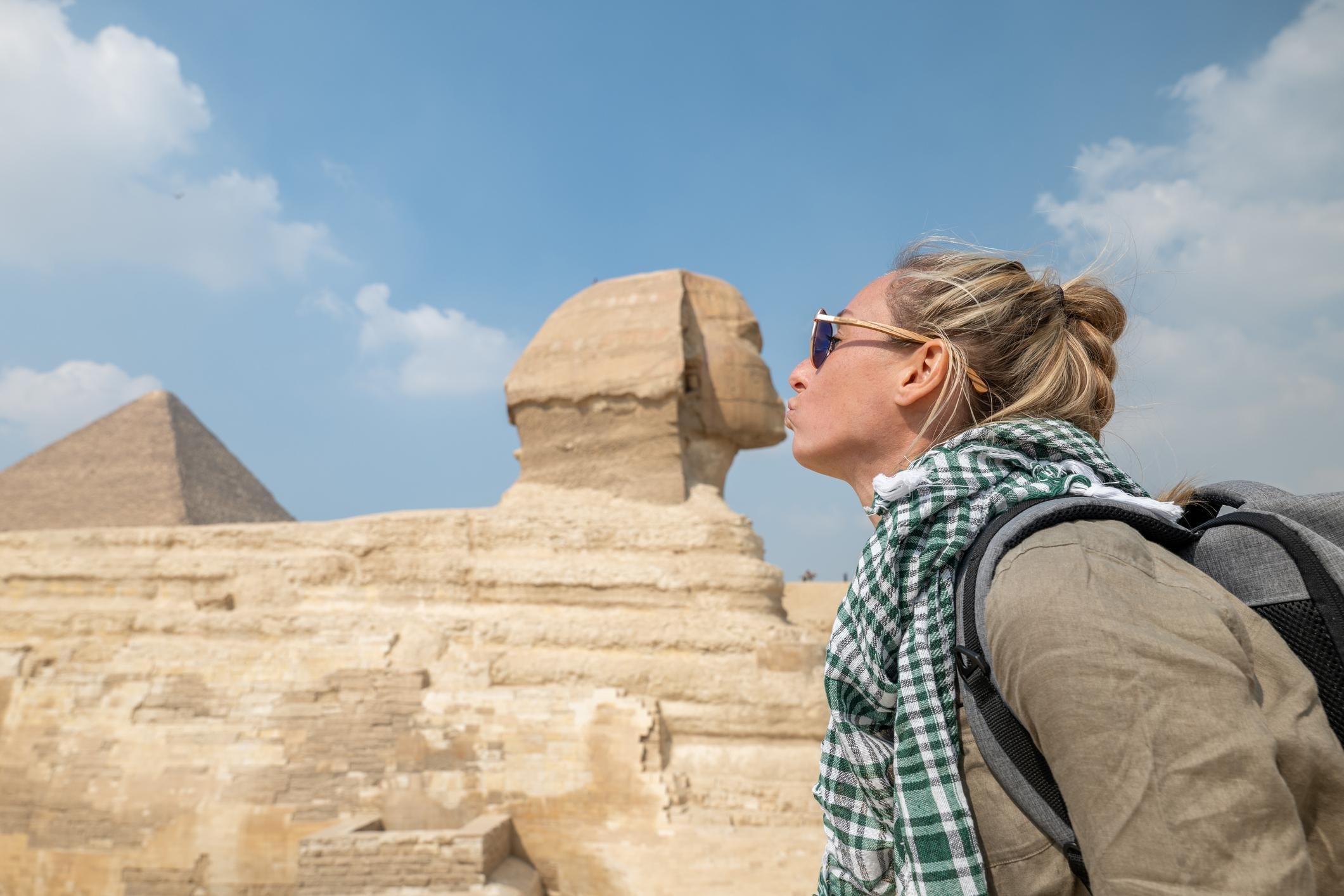
Great Sphinx of Giza

Carved from a single limestone outcrop with a lion's body and a human head usually linked to King Khafre, the Sphinx stretches about 73 meters long and 20 meters high.

Valley Temple of Khafre

Built from colossal limestone blocks faced with red granite, this temple is the best-preserved valley temple on the plateau and the sole passage to the Sphinx viewing platform.

Queens' Pyramids

Three modest satellite pyramids southeast of the Great Pyramid, built for Khufu's wives Henutsen and Meritites and his mother Hetepheres.

Panoramic Viewpoint

A desert vantage point south of the complex where all three main pyramids align in a single frame, a common turnaround stop on the camel-ride circuit.

The experience

What the visit is really like

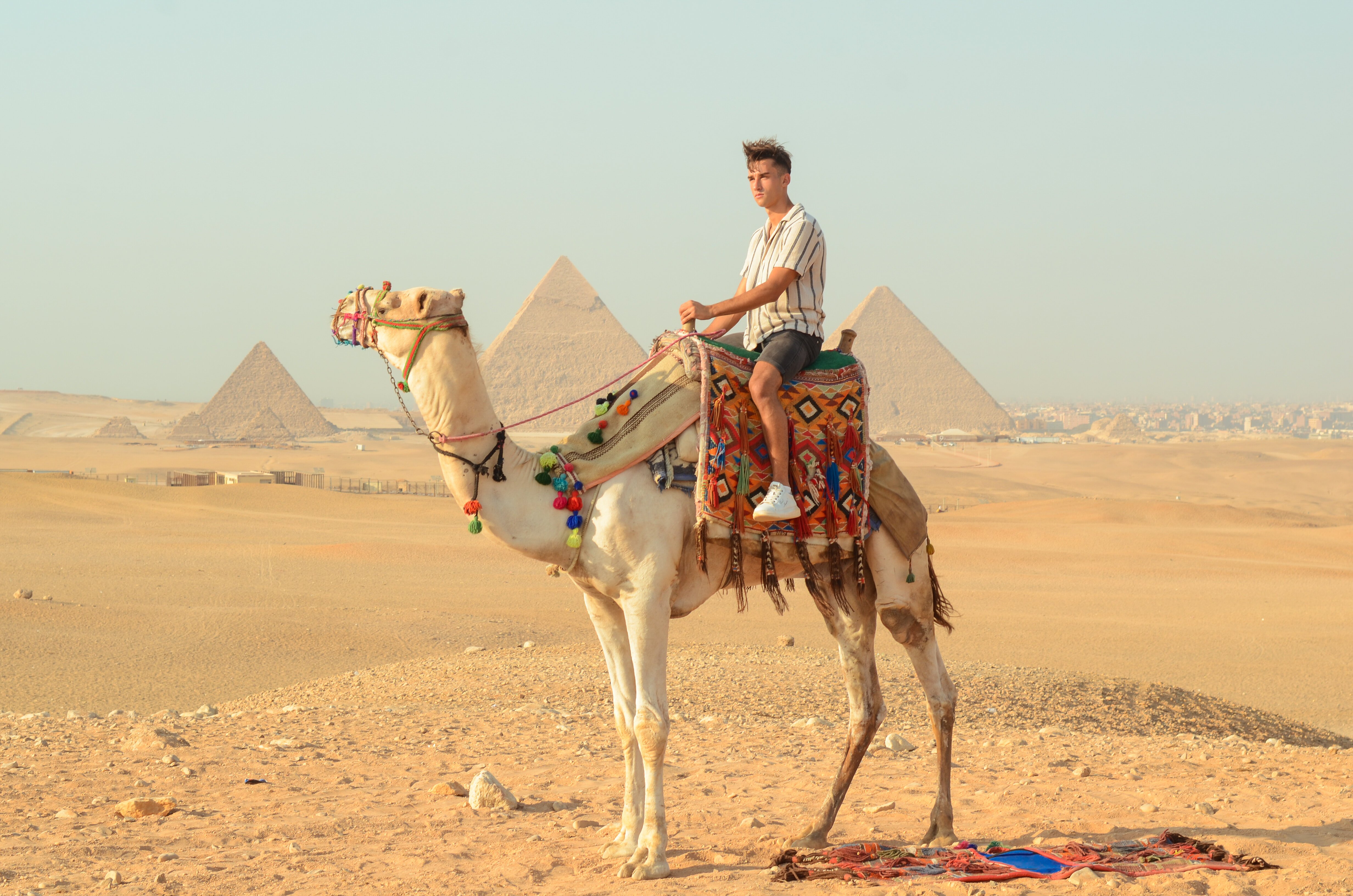
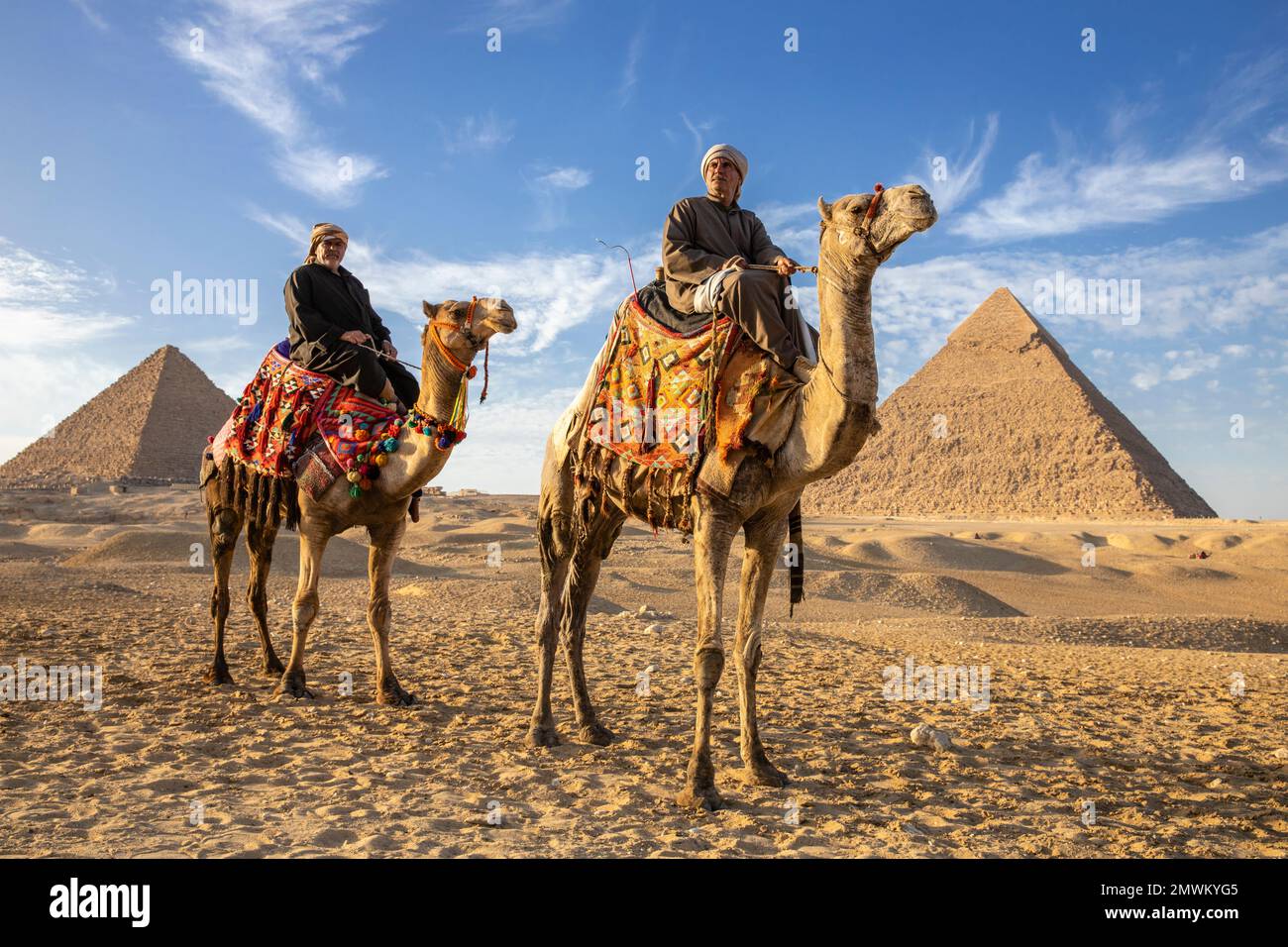
You reach the plateau at Al Haram in the cool early window, before the heat settles and the tour coaches fill the lots. You meet your camel at the desert edge, feel it fold forward and then lurch upward as you rise well above the sand. The handler leads you out along a sandy track, and within minutes the city noise thins to wind and the soft creak of the saddle. You ride toward Khufu first, craning up as the blocks stack skyward, then swing wide so all three pyramids line up in a single frame. You pause on a low rise where the sand drops away and the plateau spreads open. Your guide halts the camel, and you steady yourself for the view down the row of tombs. You dismount to walk the base of Khafre, running a hand near the limestone before remounting. The pace of a giza pyramids camel ride tour is unhurried; you have time to watch the light shift across the casing stones and shadow pool in the causeways. You loop back past the Sphinx, its weathered profile catching the sun. You return to the mounting point as the first crowds arrive, slide down from the saddle, and feel the ground again beneath your feet, the horizon still printed with three sharp peaks.

Everything You Need to Know

Your complete experience guide

All the details about your upcoming adventure in one place

Your Giza Pyramids Camel Ride Guide

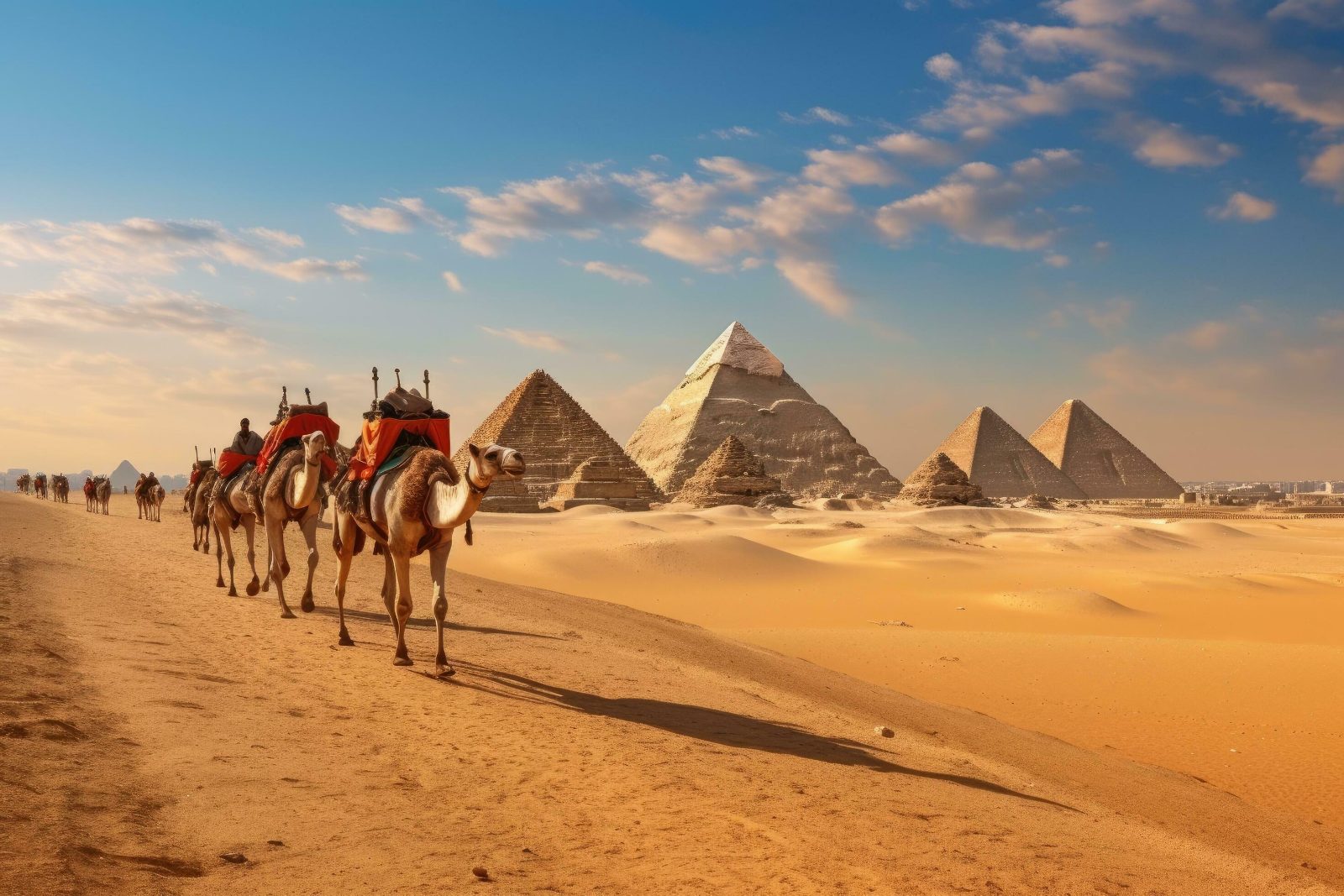
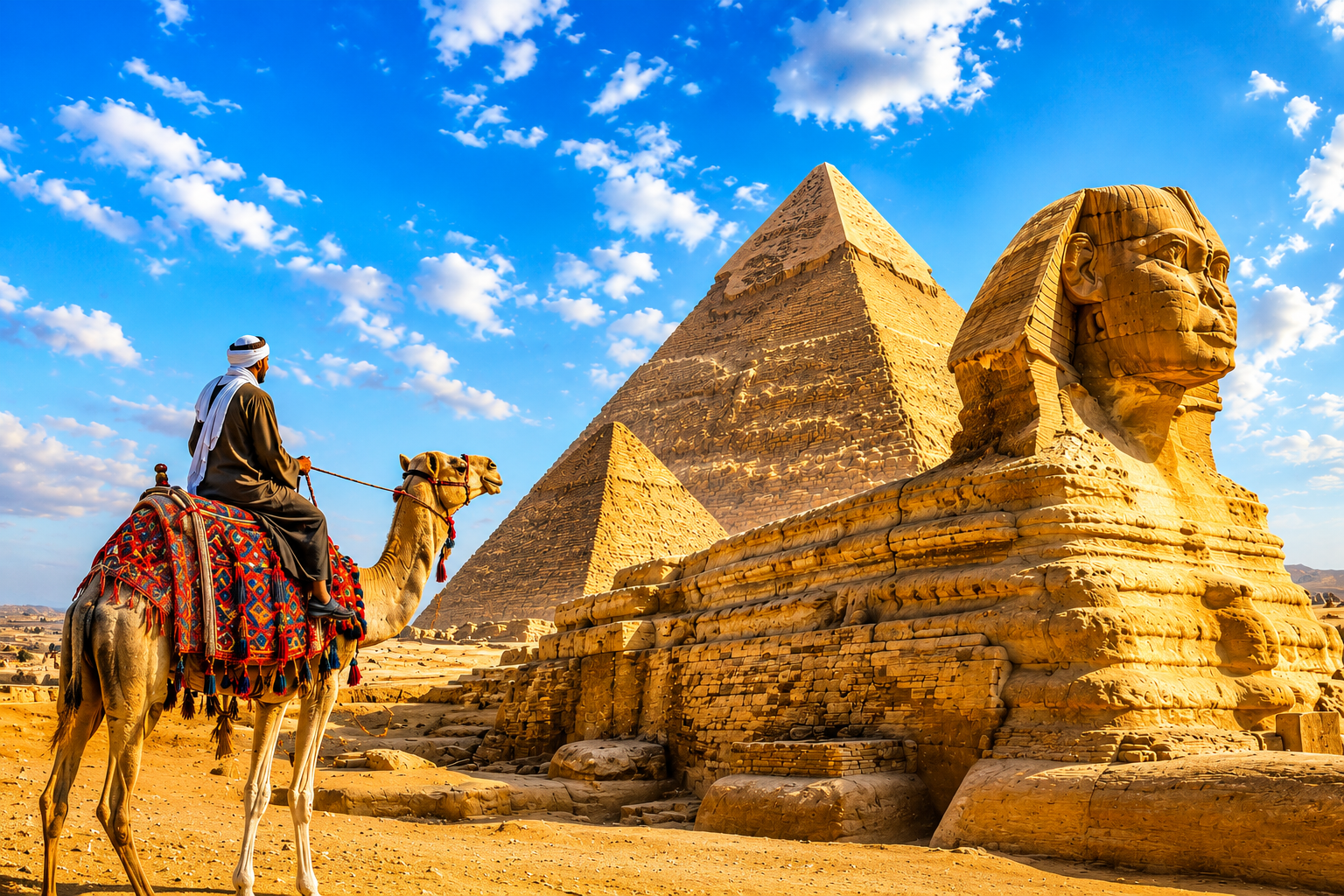
A giza pyramids camel ride carries you across the Giza Plateau sands, tracing the same desert route caravans have followed for centuries beside the Great Pyramid of Khufu and the Sphinx. Led by local camel handlers, these Giza plateau tours pair steady, guided riding with open views of the three pyramids and the surrounding necropolis. Booking giza pyramids camel ride tickets in advance secures your saddle and a licensed guide familiar with this UNESCO World Heritage site.

The Great Pyramid of Khufu was built from roughly 2.3 million limestone and granite blocks, some weighing more than 50 tonnes, and for nearly four millennia it stood as the tallest structure on Earth. A giza pyramids camel ride now traces the same plateau where quarry crews once dragged those stones across the sand, and the sightlines it opens explain why the site has never lost its grip on the imagination. The three principal pyramids — Khufu, Khafre and the smaller Menkaure — rise on a single limestone shelf above Nazlet El-Semman, aligned with startling precision to the cardinal points. Raised during the Fourth Dynasty, around 2560 BCE, the pyramids were royal tombs conceived as engines of resurrection, their internal galleries and burial chambers sealed to carry a pharaoh into the afterlife. Khafre's pyramid still wears a cap of the original polished Tura limestone casing near its apex, a fragment of the smooth white surface that once made the whole complex gleam. Below it crouches the Great Sphinx, a limestone lion with a king's face, carved from a single outcrop and staring due east toward the rising sun. What makes the plateau matter today is not scale alone but continuity. The mortuary temples, causeways and subsidiary queens' pyramids sketch an entire funerary landscape, a UNESCO World Heritage complex studied by archaeologists since the nineteenth century and still yielding discoveries — worker cemeteries, bakeries and the dismantled cedar solar boat of Khufu among them. A camel ride pyramids of giza itinerary threads between these monuments along the desert edge, where the modern sprawl of Cairo drops away and the geometry of the horizon takes over. The architecture rewards a slow eye. Khufu's structure encloses the King's Chamber, roofed by nine granite slabs and relieved by five stress-bearing compartments, an engineering solution devised without iron tools or the wheel as we know it. The Grand Gallery ascends at a corbelled angle that still puzzles structural engineers, and the mathematical ratios embedded in the base have fed speculation for centuries. Seen from the saddle, these Giza Plateau landmarks resolve into a coherent whole rather than isolated marvels. This is why giza pyramids camel ride tours endure: the vantage restores the monuments to their setting, the vast quiet plain of the Western Desert, exactly as ancient visitors would have approached them, on foot or by beast, out of the shimmering sand toward stone that refuses to age.

For nearly four millennia the Great Pyramid stood as the tallest structure on Earth, stone that refuses to age.

Dress code

Modest clothing is expected on the Giza Plateau: shoulders and knees covered for both genders, loose and breathable fabrics recommended given the desert heat. Closed-toe shoes with good grip are advisable for mounting and dismounting a camel over sandy, uneven ground.

Bags & security

All visitors pass through metal detectors and bag scanners at the Sphinx Gate or main entrance before reaching the plateau where camel-ride operators wait. Backpacks and camera bags are permitted but may be hand-searched, and drones require separate prior authorization from site security.

Photography

Personal photography and smartphone video are free at every point on the plateau, including while mounted on a camel, with no tripod restriction for casual use. Commercial filming, professional rigs, or drone footage require a permit arranged in advance through the Ministry of Tourism and Antiquities.

Families & strollers

Children generally need to be at least 6 years old and tall enough to sit securely to join a camel ride, and young children should always ride with an adult handler walking alongside. Family-suitability logistics and age-specific advice are covered in the dedicated family-visit guide.

Accessibility

The paved plaza near the main entrance and Sphinx viewing platform is wheelchair accessible, but the open desert terrain used for camel rides is soft sand and unsuitable for wheelchairs or walkers. Visitors with mobility limitations should ask camel operators about mounting platforms, since dismounting on uneven sand can be difficult without assistance.

Food & drink

No official restaurants sit directly on the plateau near the camel-ride staging points, but the 9 Pyramids Lounge near the Panoramic Viewpoint and cafés outside the Sphinx Gate offer meals with pyramid views. Bottled water is sold by licensed vendors on-site, and carrying at least 1 liter per person is advisable given the lack of shade during a camel ride.

Not allowed

× Drones without a permit × Professional filming equipment without a permit × Glass bottles × Alcohol × Selfie sticks over 1 meter × Large tripods for casual visitors × Weapons of any kind × Flammable liquids × Spray paint × Loudspeakers × Pocket knives × Fireworks or flares

What to bring

✓ Cash in Egyptian pounds ✓ Sunscreen ✓ Wide-brim hat ✓ Sunglasses ✓ Bottled water ✓ Comfortable closed-toe shoes ✓ Small daypack ✓ Power bank

Opening hours

Mon 07:00 – 17:00
Tue 07:00 – 17:00

Quietest weekday for camel bookings

Wed 07:00 – 17:00
Thu 07:00 – 17:00
Fri 07:00 – 17:00

Midday prayer break affects some vendors

Sat 07:00 – 17:00

Busiest day, tour buses arrive by 10:00

Sun 07:00 – 17:00

At a glance

Hours today

07:00 – 17:00, last entry 16:00

Address

Al Haram, Nazlet El-Semman, Giza Governorate, Egypt

Terrain

Paved paths near main entrance, sand and uneven ground beyond

Climate

Desert plateau, minimal shade — peak heat 12:00–15:00

Bag policy

Small bags and daypacks permitted, checked at security scanners

Layout

Two entrances (Sphinx Gate and main Giza Plateau gate) linking pyramids, Sphinx, and camel-ride staging areas

Getting there

Public transport · 45-60 min total · 5-10 EGP metro plus 40-60 EGP taxi

Take Cairo Metro Line 2 to Giza Station, then a taxi or minibus covers the remaining 8-10 km to the plateau entrance.

Taxi · 30-45 min · 150-250 EGP one-way

A direct taxi or rideshare from downtown Cairo runs along the Ring Road or Nile-side routes straight to the Sphinx Gate or main entrance.

Car · 30-45 min from downtown · Parking fee typically 20-30 EGP

Self-driving visitors can park in designated lots near the Mena House entrance close to the main gate.

Walk · 10-15 min · Free

Only practical for visitors already staying in hotels directly bordering the Giza Plateau in Nazlet El-Semman.

Cancellation policy

Most giza pyramids camel ride bookings allow free cancellation up to 24 hours before the scheduled start time, with a full refund processed to the original payment method. The 700 EGP general plateau entrance fee is typically non-refundable once the ticket has been issued, even if the camel-ride add-on is cancelled separately.

Plan your time

How long do you need?

Recommended time

1-2 hours

A giza pyramids camel ride typically runs 30 minutes to 2 hours, with most operators offering a 1-hour circuit around the plateau's viewpoints; add extra time if you're booking a longer route toward the desert edge or combining it with a broader skip-the-line Giza Pyramids tour. Riding between 07:00 and 09:00 keeps both you and the camel cooler and lets you mount up with barely any wait, since Bedouin handlers and gear are freshest then. By mid-morning, queues at popular mounting points lengthen as tour buses unload, and by midday the heat slows pace and shortens patience on both ends. Late afternoon rides move quickly again but cut close to the 17:00 closing, so build in a buffer.

Crowd levels through the day

Early morning (07:00-08:30) Light
Mid-morning (08:30-10:30) Building
Late morning (10:30-12:30) Busy
Midday (12:30-14:30) Peak heat, busy
Afternoon (14:30-16:00) Moderate
Last hour (16:00-17:00) Light, rushed
Plan ahead

When to go — year at a glance

Weather · crowds · average price — dots go green to amber to red as each metric rises.

Winter (Dec–Feb)

Daytime highs sit around 20°C, the most comfortable season for a giza pyramids camel ride, though this is also peak tourist season with the largest crowds.

Insider tips

Helpful tips for your visit

Negotiate before mounting

Camel and horse handlers set prices on the spot, so agree on both the fee and ride duration in Egyptian pounds before starting a giza pyramids camel ride.

Carry small bills

Vendors and camel operators rarely make change for large notes, so break 700 EGP notes in Cairo before arriving.

Watch for add-on requests

Some handlers ask for extra tips mid-ride for photo stops or a second animal; agree upfront that the quoted price is final.

Pair the ride with the Panoramic Viewpoint

The most photographed section of any giza pyramids camel ride sits at the desert viewpoint where all three pyramids align.

Bring your own water

Vendors sell bottled water at markup prices on the open desert stretch used for camel routes.

Confirm the operator is licensed

Official plateau staff can point to registered camel stands near the Khafre Pyramid area, reducing the risk of unofficial operators overcharging.

Check Ramadan schedule changes

Camel operators reduce working hours during Ramadan, so confirm availability if visiting in March.

Where to meet

Meeting points

Sphinx Gate

Abou Al Hool Al Seiahi Street, Nazlet El-Semman, Giza

Eastern entrance, closest to the Great Sphinx and Valley Temple, common start for camel rides

Get directions

Main Giza Plateau Gate

Al Haram, Nazlet El-Semman, Giza Governorate

Largest ticketing facility, nearest to the Great Pyramid of Khufu and parking

Get directions

Khafre Pyramid camel stand

Near the Pyramid of Khafre, central plateau

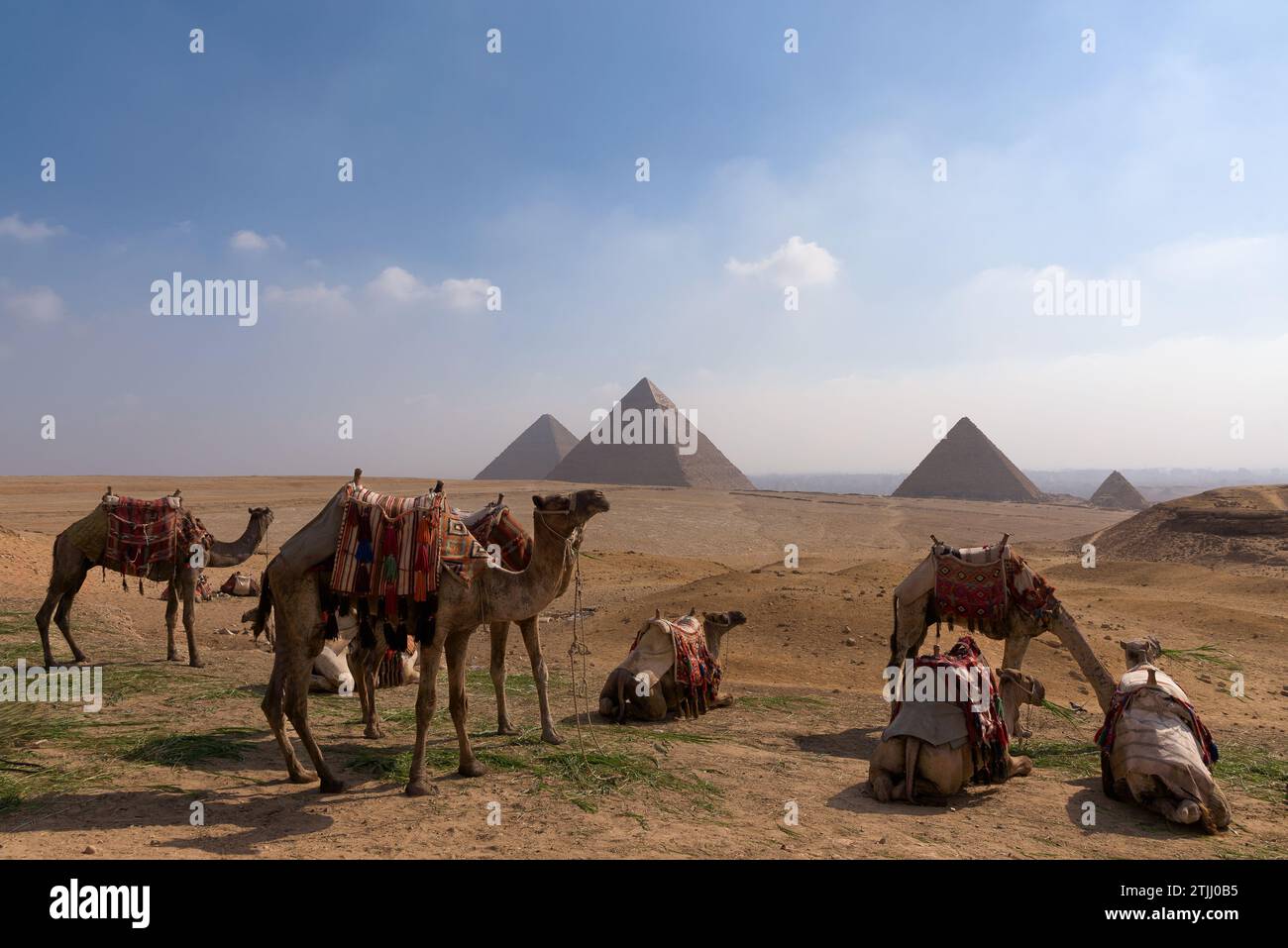
Common staging point where independent camel and horse operators wait for riders

Get directions
The story

The history behind the site

The camel is not native to Egypt. The dromedary arrived comparatively late, spreading through the Nile Valley during the Ptolemaic period after 305 BCE. Earlier Egyptians relied on donkeys and boats. By the Roman era the camel had become the standard beast of the desert margins. Caravans crossing the western sands passed within sight of the Giza plateau, carrying grain, salt, and trade goods along routes that skirted the ancient necropolis. For centuries the animal served labour, not leisure. Bedouin families near Nazlet El-Semman bred camels for haulage and desert crossing. The tradition that now underpins the giza pyramids camel ride grew from this working stock. When European travellers arrived in numbers during the nineteenth century, local handlers began offering rides across the sand to the monuments. Thomas Cook's organised Egyptian tours from 1869 accelerated the shift, turning desert transport into spectacle. Photographs from the 1880s already show visitors mounted before the Great Pyramid. By the early twentieth century the practice was fixed. Handler families passed their animals and their pitches down generations. The plateau at Al Haram became a fixed stage for giza pyramids camel ride tours, and the descriptive Giza pyramids desert tour entered every guidebook. The camel, once cargo transport, became the emblem of a visit. Modern regulation followed: handlers now work licensed stands, and giza pyramids camel ride tickets are folded into the general plateau entry that opens daily at 07:00. What survives is a lineage. The same Bedouin descent, the same routes across the same sand, the same animal that Ptolemy's soldiers first led east. The Giza landmarks endure, and beside them a living custom that predates the automobile. A giza pyramids camel ride tour today traces a path worn smooth by two thousand years of caravans, pilgrims, and travellers drawn to the desert edge west of Cairo.

305 BCE

Ptolemaic rule begins and the dromedary camel spreads through the Nile Valley.

Roman era

Camel caravans cross the western desert past the Giza plateau carrying trade goods.

19th c.

Bedouin handlers near Nazlet El-Semman begin offering plateau rides to European travellers.

1869

Thomas Cook launches organised Egyptian tours, expanding desert-transport tourism.

1880s

Photographs record visitors mounted on camels before the Great Pyramid.

Early 1900s

Handler families establish inherited pitches, fixing the ride as a plateau custom.

2026

Licensed handler stands operate under general plateau entry opening daily at 07:00.

Photo spots

Best photo spots

Panorama Point

Best light · Golden hour, early morning light

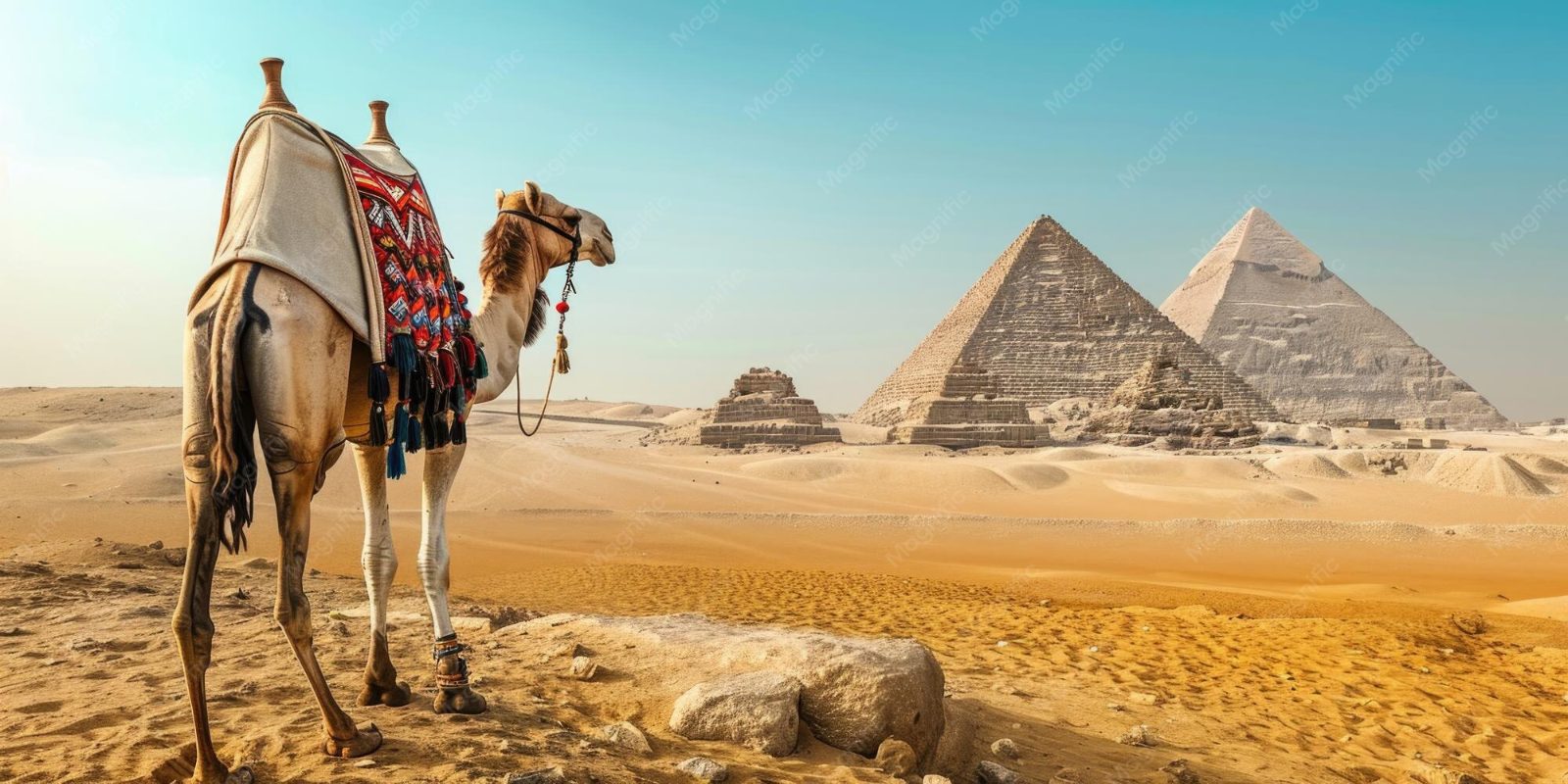
The classic three-pyramid frame where the Great Pyramid, Khafre, and Menkaure line up in near-equal scale; most giza pyramids camel ride operators start or end here since it sits on the western plateau road with easy vehicle and camel access. Stand back from the ridge edge to fit all three in a wide shot, with a camel silhouetted in the foreground for depth.

Dunes South of Menkaure

Best light · Before 09:00, soft light

A camel-only stretch of open desert south of the Pyramid of Menkaure that lines up all nine pyramids, the three main structures plus the smaller queens' pyramids, in a single sweeping frame. Guides say walking in is not permitted, so the shot belongs almost entirely to riders on a camel or horse.

Helicopter Pad Viewpoint

Best light · Mid-morning, fewer crowds

A small rise near the helipad just off the route between the plateau and Panorama Point, offering a slightly elevated, less crowded angle on all three pyramids together. Useful as a quick stop while riding out to the main panorama.

Hill in Front of the Sphinx

Best light · Sunset

A low rise roughly 20 meters ahead of the Sphinx enclosure that lets a photographer shoot down slightly, framing the Sphinx with the pyramids behind while cropping out foot traffic below. Best reached on foot rather than by camel.

Gallery

Moments from the experience

With kids

Visiting with kids

A giza pyramids camel ride is genuinely enjoyable with kids in tow, though it works best as a short, well-paced add-on rather than the centerpiece of your visit. Touts will approach constantly, so agree on a plan before you get off the bus.

Best ages

Most handlers won't seat children under about 5 alone; between 5 and 12 a child can ride but must share a saddle with an adult or stay led on a short rein.

Riding double

One parent riding double with a toddler or young child is common and generally safer than a small child on a separate camel; ask the handler to shorten the route for a nervous first-timer.

Touts and grouping

Keep the family together and let one adult do all the talking with camel touts, since kids get singled out for extra "tips" and photo fees if the group splits up; agree on the price and route before anyone mounts.

Pacing

Fit the camel ride tour into the cooler morning window rather than the middle of the day, and treat it as a 20 to 30 minute stop within a longer half-day family visit so kids don't overheat or get saddle-sore.

Nervous riders

If a child is scared once mounted, the handler can walk the camel at ground level rather than a full loop; this keeps the giza pyramids camel ride tickets flexible without wasting the booking.

Customer Reviews

What travelers say

Real experiences from real travelers

4.4
Based on undefined reviews
1 ★ 1100
2 ★ 732
3 ★ 1300
4 ★ 3900
5 ★ 14300
M
Marta R.
Spain · 2026-06-18

Golden hour worth it

We booked the giza pyramids camel ride for late afternoon and the light on the limestone was warm and soft. Our guide Hassan kept the pace slow and steady, and the sand was still hot through my shoes when we mounted. The view from the Panorama point with all three pyramids lined up made the whole outing feel special.

D
David K.
United States · 2026-05-02

Steady camels, hazy day

The Cairo haze was thick the morning we went, so the horizon looked soft rather than sharp. Still, riding across the plateau on a calm camel named Mahmoud was a smooth experience and the animal seemed well cared for. Bring sunglasses because the glare off the sand is strong even on a cloudy day.

Y
Yuki T.
Japan · 2026-04-11

Quiet early start

Going right after opening meant fewer crowds and cooler air. Our giza pyramids tour began near the Sphinx and looped out toward the desert edge where you get that classic open view. The dromedaries were gentle and the Bedouin handler was patient with my nervous mother.

L
Lukas B.
Germany · 2026-07-09

Desert scale hits you

Nothing prepares you for how enormous Khufu's pyramid feels from the saddle. We chose one of the giza pyramids camel ride tours that included the Panorama stop, and the wide sweep of sand made for great photos. Midday in July is brutally hot, so wear a hat and drink water beforehand.

A
Amara O.
Nigeria · 2026-03-24

Smooth booking

Sorting the giza pyramids camel ride tickets in advance saved us haggling at the gate. The plateau was breezy and the sand shifted in little waves as we rode toward Khafre. Our guide pointed out the different pyramids and kept the camels together as a small caravan.

S
Sophie M.
France · 2025-12-15

Cool winter ride

December mornings on the Giza plateau are crisp, almost chilly before the sun climbs. The camel was tall and swaying more than I expected on the way up, but I settled quickly. A relaxed way to see the Cairo landmarks without walking the whole sandy stretch.

C
Carlos V.
Brazil · 2026-02-08

Sphinx to sand

We started near the Great Sphinx and the giza pyramids camel ride carried us out to where the desert opens completely. Late afternoon light turned everything a deep amber and the guide happily stopped for photos. Tip your handler if he takes good care of the animal.

P
Priya N.
India · 2026-06-30

Family friendly

Our kids loved the swaying camels and the guide walked the whole route so we felt secure. This giza pyramids tour gave us the postcard view with the three pyramids stacked behind the dunes. Go early or late to dodge the harsh midday sun on the exposed plateau.

T
Thomas W.
United Kingdom · 2025-10-19

Bring small cash

The ride itself across the plateau was pleasant and the camels looked healthy. Be ready for persistent vendors near the entrance and settle every price clearly before mounting. Once out on the open sand near Khafre it was calm and the desert quiet took over.

E
Elena P.
Italy · 2026-05-27

Panorama view delivers

The stretch of Giza landmarks visible from the ride is remarkable, especially with the pyramids catching low sun. Our camel plodded steadily and the handler adjusted my stirrups without being asked. A memorable slow crossing of the sand with the Sphinx shrinking behind us.

FAQ

Frequently asked questions

Everything you need to know for your journey

Around the corner

Nearby landmarks worth a detour

Great Sphinx of Giza

10 min walk

landmark

A limestone guardian statue with a lion's body and human head, reached through Khafre's Valley Temple. It sits just east of the main pyramid field and is included in general plateau admission.

Valley Temple of Khafre

10 min walk

landmark

Built from massive limestone blocks faced with red granite, this is the best-preserved valley temple on the plateau and the only route to the Sphinx viewing platform.

Pyramid of Khafre

15 min walk

landmark

The second-largest pyramid at Giza, still retaining a cap of original polished limestone casing near its summit.

Pyramid of Menkaure

15 min walk

landmark

The smallest of the three main pyramids, notable for granite casing stones left unfinished near its base.

Queens' Pyramids

10 min walk

landmark

Three small satellite pyramids southeast of the Great Pyramid built for Khufu's wives and mother.

Where to stay

Where to stay nearby

Marriott Mena House, Cairo

5 min walk

luxury

Historic hotel bordering the plateau with direct pyramid views from its gardens and many rooms.

Nazlet El-Semman district

Adjacent

district

Cluster of budget guesthouses and rooftop cafés directly facing the Sphinx and pyramids.

Le Méridien Pyramids Hotel

10 min drive

mid-range

Business-style hotel a short drive from the plateau with views toward the Giza skyline.

Cairo Downtown hotels

30-45 min drive

district

Wide range of budget-to-boutique hotels near Tahrir Square, convenient for combining Giza with Cairo Museum visits.

Ready for Adventure?

Join thousands of happy travelers who have discovered this incredible experience

Book Your Experience Now