English| EUR
Book Now
Open today · 07:00 – 16:00

Cairo To Pyramids

Cairo To Pyramids — Giza Plateau Entry & Guided Visits

Desert dawn on ancient stone, four millennia within reach.

214K+ travelers chose this
Free Cancellation
Right now: Moderate — summer weekday Arrive by mid-morning; midday desert heat is intense in late July
4-6 hours recommended
1 Languages
Up to 12 guests
Free Cancellation
Free cancellation Instant confirmation Mobile voucher Verified partner Skip-the-line
Choose your ticket

Ticket options at a glance

Compare fares, pick the fit — all bookings are mobile-voucher and eligible for free cancellation where shown.

Cairo: Half-Day Giza Pyramids and Sphinx Guided Tour 6 hr
Guided Experience

Cairo: Half-Day Giza Pyramids and Sphinx Guided Tour

4.6 (3591)
€39
  • Expert local guide
  • Small group
  • Skip-the-line access
  • Free cancellation
Book this ticket
Cairo: Pyramids, Sphinx, Saqqara & Memphis Full-Day Tour 8 hr
Guided Experience

Cairo: Pyramids, Sphinx, Saqqara & Memphis Full-Day Tour

4.7 (3475)
€67
  • Expert local guide
  • Small group
  • Skip-the-line access
  • Free cancellation
Book this ticket
Compare options

Which ticket fits your trip?

Planning a trip from Cairo to Pyramids of Giza means choosing between two access levels at the gate: exterior-only general admission, or that ticket plus a separate interior pass. Most Giza pyramids tours default to the 700 EGP plateau ticket, leaving the chamber climb as an optional add-on for those who want it.

General Admission (Plateau & Sphinx) Top pick
General Admission + Interior Access (Chamber Entry)
What's included Plateau grounds, Sphinx, exterior pyramid views
Interior access
Daily availability Unlimited, sold all opening hours
Typical wait Short line at main gate
Physical demands Flat walking on sand and stone paths
Best for Budget-focused, exterior photography, casual visits

Verdict: Skip-the-line planning matters here: buy the interior add-on at opening if a chamber visit is on your list, since a standard cairo to pyramids tour with only general admission is fine for sightseeing but won't get you inside.

Is it worth it?

Worth it for nearly every first-time visitor

The cairo to pyramids run costs you 700 EGP for Giza Plateau general admission, and for that you stand beside the last surviving Ancient Wonder — the only one still intact after 4,500 years. Roughly the price of a decent Cairo dinner buys direct access to the Great Pyramid of Khufu, the Sphinx, and the Giza necropolis on the limestone plateau. The value math is simple: nowhere else on Earth offers this. Where visitors feel shortchanged is the friction — persistent camel touts, midday heat, and crowds thick by late morning. Most of that is fixable. Arrive at 07:00–09:00 and the plateau is cooler and calmer, which is why cairo to pyramids tours cluster at opening. The 700 EGP pays off for anyone drawn to ancient history, monumental architecture, or Egypt's UNESCO heritage. It is thinner value for travelers who dislike heat, hassle, or open desert with little shade.

What makes it worth it

  • Only surviving Ancient Wonder, still fully intact
  • 700 EGP is cheap for once-in-a-lifetime access
  • Great Pyramid and Sphinx in one plateau
  • Early arrival dodges heat and crowds
  • Iconic Egypt landmark no photo replaces

Keep in mind

  • Persistent camel and souvenir touts wear you down
  • Midday heat and near-zero shade
  • Crowds thicken sharply by late morning
  • Extra costs stack on the base ticket

Bottom line: For a first visit, the cairo to pyramids tickets are firmly worth the 700 EGP — just go at opening and hold your ground with the touts.

Head to head

Cairo to Pyramids or Saqqara: Which Pyramid Site Should You Choose?

Most first-timers planning a cairo to pyramids trip should still start at Giza for the iconic Great Pyramid and Sphinx, then add Saqqara if time allows for a quieter, deeper look at pyramid history.

Top pick
Pyramids of Giza
Saqqara (Step Pyramid of Djoser)
What you see Step Pyramid of Djoser, mastabas, Serapeum
Historical age Built c. 2670 BC (3rd Dynasty), older
Crowd levels Light — far fewer visitors
Distance from Cairo ~30 km south of Cairo
Entrance cost Approx. 450–600 EGP (general site)
Typical visit duration 2.5–3 hours (or up to 5)
Best for History depth, quiet exploration

Verdict: Giza wins on sheer icon status and the Sphinx, while Saqqara rewards travelers who want older history and empty walkways, and many day-tour itineraries combine both sites since they sit only about 20 km apart.

Featured Experiences

Popular tours & activities

Hand-picked experiences loved by thousands of travelers

Recommended Experience

Powered by GetYourGuide

Another traveler favorite

Powered by GetYourGuide
Cairo & Pyramids Day Trip by Air from Hurghada 16 hours Free Cancellation

Cairo & Pyramids Day Trip by Air from Hurghada

Fly to Cairo for an immersive day exploring the Great Pyramids, the Sphinx, and Egypt’s world-class museums.

4.9 (2594)
FromFrom €239.01
See details
Private Giza Pyramids & Grand Egyptian Museum Tour 7 hours Free Cancellation

Private Giza Pyramids & Grand Egyptian Museum Tour

Experience Egypt's ancient wonders and modern museum marvels on this exclusive 7-hour private guided excursion.

4.7 (239)
FromFrom €86.14
See details
Cairo & Pyramids Day Expedition from Sharm El Sheikh 1 day Free Cancellation

Cairo & Pyramids Day Expedition from Sharm El Sheikh

Travel from Sharm to Cairo for a guided exploration of the Giza Pyramids, the iconic Sphinx, and your choice of premier Egyptian museum.

4.8 (641)
FromFrom €75
See details
Your journey

Step-by-step — what your day looks like

1

Arrive at the gate

Pass security screening and collect the Giza Plateau general admission ticket at the main entrance near Al Haram

2

View the Great Pyramid

Walk the exterior of the Great Pyramid of Khufu and, with a separate ticket, descend into the ascending and Grand Gallery passages

3

Continue to Khafre and Menkaure

Move along the plateau road to see the Pyramid of Khafre, which retains casing stones near its summit, then the smaller Pyramid of Menkaure

4

Visit the Great Sphinx

Walk down to the Sphinx enclosure and the adjoining Valley Temple of Khafre

5

Solar Boat Museum stop

See the reconstructed cedarwood funerary boat excavated beside the Great Pyramid in 1954

6

Panoramic viewpoint

Finish at the desert viewpoint south of the plateau for a wide view of all three pyramids together

What you'll see

Highlights not to miss

Great Pyramid of Khufu

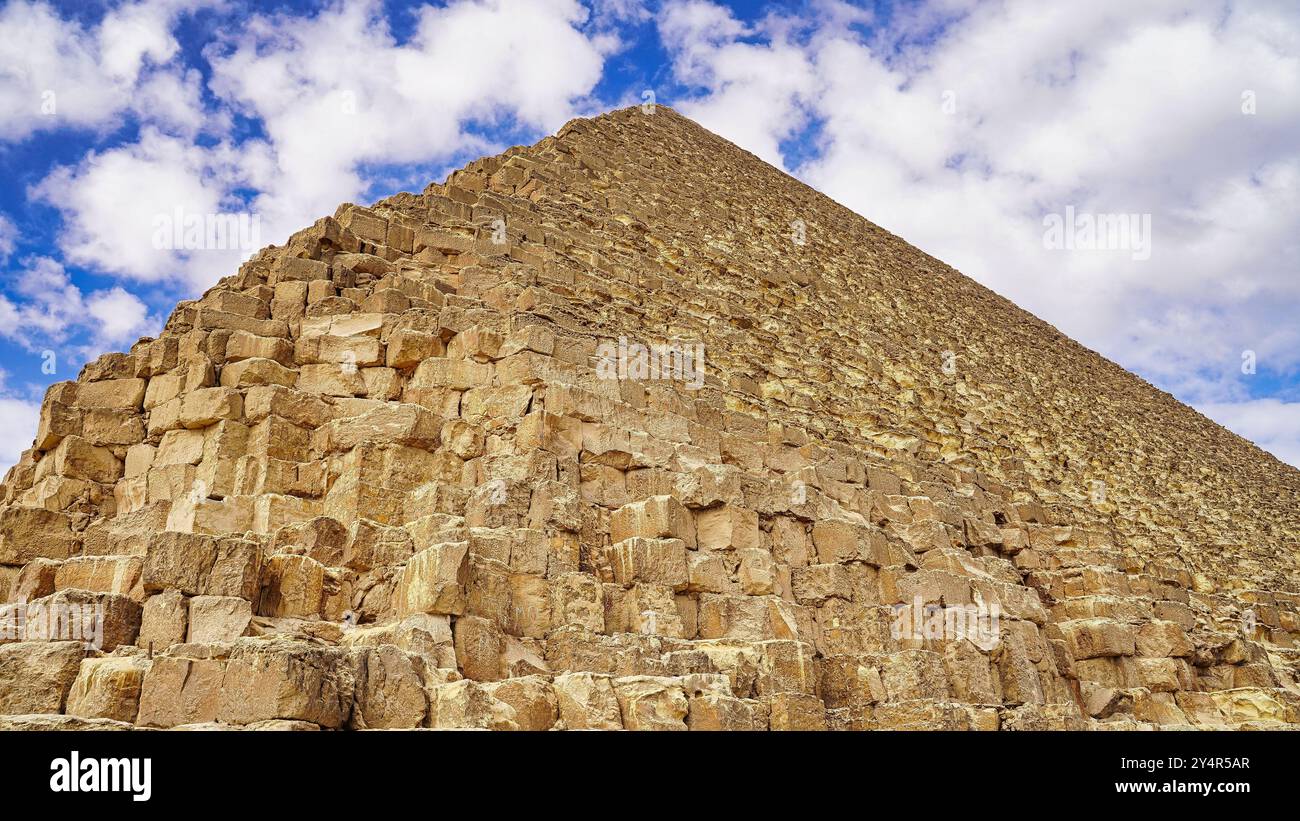
The largest of the three Giza pyramids, originally standing 146.6 meters tall and built as the tomb of Pharaoh Khufu around 2560 BCE. It held the record as the tallest human-made structure on Earth for roughly 3,800 years until the completion of Lincoln Cathedral.

Pyramid of Khafre

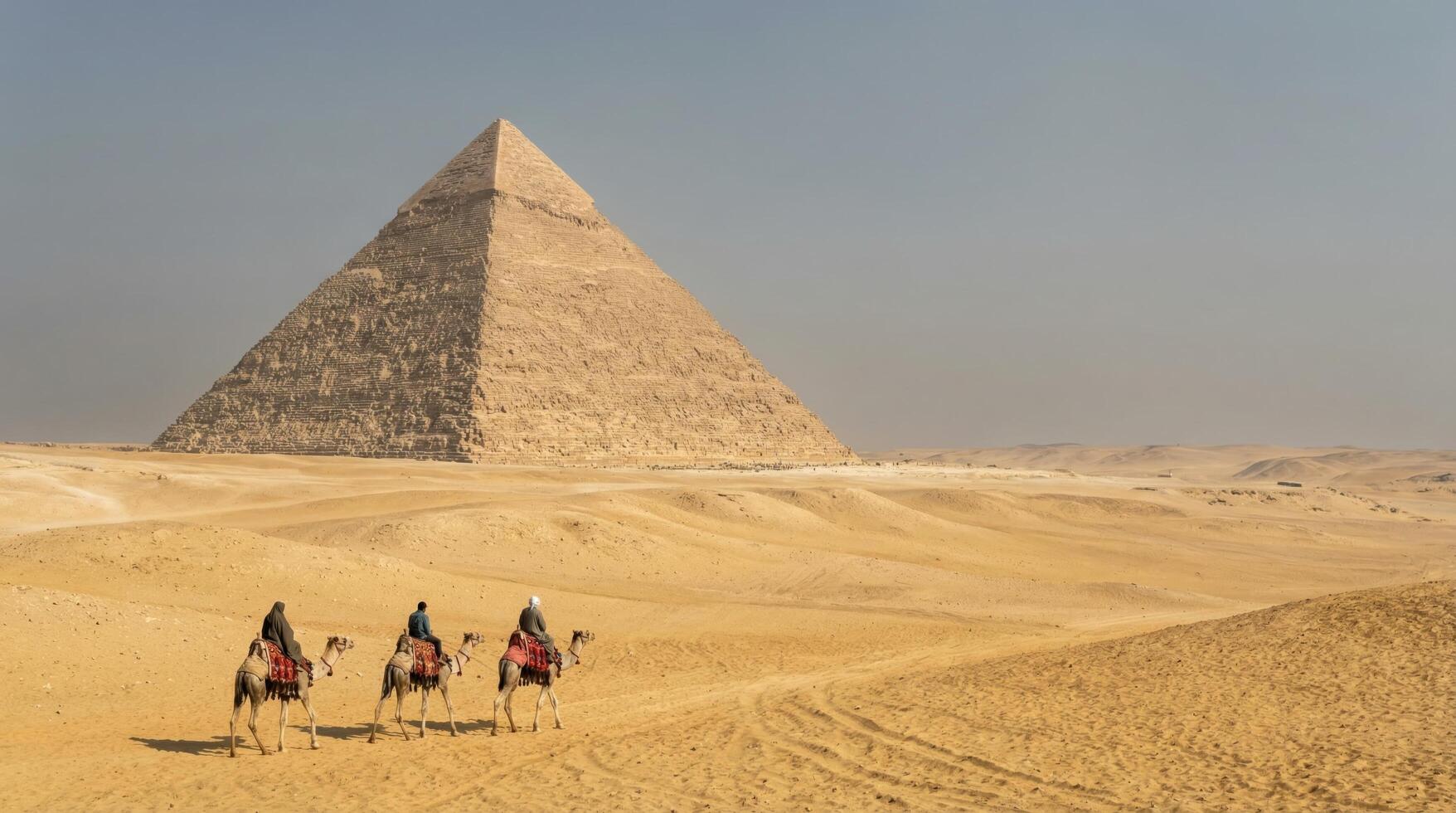
The second-largest pyramid on the plateau, built for Khufu's son Khafre and rising to 471 feet, only about ten feet shorter than its neighbor. It retains a cap of original polished limestone casing stones near its summit, a rare surviving trace of how all three pyramids once looked when finished.

Pyramid of Menkaure

The smallest of the three principal pyramids, roughly a tenth the volume of the Great Pyramid, built for Pharaoh Menkaure around 2510 BCE. Its lower courses were faced in granite rather than limestone, a costlier material choice archaeologists still debate the purpose of.

Great Sphinx of Giza

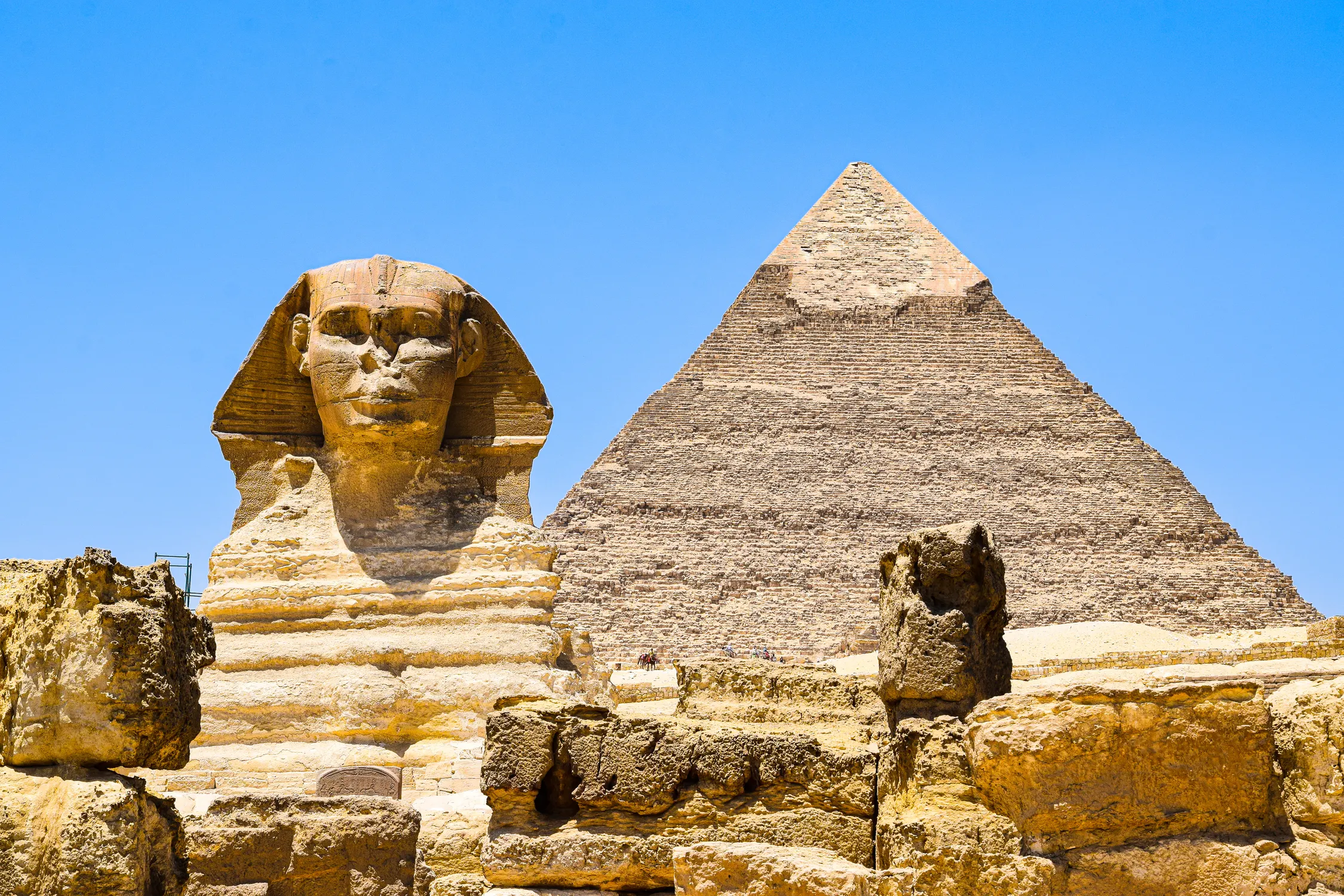
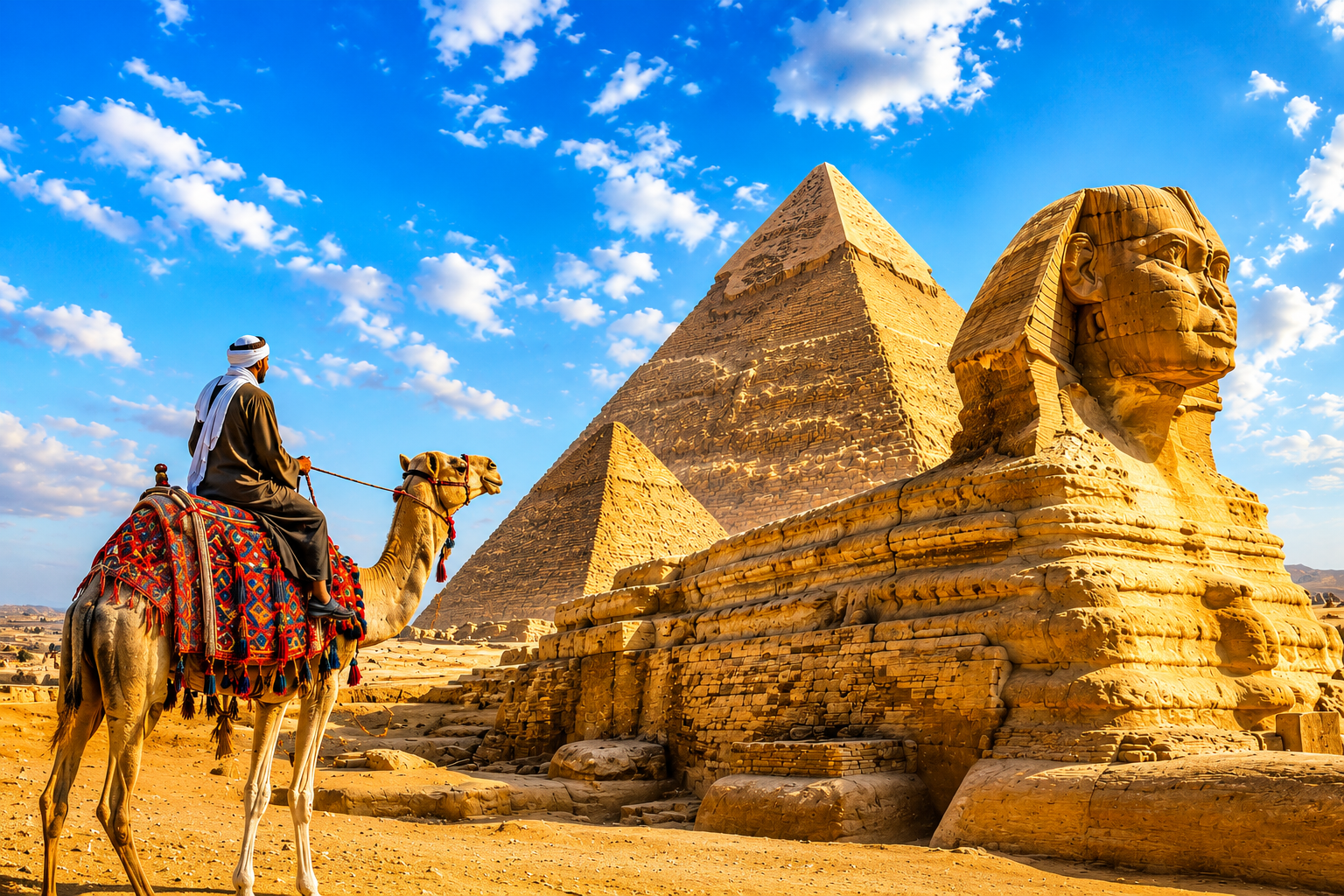
A limestone statue with a lion's body and a human head, stretching about 73 meters long and 20 meters high, carved from a single mound of bedrock left over from quarrying the Great Pyramid. Its nose has been missing since at least the 15th century, with erosion and deliberate damage both cited as causes.

Khafre Valley Temple

A temple built from massive limestone blocks encased in pink granite, linked to the Pyramid of Khafre by a long stone causeway leading toward the Sphinx. It is considered one of the best-preserved Old Kingdom temples in Egypt, with its original granite pillars still standing.

Solar Boat Museum

A structure built directly over the pit where a 4,600-year-old cedarwood funerary boat was discovered disassembled in 1954 beside the Great Pyramid. The 43-meter vessel was reconstructed from more than 1,200 individual wooden pieces and is believed to have been built for Khufu's symbolic journey through the afterlife.

The experience

What the visit is really like

You leave the city early, chasing the 07:00–09:00 window when the light is low and the coaches have not yet arrived. The road from cairo to pyramids narrows past Al Haram, and then the plateau opens and Khufu fills the windscreen, larger than any photograph prepared you for. You step onto the sand and crane upward. The blocks that read as smooth from a distance resolve into rough, waist-high courses of limestone, each one a small climb in itself. You walk the perimeter, counting your pace against the base, and the scale reorganises around you with every step. You move on toward Khafre, then descend the causeway to the Sphinx, where you stand at the enclosure edge and line its weathered profile against the two pyramids behind. You feel the temperature begin to lift off the stone as the morning stretches. By mid-morning you drift to the panorama point on the plateau's western rise, where all three pyramids stack into a single frame. You pause, drink water, and let the desert quiet settle before the heat and the crowds fully arrive. The ruins hold you a moment longer than you expected.

Everything You Need to Know

Your complete experience guide

All the details about your upcoming adventure in one place

Cairo to Pyramids: Giza Plateau Overview

The journey from cairo to pyramids brings you across the Giza Plateau to the Great Pyramid of Khufu, the Sphinx, and the surrounding necropolis of the Old Kingdom pharaohs. Most cairo to pyramids tours pair air-conditioned transfers with a licensed Egyptologist who guides you through the mastabas, valley temples, and panorama points. This limestone plateau on the western desert edge remains one of Egypt's defining landmarks and the last surviving wonder of the ancient world.

The Great Pyramid of Khufu held the record as the tallest human-made structure on Earth for roughly 3,800 years, until the spires of Lincoln Cathedral rose in the fourteenth century. That single fact frames the journey from cairo to pyramids: a short drive from a modern capital of twenty million people to a plateau that predates written record-keeping in much of the world. The three principal pyramids — Khufu, Khafre, and Menkaure — were raised during the Fourth Dynasty, around 2600 to 2500 BCE, on a limestone shelf overlooking the western bank of the Nile at Al Haram. What survives today is only the skeleton of a far grander scheme. Khufu's monument was once sheathed in polished Tura limestone that would have flashed white across the valley; most of that casing was stripped over centuries for construction in medieval Cairo. Khafre's pyramid still wears a cap of that original stone near its apex, the clearest hint of how the complex first appeared. Beside it crouches the Great Sphinx, carved from a single ridge of bedrock, its lion's body and human face aligned with the rising sun. These monuments matter now not merely as relics but as the anchor of Egyptology itself. The plateau remains an active archaeological site, where boat pits, mortuary temples, causeways, and the workers' settlements excavated in recent decades continue to reshape how scholars understand the labour behind the stone — organised crews, not enslaved masses, fed and housed on site. A well-planned cairo giza pyramids trip places a visitor inside that ongoing scholarship rather than merely beside a photograph. The engineering still resists easy explanation. Khufu's pyramid contains an estimated 2.3 million blocks, some interior granite slabs weighing upwards of 70 tonnes, hauled from Aswan more than 800 kilometres south. The internal architecture — the Grand Gallery, the King's Chamber with its relieving stones, the descending and ascending passages — reflects a precision of alignment to true north that engineers still study. Nearby, the reconstructed Khufu solar barque speaks to a belief system in which the pharaoh sailed the sky with the sun god. As one of the original UNESCO World Heritage sites and the last surviving wonder of the ancient world, the Giza necropolis carries a weight few Cairo landmarks can match. Any thoughtful journey from cairo to pyramids is, finally, a walk into the deep architecture of memory itself, older than empire, older than scripture.

Older than empire, older than scripture, the plateau is finally a walk into the deep architecture of memory itself.

Dress code

Modest clothing is expected on the Giza Plateau: shoulders and knees covered for both men and women, since this is still a working archaeological and religious heritage site. Closed, sturdy shoes are recommended for the sand and loose stone underfoot, and a hat plus sunglasses help against the open desert glare.

Bags & security

All visitors and bags pass through metal detectors and X-ray scanners at the Giza Plateau gates before reaching the pyramids and Sphinx. Large suitcases and oversized backpacks are discouraged and may be refused entry, so day bags or small backpacks are the practical choice.

Photography

Personal photography and video of the pyramids, the Sphinx, and the surrounding plateau are permitted with a standard admission ticket, including handheld cameras and phones. Tripods and commercial filming equipment require separate permits arranged in advance through the Ministry of Tourism and Antiquities, and drones are not allowed without prior authorization.

Families & strollers

Children under 6 enter the Giza Plateau free of charge, and the open-air layout gives kids room to move between the Great Pyramid, Khafre, and Menkaure. Strollers manage on the paved sections near the Sphinx but struggle on the sandy paths further onto the plateau.

Accessibility

The visitor center and areas immediately around the Great Sphinx have paved or compacted surfaces suitable for wheelchairs, but most of the plateau around the pyramids themselves is loose sand and uneven stone. Interior pyramid passages involve steep, narrow stairways and are not wheelchair accessible; golf-cart transport can be arranged near the entrance for visitors with mobility limitations.

Food & drink

Outside food and drink may be brought onto the Giza Plateau grounds, and bottled water is strongly advised given the desert heat, but eating is generally limited to designated rest areas near the visitor center rather than beside the monuments themselves. Alcohol is not permitted anywhere on site.

Not allowed

× drones without permit × tripods without filming permit × large suitcases × glass containers × alcohol × weapons or sharp tools × professional filming rigs × flammable materials × spray paint × large cooler bags × amplified speakers × climbing or marking equipment for the monuments

What to bring

✓ bottled water ✓ sun hat ✓ sunglasses ✓ sunscreen ✓ comfortable closed shoes ✓ cash in Egyptian pounds ✓ physical or printed ticket confirmation ✓ light scarf for sun and dust

Opening hours

Mon 07:00 – 16:00
Tue 07:00 – 16:00
Wed 07:00 – 16:00

Quietest weekday

Thu 07:00 – 16:00
Fri 07:00 – 16:00

Midday prayer break nearby

Sat 07:00 – 16:00

Busier with local visitors

Sun 07:00 – 16:00

At a glance

Hours

Daily 07:00–16:00, last entry recommended by 15:00

Address

Al Haram, Nazlet El-Semman, Giza Governorate, Egypt

Accessibility

Paved paths near the entrance, uneven sand and stone further onto the plateau

Climate

Desert heat, minimal shade, strongest sun from 11:00–15:00

Bag policy

Small bags permitted, large luggage and bulky backpacks screened at gates

Layout

Three pyramids, the Great Sphinx, and Solar Boat Museum spread across one open plateau

Getting there

Public transport · 60–90 min · Approx. 15–30 EGP total

Take Cairo Metro Line 2 to Giza Station, then a local bus, microbus, or short taxi ride covers the remaining roughly 8.5 km to the plateau; bus routes 355 and 357 also run directly from Tahrir Square area near the Egyptian Museum.

Car · 30–45 min · Fuel plus parking, roughly 50–100 EGP

From central Cairo, drive west along Al Tahrir Street, cross toward Gezira, then follow Charles de Gaulle Street and Al Haram Street directly to the plateau entrance.

Taxi · 30–45 min · Approx. 100–200 EGP

A metered taxi or ride-hailing app from downtown Cairo hotels drives directly to the Giza Plateau gate along the Ring Road or Al Haram Street.

Bike · 90–120 min · No fixed cost

Cycling from central Cairo is possible along Al Haram Street but not widely used by visitors due to heavy traffic and lack of dedicated bike lanes.

Cancellation policy

General admission tickets covering the 700 EGP Giza Plateau entrance fee are typically non-refundable once issued at the gate or confirmed online. Third-party tour bookings that include this fee usually allow free cancellation up to 24–48 hours before the visit date; check the specific operator's terms at checkout.

Plan ahead

When to go — year at a glance

Weather · crowds · average price — dots go green to amber to red as each metric rises.

Winter (Dec–Feb)

Daytime temperatures sit around 20–24°C, making this the most comfortable season, though it is also peak season with the largest crowds and tour bus volume at the plateau.

Spring (Mar–Apr)

Temperatures climb into the high 20s and early Ramadan-adjusted hours may apply in March 2026, with moderate crowd levels most weekdays.

Summer (Jun–Aug)

Daytime heat regularly exceeds 38–40°C in July and August, so an early arrival at opening is close to essential and crowds thin out considerably by midday.

Autumn (Sep–Nov)

Temperatures ease back into the high 20s to low 30s, and this shoulder season combines fewer visitors than winter with more comfortable conditions than summer.

Insider tips

Helpful tips for your visit

Arrive at opening

The best arrival window is 07:00–09:00, when temperatures are cooler and tour buses have not yet filled the plateau; this window matters even more in late July heat.

Book interior tickets ahead

Great Pyramid interior access is capped at a limited number of daily slots and can sell out on busy days, so buy that separate ticket online before arrival if entering Khufu's chamber matters to you.

Carry small EGP notes

Vendors, restroom attendants, and camel or horse operators mostly deal in cash, so small Egyptian pound denominations make transactions and tipping easier.

Agree prices before rides

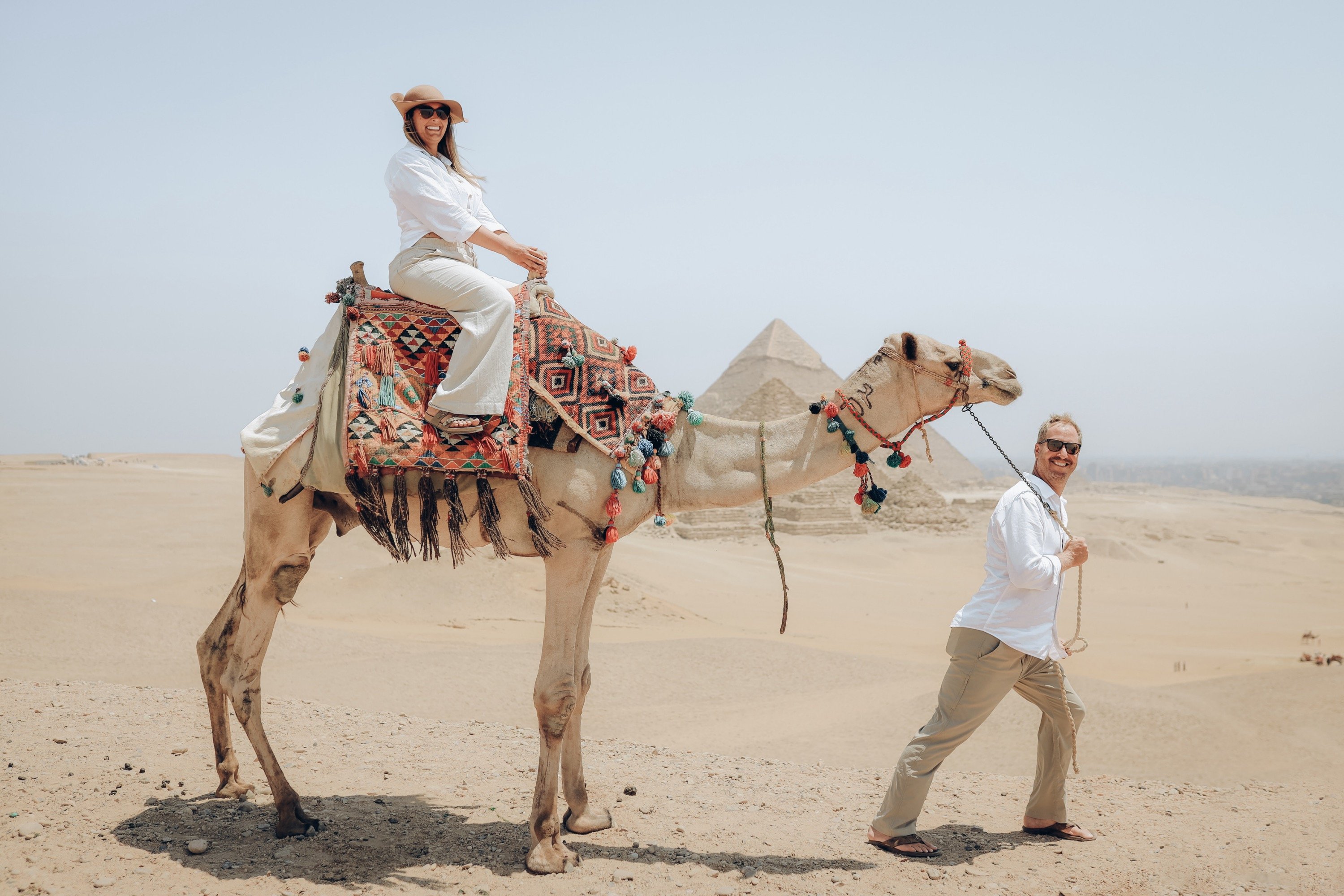
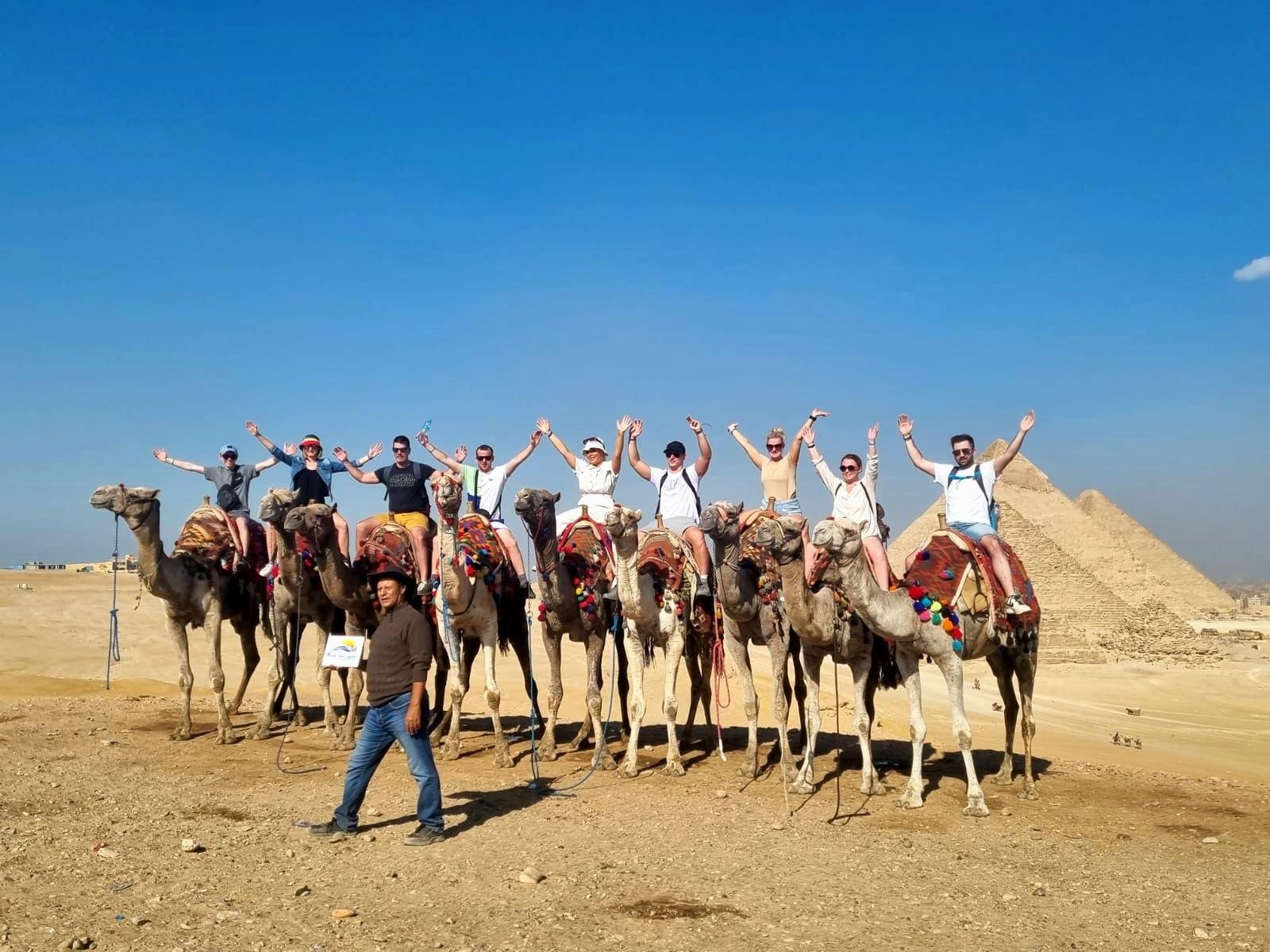
Camel and horse operators negotiate rates individually; settle the price and duration before mounting to avoid disputes afterward.

Use the plateau shuttle

A shuttle bus now links the main sights across the site, cutting down on the amount of walking needed across open sand in the heat.

Combine with the Grand Egyptian Museum

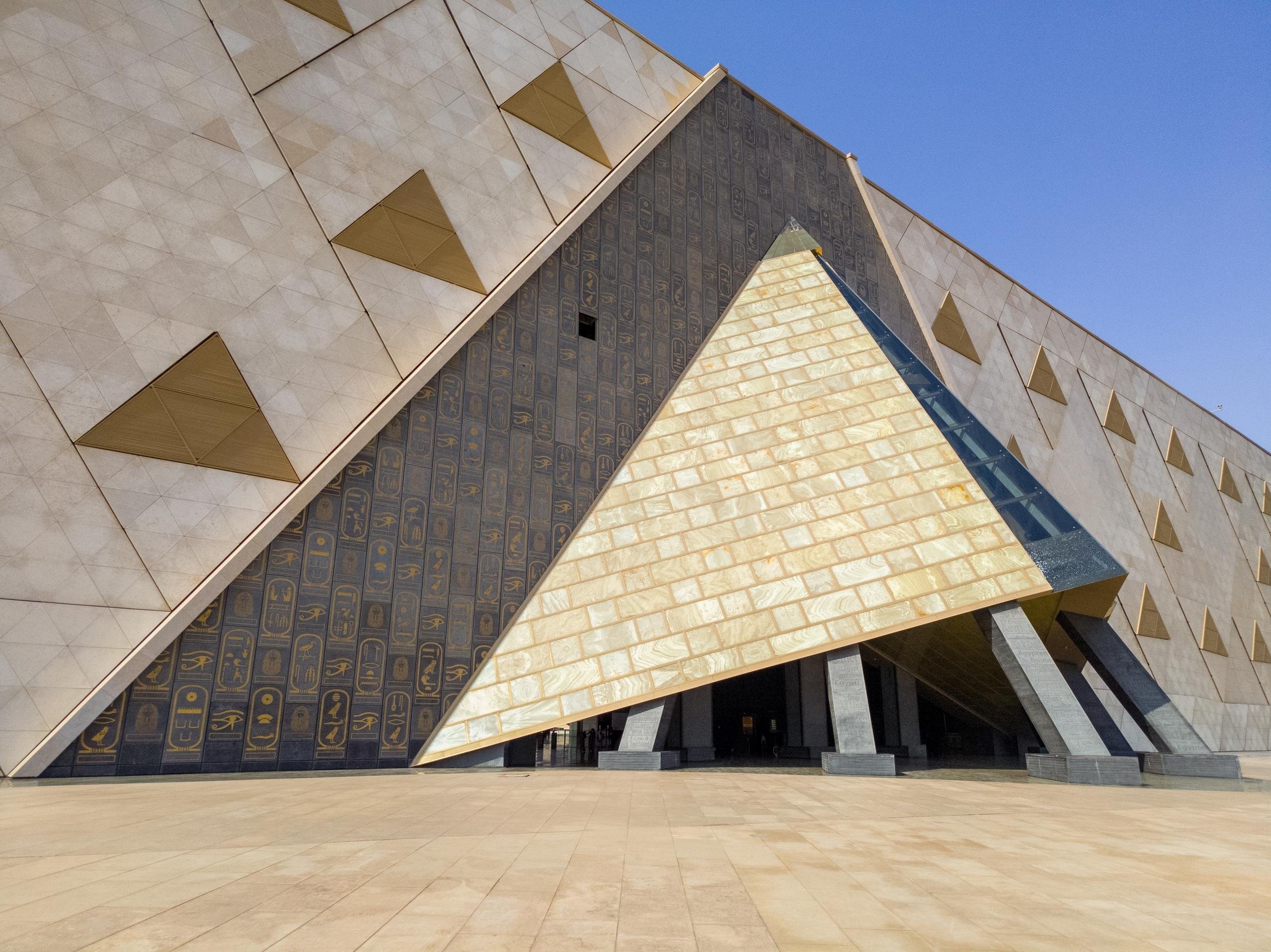
Many day plans pair a pyramids morning with an afternoon at the Grand Egyptian Museum roughly 2 km away, which holds the Tutankhamun collection and Khufu's solar boat.

Keep water on hand

Desert conditions mean dehydration risk is high, especially between late morning and mid-afternoon in summer months.

Where to meet

Meeting points

Main Plateau Gate

Al Haram, Nazlet El-Semman, Giza Governorate, Egypt

Primary entrance for most organized cairo to pyramids tours and ticket purchases

Get directions

Sphinx Entrance

Al Haram Street near the Great Sphinx enclosure, Giza

Secondary gate closer to the Sphinx, used by some smaller tour groups

Get directions

Panoramic Viewpoint

Desert road south of the plateau, Nazlet El-Semman, Giza

Common pickup point for camel rides and photo stops after the main visit

Get directions
The story

The history behind the site

The story that draws travelers on the cairo to pyramids route begins in the Fourth Dynasty, around 2580 BCE. Pharaoh Khufu commissioned the Great Pyramid on the Giza Plateau. His architects raised a structure of roughly 2.3 million limestone and granite blocks. It rose to 146.6 metres, and it held the record as the tallest human-made structure for nearly four millennia. The engineering remains a subject of scholarly debate to this day. Modern excavations reshaped the older picture of construction. In 1990, archaeologist Mark Lehner and Egyptian colleagues uncovered workers' cemeteries and settlement remains south of the plateau. Their findings pointed to a skilled, paid labor force, not the enslaved masses of popular legend. Bakeries, breweries, and medical evidence of healed fractures supported this view. Zahi Hawass led parallel work on the tomb complex through the 1990s. Any thorough Cairo Pyramids tour now carries this revised understanding of how the monument was raised. Khufu's successors extended the necropolis. Khafre built the second pyramid around 2570 BCE and is credited with the Great Sphinx, the limestone lion with a human face guarding the causeway. Menkaure completed the smallest of the three principal pyramids near 2510 BCE. Together these Giza landmarks formed a royal cemetery bound to solar and funerary cult. The original casing stones once gave the structures a polished white sheen. Most were stripped for medieval Cairo construction after a 1303 earthquake loosened them. Interest revived through the centuries. Napoleon's 1798 expedition brought scholars who measured the monuments systematically. In 1979, UNESCO inscribed the Memphis necropolis, including Giza, as a World Heritage Site. That recognition anchors the appeal of cairo to pyramids tours today, drawing visitors who book cairo to pyramids tickets to stand before the last surviving wonder of the ancient world. The Solar Boat of Khufu, recovered in 1954 and relocated to the Grand Egyptian Museum by 2021, testifies to the plateau's enduring hold. A cairo to pyramids tour completes a journey that started forty-five centuries ago on the west bank of the Nile.

c.2580 BCE

Khufu commissioned the Great Pyramid on the Giza Plateau.

c.2570 BCE

Khafre built the second pyramid and is credited with the Great Sphinx.

c.2510 BCE

Menkaure completed the smallest of the three principal pyramids.

1303

An earthquake loosened casing stones, later stripped for medieval Cairo.

1798

Napoleon's expedition scholars measured the monuments systematically.

1954

Khufu's dismantled Solar Boat was discovered beside the Great Pyramid.

1979

UNESCO inscribed the Memphis necropolis, including Giza, as World Heritage.

1990

Lehner and colleagues uncovered workers' cemeteries revising labor theories.

Photo spots

Best photo spots

Panoramic Point

Best light · Early morning before 09:00 or late afternoon

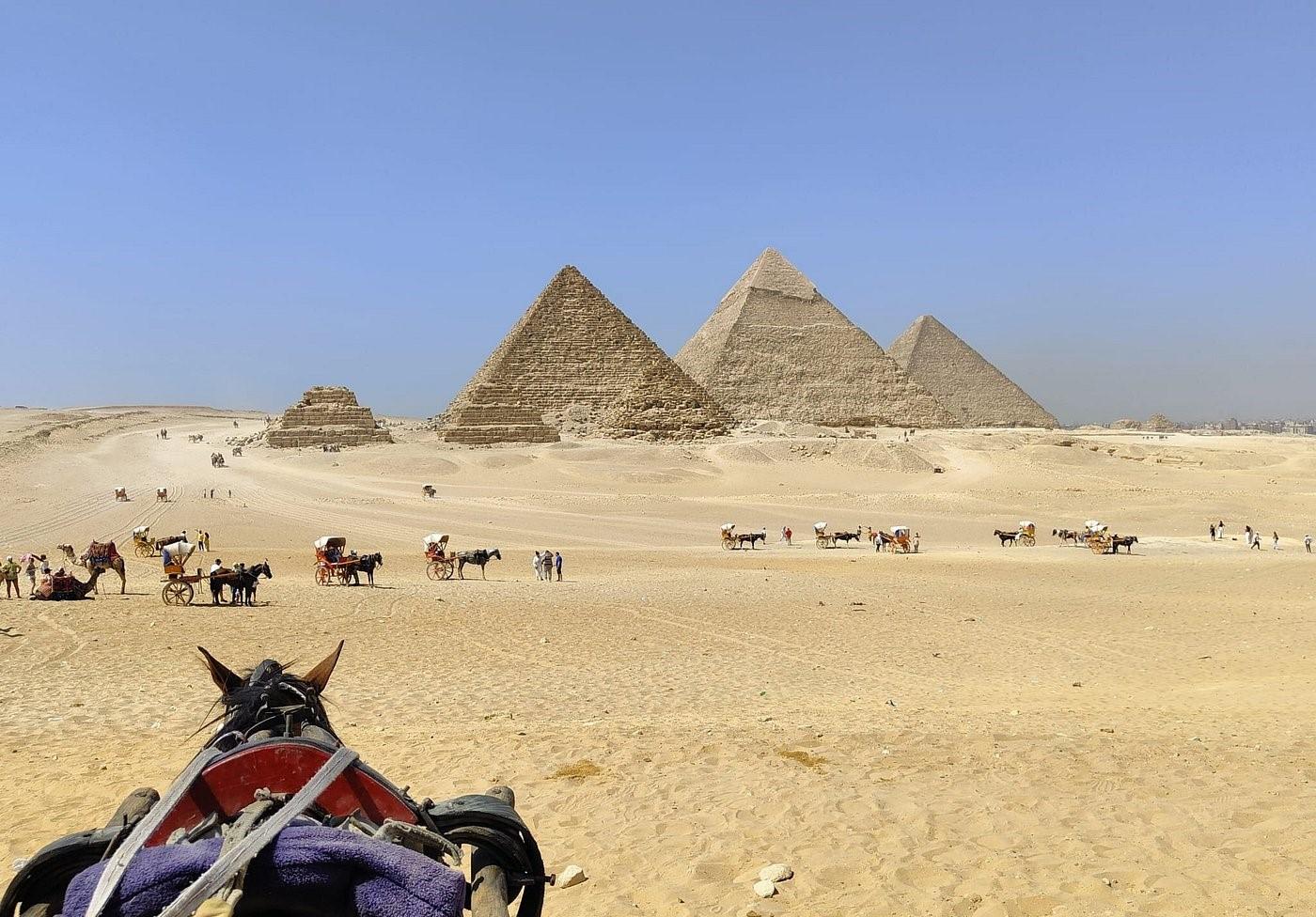
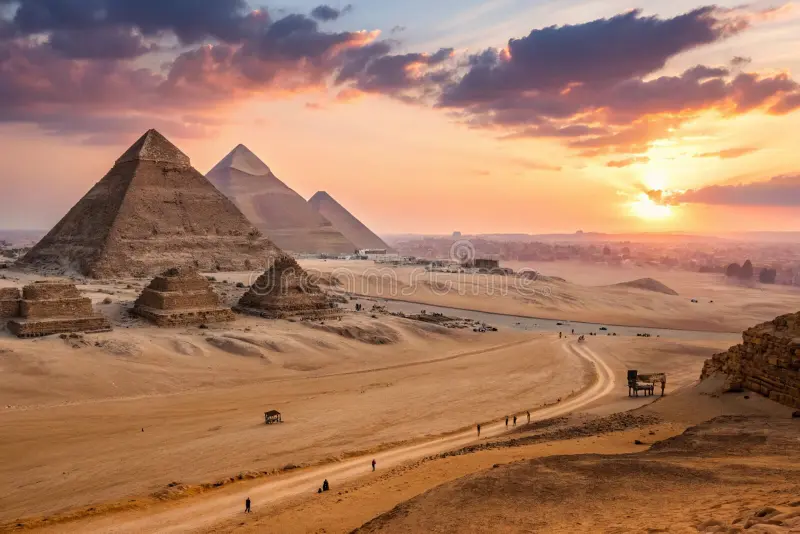
The classic frame with all three pyramids of Khufu, Khafre, and Menkaure lined up together, shot from an elevated stretch of desert southwest of the plateau. Many independent travelers plan a cairo to pyramids itinerary around reaching this viewpoint early, before haze and haze-cutting tour buses fill the road below. Reachable on foot, by camel, or by vehicle.

Sphinx Viewing Platform

Best light · Just before sunset

A close, side-on view of the Great Sphinx with the Great Pyramid of Khufu rising behind it, taken from the designated platform beside the Valley Temple of Khafre. Barriers keep visitors back from the statue itself, so a longer lens helps compress the two monuments into one frame.

Southern Dune Viewpoint

Best light · Golden hour, soft desert light

A quieter angle over the Pyramid of Menkaure and its three subsidiary queens' pyramids, taken from dunes south of the plateau where the modern city disappears from the frame. Guides generally require a camel or vehicle to reach this stretch, since walking in is not permitted.

Nine Pyramids Lounge Terrace

Best light · Late afternoon, fewer crowds

A café terrace south of the main complex that lines up all nine pyramids, including the smaller queens' pyramids, across an open desert foreground. Front-row cushioned seating gives an unobstructed shot without other visitors in frame.

Gallery

Moments from the experience

With kids

Visiting with kids

A cairo to pyramids day out with kids means sun, sand, and long stretches between monuments rather than a compact, shaded park, so pacing matters more than sightseeing checklists. Most families do best treating it as a slow half-day rather than a full itinerary.

Strollers

Leave the stroller behind: the plateau ground is sandy, rocky, and uneven, so a baby carrier works far better for infants and toddlers who tire on foot.

Best ages

Children around 6 and up handle the walking and heat best, since toddlers and younger kids typically last only an hour or two before fatigue sets in.

Facilities

There are just two paid restrooms on site, near the Khufu ticket booth and the Solar Barque Museum, so plan bathroom stops around those and pack wipes for younger kids.

Pacing

Space out the walk between the pyramids and the Sphinx with shaded pauses, since there is little natural shade and distances between monuments feel longer than they look on a map.

Vendors and touts

Camel and horse touts approach near the parking area; agree on a fixed price before any ride starts and keep a firm, polite no ready if children are overwhelmed by the attention.

Realistic expectations

Even engaged children tend to flag after two to three hours in the heat, so treat any Cairo pyramids tour with kids as a shorter morning outing rather than an all-day plan.

Food & drink

Where to eat nearby

Dining right on the Giza Plateau is limited to a couple of view restaurants, so most visitors on a cairo to pyramids day head into neighboring Nazlet El-Semman for lunch after the site, where budget grills and cafés line the streets facing the panoramic viewpoint.

9 Pyramids Lounge

EGP 90-350 (€€)

View restaurant inside the plateau

The only sit-down spot within the Giza Plateau perimeter, with terraces facing all nine pyramids. Reservations are required, no walk-ins, and breakfast service ends by late morning. Best for a slow post-visit meal rather than a quick bite.

Khufu's Restaurant

€€€ (tasting menu from $33)

Fine dining — 2 min from the entrance

Set menus of modern Egyptian dishes with an unobstructed pyramid view, ranked among the region's best restaurants. Popular at sunset, so book ahead. Not suited to a fast, casual stop.

Abou Shakra

€€

Egyptian grill — short walk

A longstanding Cairo grill chain outpost in Al Haram serving kebab, kofta, and mezze. Casual and quicker-turnover than the view restaurants, good for a straightforward lunch after touring.

Koshary Hekaya

Street food — short walk

Local spot for koshary, Egypt's carb-heavy lentil-rice-pasta staple, plus other quick eats. Inexpensive and fast, best for travelers wanting a cheap refuel rather than a view.

Customer Reviews

What travelers say

Real experiences from real travelers

4.6
Based on undefined reviews
1 ★ 520
2 ★ 410
3 ★ 980
4 ★ 3100
5 ★ 16800
M
Marcus T.
Germany · 2026-06-18

Desert edge at dawn

We booked one of the cairo to pyramids tours for the earliest slot and the plateau was nearly empty at 7am. The scale of Khufu doesn't register in photos until you are standing beside a single block taller than you are. Cool morning air made the walk between the three pyramids comfortable.

A
Aiko N.
Japan · 2026-05-02

Bigger than imagined

The drive from the city gives you no warning, then the desert opens and the pyramids just appear over the rooftops. Standing at the Sphinx with Khafre behind it was the moment that stayed with me. Bring water and a hat even in the morning.

S
Sofia R.
Spain · 2026-04-27

Worth the early start

Our giza pyramids tour guide knew exactly where the light hit best and kept us ahead of the tour buses. Only note is the plateau is dustier and windier than expected, so pack a scarf. The camel guides can be pushy but a polite no works fine.

J
James O.
United States · 2026-07-09

Summer heat but glad we went

July sun is intense by mid-morning so we did the cairo to pyramids tour first thing and were back before it peaked. The panorama point where all three pyramids line up is exactly as grand as people say. Wear real shoes, the sand and rubble are rough underfoot.

L
Lena K.
Netherlands · 2026-03-15

Ancient and enormous

Seeing the limestone casing fragments up close made the age of the place feel real. These are Cairo landmarks you cannot fully grasp from a distance. The wind carried fine sand all afternoon so protect your camera.

R
Rafael M.
Brazil · 2026-02-11

A quiet winter visit

Went in February and the cooler weather made walking the whole plateau easy. The cairo to pyramids skip-the-line entry saved us a long wait at the gate. Watching the sun drop behind Menkaure with almost no crowd was the highlight.

P
Priya S.
India · 2026-06-30

Grand but plan for sun

The site is vast and there is little shade, so timing matters more than anything. Our guide framed the history well without lecturing. The جولة أهرامات الجيزة felt personal because we were a small group rather than a coach load.

T
Tom H.
United Kingdom · 2026-01-30

Sphinx up close

The Sphinx is smaller than the pyramids but far more expressive in person, weathered nose and all. Booking cairo to pyramids tickets in advance meant no fumbling at the entrance. Golden hour light on the honey-colored stone was the reason to linger.

C
Camille D.
France · 2025-11-22

Sunset on the plateau

We stayed until closing and the low sun turned the whole plateau amber. A camel ride along the ridge gave a wide view of the three tombs together. The transition from the noise of the city to the silence of the desert is striking.

D
David L.
Australia · 2025-09-14

Older than everything

Nothing prepares you for standing at the foot of a monument built over four and a half thousand years ago. The panorama viewpoint is the shot everyone wants and it earns the walk. Go early, carry water, and take your time.

FAQ

Frequently asked questions

Everything you need to know for your journey

Around the corner

Nearby landmarks worth a detour

Grand Egyptian Museum

10 min drive

museum

A large state museum holding more than 100,000 ancient Egyptian artifacts, including the full Tutankhamun collection and Khufu's reassembled solar boat. It sits roughly 2 km from the plateau and anchors many combined Cairo to Pyramids itineraries.

Solar Boat Museum

5 min walk

museum

Houses the excavated cedarwood funerary vessel found buried beside the Great Pyramid in 1954. It is included within the general plateau admission.

Khafre Valley Temple

10 min walk

landmark

A granite and limestone temple linked by a causeway to the Pyramid of Khafre, considered one of the best-preserved Old Kingdom temples on the plateau.

Panoramic Viewpoint

10 min drive

viewpoint

A desert overlook south of the plateau offering a single wide frame of all three pyramids together, popular for camel and horse photo stops.

Nazlet El-Semman village

5 min walk

square

The local village bordering the plateau's eastern edge, with shops, cafes, and stables that service plateau visitors.

Where to stay

Where to stay nearby

Marriott Mena House

5 min walk

luxury

A historic hotel directly adjoining the Giza Plateau grounds with pyramid views from its gardens and many rooms.

Pyramids View district

5-15 min walk

district

A cluster of small hotels and guesthouses along Al Haram Street offering rooftop pyramid views at lower price points.

Pyramids Solar Boat Inn

5-10 min walk

budget

A budget hostel-style property within a short walk of the plateau entrance and the Great Sphinx.

Downtown Cairo district

30-45 min drive

mid-range

Central Cairo hotels near Tahrir Square offer more dining and nightlife options with a longer commute to the plateau each day.

Ready for Adventure?

Join thousands of happy travelers who have discovered this incredible experience

Book Your Experience Now